In the realm of industrial automation, precision and reliability are paramount. The 70 series proximity photoelectric sensor stands as a cornerstone technology, enabling seamless detection and control in diverse applications. This comprehensive guide delves into the working principles, key features, installation best practices, and common use cases of the 70 proximity photoelectric sensor, providing engineers and technicians with essential insights for optimal deployment.
The 70 proximity photoelectric sensor operates on the principle of modulated infrared light emission and reception. It emits a focused beam of infrared light toward a target object. When the object enters the sensing range, it reflects the light back to the sensor's receiver. The internal circuitry then processes this signal to trigger an output switch. This non-contact detection method ensures minimal wear and tear, offering a significant advantage over mechanical limit switches. The sensor typically features a sensing distance of up to 70mm, though specific models may vary. Its compact, cylindrical housing, often with an M18 or M30 threaded barrel, facilitates easy integration into machinery and production lines.
Key technical specifications distinguish the 70 series. It commonly supports both diffuse-reflective and retro-reflective sensing modes. The diffuse-reflective type detects objects directly, while the retro-reflective variant uses a reflector to bounce light back, extending the effective range. Many models incorporate background suppression technology, which allows them to ignore objects beyond a set distance, preventing false triggers from distant surfaces. The sensor's output can be configured as NPN (sinking) or PNP (sourcing) transistor types, ensuring compatibility with various programmable logic controllers (PLCs) and control systems. Operating voltage ranges typically span from 10-30V DC, with a fast response time often under 1 millisecond, crucial for high-speed production environments.
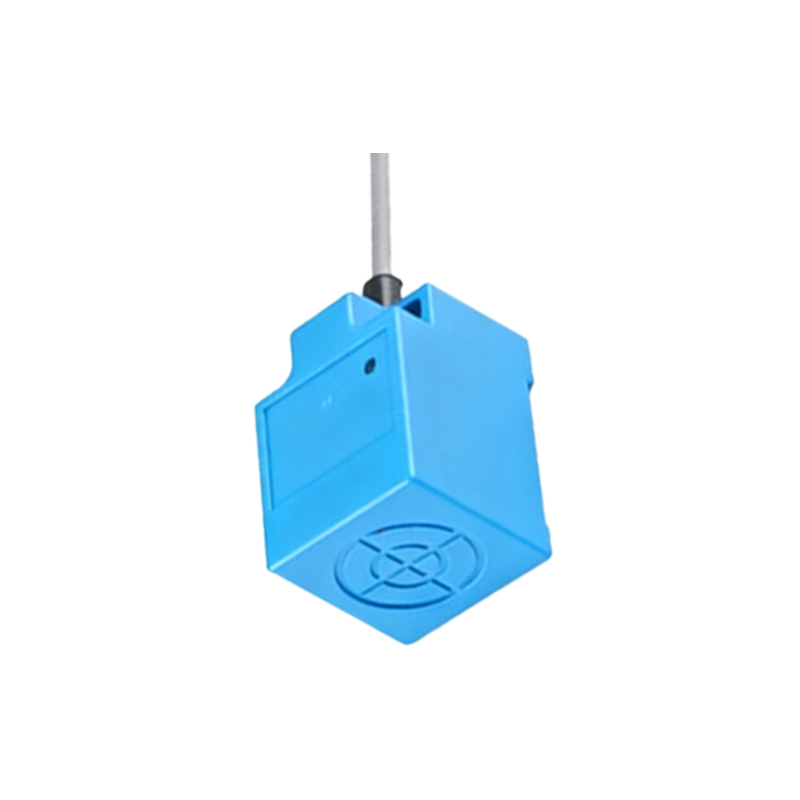
Installation and alignment are critical for performance. Engineers must consider environmental factors such as ambient light, dust, moisture, and vibration. For instance, strong ambient light from welding arcs or sunlight can interfere with the sensor's infrared beam. Selecting a model with a modulated light source and proper housing rating (e.g., IP67 for dust and water resistance) mitigates these issues. Mounting should be secure to avoid misalignment due to machine vibration. The sensing face must be positioned perpendicular to the target's expected path, and the sensing distance should account for object color and material, as dark or non-reflective surfaces may reduce effective range. Regular maintenance, including lens cleaning and output signal verification, ensures long-term reliability.
Application scenarios for the 70 proximity photoelectric sensor are vast across manufacturing and logistics. In packaging lines, it detects the presence of boxes on conveyors, triggering sealing or labeling operations. Within automotive assembly, it verifies component placement, such as ensuring a gasket is correctly seated before a robot applies adhesive. In material handling, it counts items passing through a chute or monitors fill levels in bins by detecting the presence or absence of material at a specific point. Its robustness also makes it suitable for harsh environments like foundries or outdoor logistics yards, where it can withstand temperature fluctuations and particulate exposure.
When selecting a 70 series sensor, engineers should evaluate parameters like sensing range, output type, housing material (often stainless steel or nickel-plated brass for corrosion resistance), and connection method (pre-wired cable or quick-disconnect). Advanced models may offer teach-in functionality for easy distance setting or IO-Link communication for digital parameter adjustment and diagnostics. Comparing these features against application requirements ensures cost-effective and reliable operation.
In conclusion, the 70 proximity photoelectric sensor is an indispensable tool in modern industrial automation. Its non-contact operation, durability, and versatility enable precise object detection across countless processes. By understanding its technology and adhering to installation best practices, engineers can enhance system efficiency, reduce downtime, and contribute to smarter, more responsive manufacturing ecosystems. As Industry 4.0 evolves, integrating such sensors with IoT platforms will further unlock predictive maintenance and data-driven optimization, solidifying their role in the future of automation.