In the realm of industrial automation and control, inductive proximity sensors stand as fundamental components for non-contact object detection. These robust and reliable devices are ubiquitous in manufacturing lines, robotic systems, and machinery, providing a critical interface between the physical movement of metallic objects and the digital control system. Unlike mechanical limit switches, they operate without physical contact, leading to significantly reduced wear and tear, higher operational speeds, and enhanced reliability in harsh environments.
The core operating principle of an inductive proximity sensor is based on electromagnetic induction. The sensor's active face contains a coil that is part of an oscillator circuit, generating a high-frequency electromagnetic field. When a metallic object (the "target") enters this field, eddy currents are induced on the surface of the target. These eddy currents draw energy from the oscillator, causing a change in its amplitude. An integrated evaluation circuit within the sensor detects this amplitude change and triggers a switching signal—typically turning a solid-state output transistor ON or OFF. It is crucial to note that these sensors are primarily designed to detect ferrous metals like steel and iron, which cause the most significant damping effect. Non-ferrous metals like aluminum, copper, or brass have a lower detection range, often specified by a correction factor (e.g., 0.4 for aluminum).
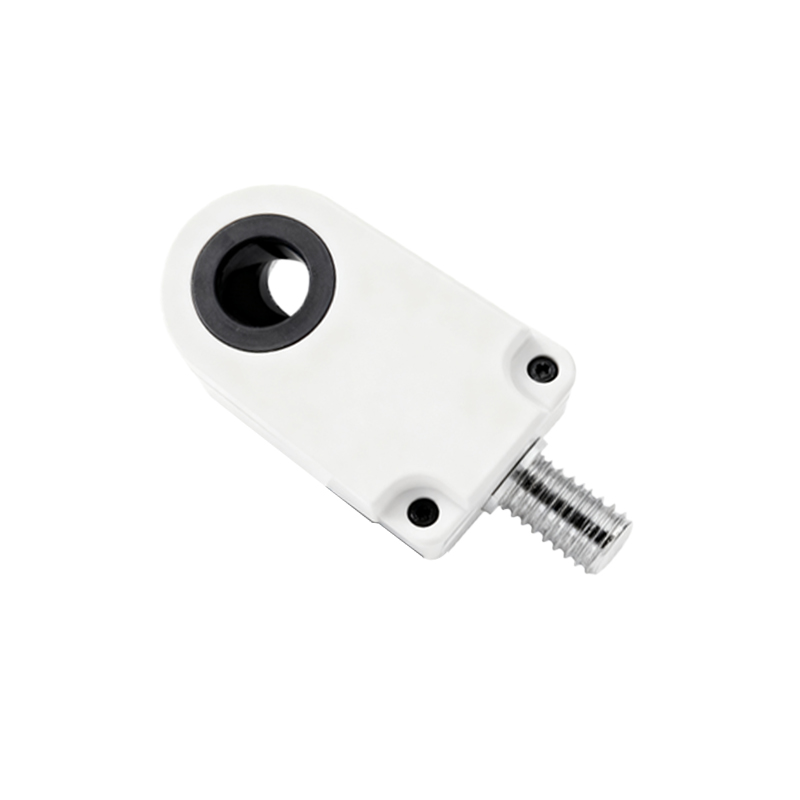
Key specifications define the performance and suitability of an inductive sensor for a given application. The nominal sensing distance (Sn) is a theoretical value under standardized conditions (usually a mild steel target of defined size). The effective operating distance (Sr) accounts for manufacturing tolerances and typically ranges from 90% to 110% of Sn. Designers must also consider the hysteresis, which is the difference between the switch-on and switch-off points, preventing output chatter when a target is at the exact sensing limit. Other critical parameters include the switching frequency (how many on/off cycles per second), the type of output (NPN sinking, PNP sourcing, NO/NC), and environmental ratings like IP67 or IP69K for protection against dust and water ingress.
The applications for inductive proximity sensors are vast and varied. Common uses include:
Position Verification: Confirming the presence or absence of a metal part at a specific station on an assembly line.
End-of-Travel Detection: Acting as a limit switch for cylinders, slides, or other moving machine elements.
Counting and Sorting: Detecting metal parts on a conveyor for inventory or routing purposes.
Speed Monitoring: Measuring the rotational speed of a gear or a shaft by detecting its teeth or keyways.
Thread Detection: Verifying the presence of metal nuts or bolts.
When selecting an inductive proximity sensor, engineers must answer several key questions:
1. Target Material: Is it ferrous steel, stainless steel, or a non-ferrous metal? This determines the required sensor size and type.
2. Required Sensing Distance: The needed clearance between the sensor and the target, considering installation and potential mechanical tolerances.
3. Form Factor: Cylindrical (M8, M12, M18, M30) or rectangular/housing style? This depends on the mounting constraints.
4. Output Configuration: Does the PLC or controller require a PNP (sourcing) or NPN (sinking) signal? Is a normally-open or normally-closed logic needed?
5. Environmental Conditions: Will the sensor be exposed to coolants, oils, extreme temperatures, or strong electromagnetic interference? This dictates the housing material (often nickel-plated brass or stainless steel) and shielding type. Shielded (flush-mountable) sensors have a reduced range but can be installed flush in metal, while unshielded sensors offer a longer range but require non-metallic surroundings.
Modern advancements continue to enhance inductive sensor capabilities. Miniaturization has led to sensors as small as M3 and M4, enabling use in compact machinery. Analog output versions provide a continuous signal proportional to the distance to the target, useful for precision positioning. Furthermore, sensors with IO-Link digital communication are becoming standard, offering not just a simple switch signal but also diagnostic data like operating temperature, signal strength, and parameter configurability for predictive maintenance.
In conclusion, the inductive proximity sensor is a workhorse of industrial sensing. Its simple yet effective principle, coupled with rugged construction and versatile designs, makes it an indispensable tool for ensuring precision, safety, and efficiency in automated systems. A thorough understanding of its operating principles, specifications, and selection criteria is essential for any engineer designing or maintaining modern industrial equipment.