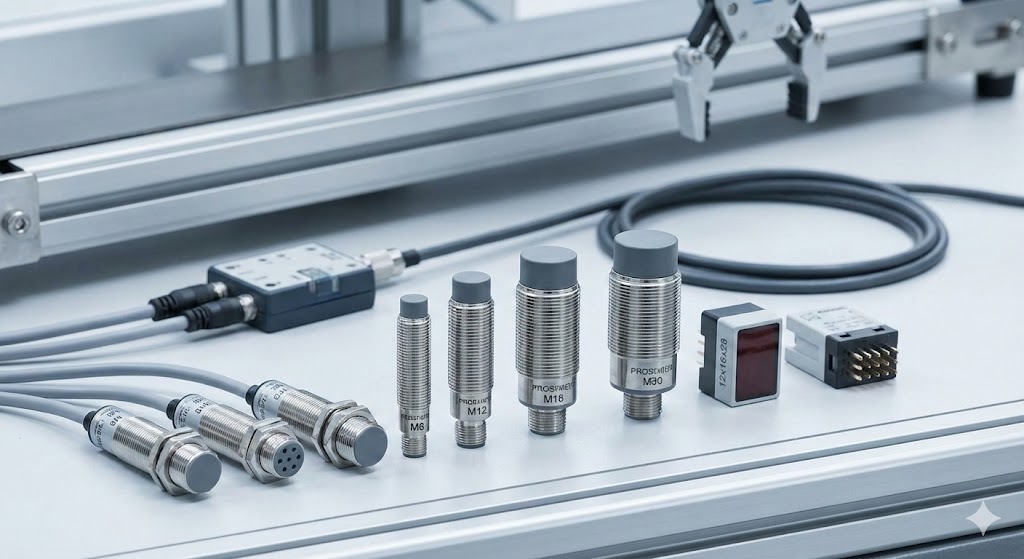
In large-scale industrial automation integration, complex wiring is often a primary cause of increased failure rates and extended commissioning cycles. Addressing this pain point, the new generation of DC Two-Wire Proximity Sensors (e.g., KJN30 series) is becoming the top choice for engineers upgrading legacy equipment, thanks to its unique "minimalist connection" advantage.
Less Wiring, Less Worry: Advantages of Two-Wire TechnologyCompared to traditional three-wire or four-wire sensors, DC two-wire models like the KJN30-25HC do not require a separate power line; they operate by being connected directly in series with the load circuit.
Cost Reduction: Reduces cable usage by one-third. For long-distance conveyor belts or large assembly lines, the cumulative savings in cabling materials and labor are significant.
High Compatibility: Can directly replace mechanical limit switches without altering the PLC's I/O module input logic, making equipment upgrades seamless and smooth.
Robust and Interference-ResistantBeyond wiring benefits, this series maintains the M30 standard industrial-grade rugged design. Featuring a nickel-plated brass housing and a high-strength PBT sensing face, it offers excellent water and dust resistance. The internal circuitry has been optimized to enhance immunity against industrial noise from devices like frequency inverters, ensuring stable signal output without "false alarms" even in electrically complex factory workshops.