In industrial automation and electronic design, the terms "proximity switch" and "laser sensor" are often encountered. A common question arises: Is a proximity switch a laser sensor? The straightforward answer is no; they are distinct technologies serving overlapping but different purposes. Understanding their fundamental principles, applications, and characteristics clarifies this distinction and aids in selecting the right component for a specific task.
A proximity switch, also known as a proximity sensor, is a broad category of devices that detect the presence or absence of an object within a specified range without physical contact. They operate based on various physical principles. The most common types include:
Inductive Proximity Switches: Detect metallic objects (primarily ferrous metals like iron and steel) by generating an electromagnetic field. When a metal object enters this field, it induces eddy currents, causing a change in the sensor's oscillation amplitude, which triggers the switch.
Capacitive Proximity Switches: Can detect both metallic and non-metallic objects (like plastic, wood, glass, or liquids) by measuring changes in capacitance. The sensor forms one plate of a capacitor, and the target object acts as the other plate. As the object approaches, the capacitance increases, triggering the output.
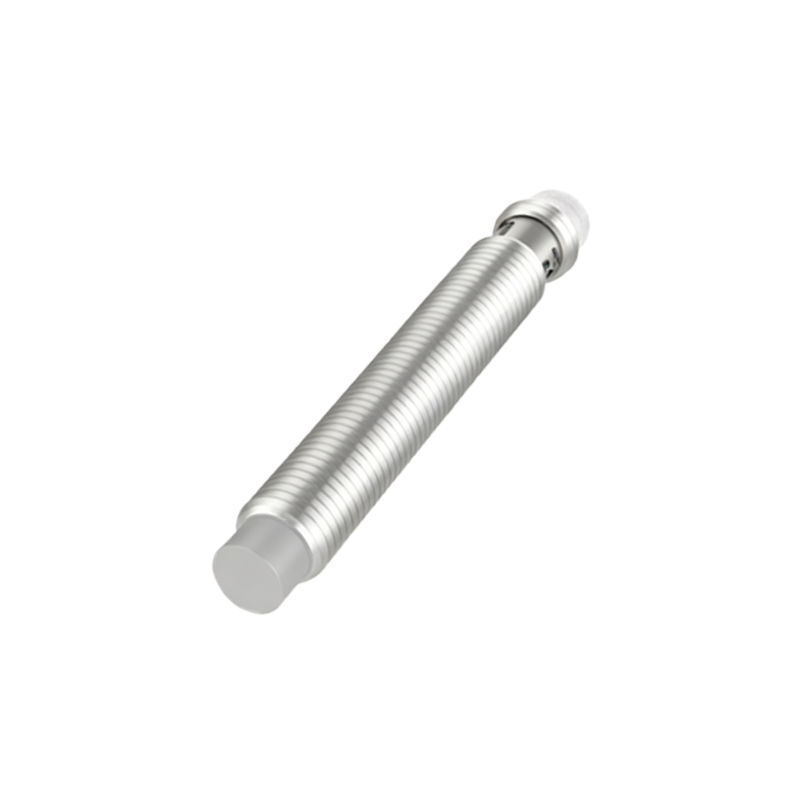
Ultrasonic Proximity Switches: Use sound waves beyond human hearing. They emit ultrasonic pulses and measure the time it takes for the echo to return from an object, calculating distance. They work well on a variety of surfaces, regardless of color or material.
Photoelectric Proximity Switches (including some laser types): Use light beams (often infrared LED or laser diode) to detect objects. They can be configured in through-beam, retro-reflective, or diffuse-reflective modes. Here lies a potential point of confusion: some photoelectric sensors use laser light sources.
This brings us to laser sensors. A laser sensor is not a separate category but rather a subtype defined by its light source. It uses a highly focused, coherent beam of laser light. Laser sensors are primarily used for precise tasks such as:
Extremely Accurate Distance Measurement: Using time-of-flight or triangulation principles.
Precision Positioning: Aligning components in manufacturing.
Detecting Very Small Objects: Due to the small, intense spot size of the laser beam.
High-Speed Counting: Where a precise, narrow beam is necessary.
Therefore, while a standard photoelectric proximity switch might use a diffuse LED light source, a laser photoelectric proximity switch uses a laser diode. So, one could say that some proximity switches (specifically, certain photoelectric models) can be laser-based, but not all proximity switches are laser sensors, and not all laser applications are simple proximity switches.
The core difference lies in their primary function and sophistication. A typical proximity switch is primarily a binary device: object present or not present (on/off). Its design prioritizes robustness, cost-effectiveness, and reliable detection in harsh industrial environments (like factories with dust, vibration, or moisture). A dedicated laser sensor, on the other hand, is often an analog or digital measuring device. Its primary output is not just a switch signal but precise dimensional data—distance, height, or thickness—with resolutions down to micrometers. It is a tool for metrology and precision control.
Consider a conveyor belt in a packaging plant. An inductive proximity switch would be perfect for counting metal cans as they pass by. A capacitive switch could detect if a plastic bottle is present, regardless of whether it contains liquid. A standard diffuse photoelectric sensor could detect the presence of any cardboard box. However, if you needed to measure the exact height of each box to sort them into different categories, a laser distance sensor would be the appropriate choice.
In summary, categorizing these devices requires looking at their technology stack:
1. Function: Proximity Switch (On/Off Detection) vs. Laser Sensor (Often Precision Measurement).
2. Technology: Electromagnetic (Inductive), Field-based (Capacitive), Sound (Ultrasonic), or Light (Photoelectric).
3. Light Source (if photoelectric): Standard LED vs. Laser Diode.
When specifying a component, engineers must define the need: Is the requirement simply to know if an object is there, or is it to know exactly where it is or how big it is? For robust, cost-effective presence detection in varied conditions, traditional proximity switches (inductive, capacitive, ultrasonic) are unparalleled. For high-precision, long-range, or detection of minute objects, laser-based photoelectric sensors or dedicated laser measurement sensors become essential. Recognizing that "laser" describes a light source within a broader sensor category is key to navigating the selection process