In industrial environments where flammable gases, vapors, mists, or combustible dusts are present, standard electronic equipment poses a significant ignition risk. This is where explosion-proof (Ex) equipment, specifically engineered for hazardous locations, becomes not just a preference but a mandatory safety requirement. Among the most critical components in such automated systems are explosion-proof proximity sensors. These devices provide non-contact object detection in areas classified as hazardous, ensuring both operational reliability and personnel safety. This guide delves into the principles, types, standards, and key selection criteria for these vital industrial components.
Understanding the Hazard and the Protection Concept
Hazardous areas are classified based on the type and probability of an explosive atmosphere being present. Zones (in IEC/ATEX systems) or Divisions (in NEC systems) define these probabilities. An explosion requires three elements: fuel (flammable substance), oxygen, and an ignition source. Electrical equipment like sensors can provide this ignition source through sparks or high surface temperatures. Explosion-proof protection, as defined by protection methods like "Flameproof Enclosure" (Ex d), does not prevent an explosion from occurring inside the enclosure. Instead, it is designed to withstand an internal explosion of a specific gas mixture and prevent the transmission of the explosion to the surrounding atmosphere. The robust enclosure cools any escaping flames and gases below the ignition temperature of the external environment.
Core Technology and Sensing Principles
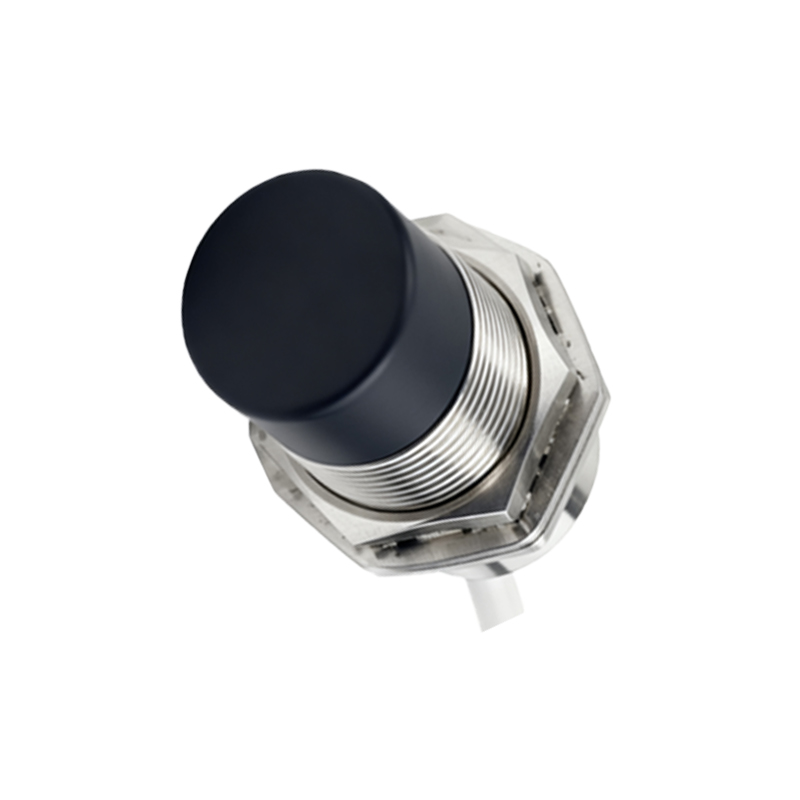
An explosion-proof proximity sensor integrates a standard sensing element within a certified, ruggedized enclosure. The primary sensing technologies include:
Inductive Sensors: Detect metallic objects without physical contact. They generate an electromagnetic field; when a metal target enters this field, it induces eddy currents, causing a change in the field that is detected by the sensor's circuitry. They are ideal for detecting metal parts, position verification, and counting in machinery.
Capacitive Sensors: Can detect both metallic and non-metallic materials (liquids, plastics, wood, etc.) by measuring changes in capacitance. They are suitable for level detection of liquids or granular materials, and detecting non-metal objects through container walls.
Ultrasonic Sensors: Use sound waves to detect objects and measure distance. They are effective in dusty environments and for detecting a wide variety of materials, often used in level monitoring and distance control.
The internal electronics are potted or encapsulated to withstand shock, vibration, and to prevent any internal arcing from contacting the enclosure walls. The enclosure itself is typically made of stainless steel (e.g., 316L) or robust brass, with machined flame paths at the joints (flanges or threaded entries) that are precisely engineered to quench flames.
Global Standards and Certifications
Selecting the correct sensor requires understanding the relevant certification for the geographic region and the specific hazard.
ATEX (EU): Directive 2014/34/EU. Equipment is marked with "Ex" followed by the protection type (e.g., Ex d IIC T6). The marking indicates conformity for use in specified zones (Zone 0, 1, or 2 for gases; Zone 20, 21, or 22 for dust).
IECEx (International): An international certification scheme facilitating global acceptance. Markings are similar to ATEX.
NEC / UL (North America): Equipment is listed for Class I (Gases/Vapors), Class II (Dust), or Class III (Fibers), and Division 1 or 2. Common protection techniques include Explosion-Proof (XP) and Intrinsic Safety (IS).
A sensor certified for Zone 1/Division 1 offers a higher safety level than one for Zone 2/Division 2. The Temperature Class (T1-T6) or Maximum Surface Temperature is critical, as it must be below the auto-ignition temperature of the specific gas or dust present.
Critical Selection Factors for Engineers
Beyond the essential certification, engineers must consider:
1. Sensing Range: The rated operating distance. Explosion-proof housings can slightly reduce the effective sensing range compared to standard models.
2. Enclosure Material and Rating: Stainless steel offers superior corrosion resistance for harsh, wet, or chemically aggressive environments (IP67, IP68, IP69K ratings are common).
3. Electrical Connections: Conduit entries (e.g., M12, M18, ½” NPT) or integral cables with certified cable glands. The choice affects installation ease and ingress protection.
4. Output Type: PNP/NPN transistor outputs, analog outputs (4-20mA, 0-10V), or IO-Link for smart sensor capabilities. The output must be compatible with the control system (e.g., PLC