Laser displacement sensors are non-contact measurement devices that have become indispensable tools across a wide spectrum of industries, from precision manufacturing and robotics to automotive and aerospace. Their core function is to accurately determine the distance between the sensor head and a target object by utilizing the principles of triangulation or time-of-flight measurement. Unlike traditional contact probes, they eliminate the risk of damaging delicate surfaces and enable high-speed, real-time measurements, making them ideal for dynamic processes and quality control.
The most common operating principle for high-accuracy, short to medium-range applications is laser triangulation. In this method, the sensor projects a focused laser spot onto the target surface. The reflected light is then captured by a receiving lens at a specific angle and focused onto a position-sensitive detector, typically a CCD or CMOS array. As the target distance changes, the position of the reflected spot on the detector shifts proportionally. The sensor's internal processor calculates the exact displacement based on this positional shift and known geometric relationships. This technology excels in applications requiring micron-level resolution, such as measuring component thickness, warpage, or vibration.
For longer-range measurements, often exceeding several meters, time-of-flight (ToF) principles are frequently employed. These sensors measure the time it takes for a laser pulse to travel to the target and back. Since the speed of light is constant, the distance can be calculated directly from the round-trip time. While typically offering slightly lower resolution than triangulation sensors at close range, ToF sensors are robust for large-scale applications like vehicle detection, bulk material level monitoring, or crane positioning.
The selection of an appropriate laser displacement sensor is critical and depends on several key parameters. Resolution, defined as the smallest detectable change in distance, is paramount for precision tasks. Measurement range specifies the minimum and maximum distances over which the sensor can operate accurately. Spot size, the diameter of the laser beam on the target, influences the ability to measure small features or uneven surfaces. Linearity error indicates the maximum deviation from a perfect straight-line response across the measurement range. Furthermore, environmental factors such as ambient light, target surface characteristics (color, reflectivity, texture), and the presence of dust or steam must be carefully considered. A highly reflective or transparent surface may require a sensor with automatic gain control or a specialized model designed for challenging surfaces.
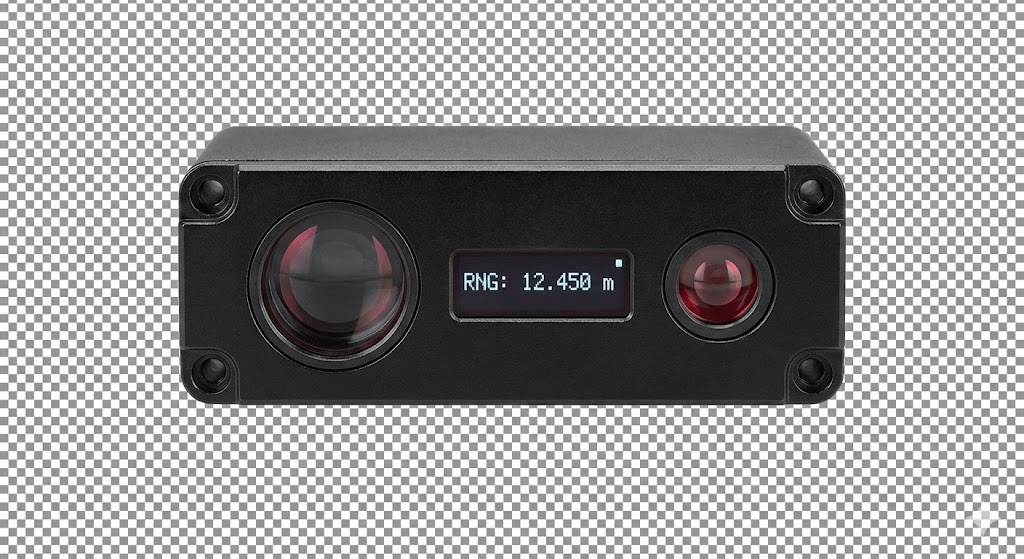
In practical applications, these sensors are the workhorses of modern automation. On assembly lines, they verify the presence, height, or orientation of components. In robotics, they provide crucial feedback for precise positioning and guidance. They monitor tire tread depth, brake disc thickness, and panel gaps in automotive manufacturing. In electronics, they ensure the coplanarity of chip leads and the flatness of circuit boards. Their versatility extends to monitoring structural deformation, controlling roll diameters in paper and steel mills, and guiding autonomous vehicles.

Integration into control systems is typically straightforward, with analog outputs (e.g., 4-20 mA, 0-10 V), digital interfaces (RS-232, RS-485), and industrial network protocols (EtherNet/IP, PROFINET, EtherCAT) being standard. This allows seamless communication with PLCs, PCs, and data acquisition systems for real-time process adjustment and statistical analysis.
In conclusion, laser displacement sensors offer a powerful combination of speed, accuracy, and non-contact operation. By understanding their fundamental principles—triangulation for high precision at shorter ranges and time-of-flight for extended distances—engineers can effectively select and deploy the right sensor for their specific application. As technology advances, we see trends towards miniaturization, higher speeds, enhanced resistance to environmental interference, and smarter sensors with integrated analysis capabilities, further solidifying their role as a cornerstone of industrial measurement and automation.