In the landscape of industrial automation and process control, the demand for reliable, non-contact sensing solutions is ever-present. Among the diverse technologies available, the self-mixing proximity sensor has emerged as a sophisticated and highly effective tool for precise distance and displacement measurement. This article delves into the operational principles, key advantages, and typical applications of this unique sensor technology.
At its core, a self-mixing proximity sensor is a type of laser-based sensor that utilizes the optical feedback phenomenon within the laser cavity itself. Unlike traditional laser triangulation sensors or time-of-flight sensors, the self-mixing sensor does not require an external photodetector separate from the laser source. The fundamental component is a semiconductor laser diode. When the coherent light emitted from this laser strikes a target object, a small fraction of the scattered or reflected light re-enters the laser cavity. This reinjected light interacts with the light already oscillating inside the cavity, causing measurable perturbations in the laser's operating characteristics—specifically, its output power and terminal voltage.
This interaction is known as the self-mixing or optical feedback effect. The reinjected light wave, having traveled to the target and back, has a phase that depends on the distance to the target. When it mixes with the original wave inside the cavity, it creates an interference pattern. This pattern modulates the laser's output power. As the target moves, the optical path length changes, causing the interference to alternate between constructive and destructive phases. This results in a periodic oscillation or "fringe" in the detected laser power for every half-wavelength of target displacement. By counting these fringes and processing the signal, the sensor's electronics can accurately determine displacement, velocity, and, in static mode, the absolute distance to the target.
The architecture of these sensors offers several compelling advantages for industrial environments. Firstly, their inherent simplicity leads to a compact, robust, and cost-effective design. The integration of the laser and the detection mechanism into a single element reduces alignment issues and component count, enhancing long-term reliability. Secondly, they provide exceptionally high resolution, capable of detecting sub-micrometer displacements, which is crucial for precision manufacturing and quality inspection tasks. Thirdly, self-mixing sensors exhibit excellent performance on a wide variety of surface materials and finishes, including rough, shiny, or transparent surfaces that often challenge other optical methods. The coherent nature of the laser light and the specific feedback mechanism make the signal less susceptible to ambient light interference. Finally, their response is highly linear over a defined measurement range, simplifying calibration and data interpretation.
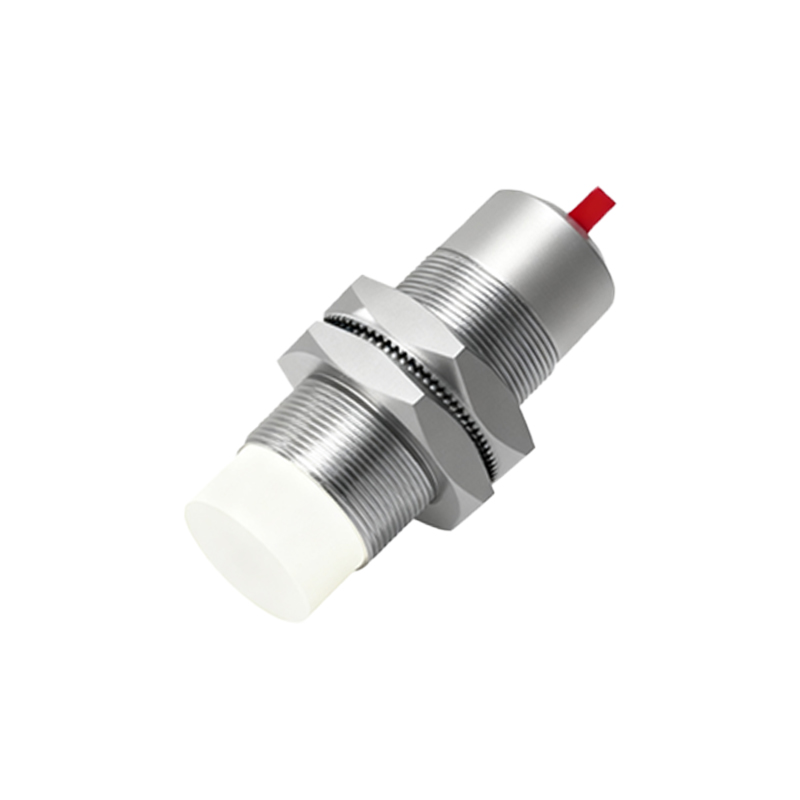
The operational range of self-mixing proximity sensors typically spans from a few millimeters up to several meters, depending on the laser power and optical design. They are particularly well-suited for applications requiring non-contact, high-speed, and high-precision measurements. In industrial automation, they are deployed for vibration analysis of machinery, such as motors, turbines, and pumps, enabling predictive maintenance by detecting abnormal oscillations. In semiconductor manufacturing and microelectronics, they perform critical tasks like wafer alignment, stage positioning, and thickness monitoring with nanometer-scale accuracy. The automotive industry utilizes them for testing component vibrations, brake disc runout measurement, and precise assembly verification.
Furthermore, these sensors find roles in biomedical instrumentation for monitoring physiological movements, in aerospace for structural health monitoring, and in scientific research for studying material properties. Their ability to measure velocity directly from the Doppler shift in the feedback signal adds another dimension of utility for process control.
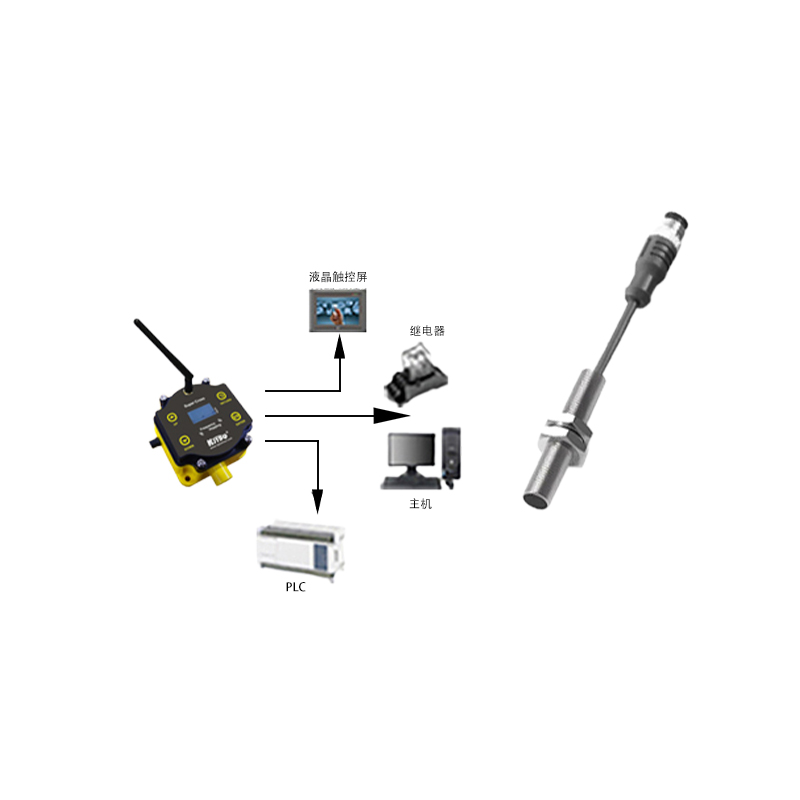
When integrating a self-mixing sensor, several factors must be considered. The maximum measurable distance and velocity are defined by the laser's coherence length and the electronics' bandwidth, respectively. Target surface properties can influence the signal strength; while the sensor works on most surfaces, optimal performance is achieved with a diffusely reflecting target within the sensor's specified spot size. Environmental conditions like temperature fluctuations can affect the laser's wavelength, though modern sensors often incorporate compensation algorithms.
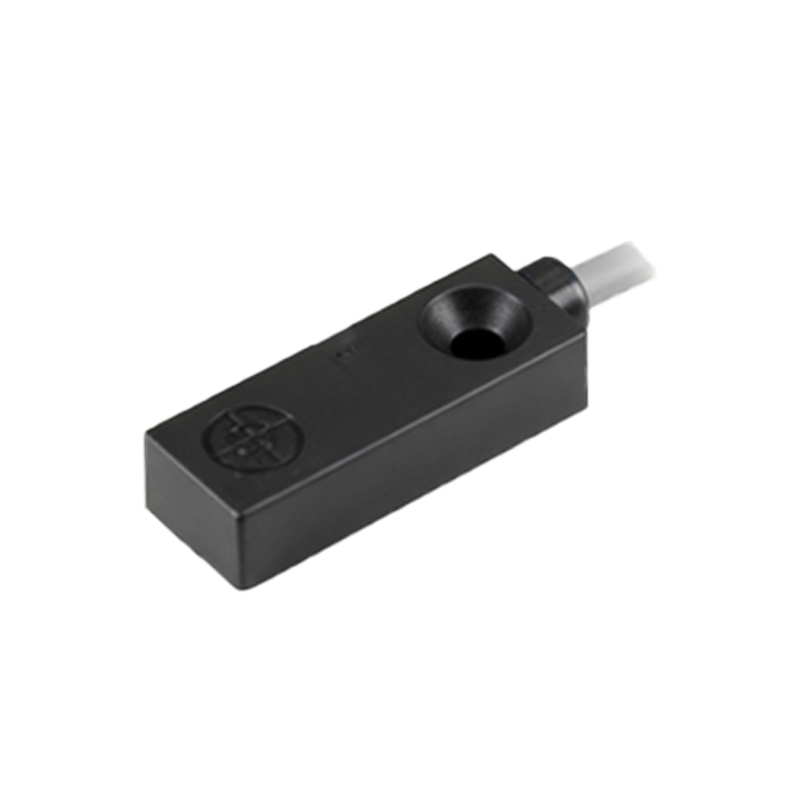
In conclusion, self-mixing proximity sensors represent a powerful fusion of laser physics and practical engineering. Their unique operating principle, leveraging the laser diode as both emitter and detector, yields a measurement system that is simultaneously simple, precise, robust, and versatile. As industrial processes continue to demand higher levels of automation and precision, the adoption of self-mixing sensor technology is poised to expand, offering elegant solutions to complex measurement challenges across a broad spectrum of engineering fields. Understanding their capabilities and optimal application scenarios allows engineers and system integrators to harness their full potential for enhancing productivity, quality, and operational insight.