In industrial automation and control systems, proximity sensors are indispensable components for non-contact detection of objects. A fundamental yet often nuanced characteristic of these sensors is their sensing area or sensing field. This article delves into the technical aspects of the sensing area, exploring its definition, determining factors, and practical implications for system design and reliability.
The sensing area, sometimes referred to as the sensing range or field, is the three-dimensional space within which a proximity sensor can reliably detect a specified standard target. It is not merely a point or a single nominal distance (Sn). Instead, it defines the operational envelope. For a standard inductive or capacitive sensor, this is typically conceptualized as a hemisphere or a cylindrical volume in front of the sensing face. The effective sensing distance can vary within this area depending on the target's size, material, and approach direction.
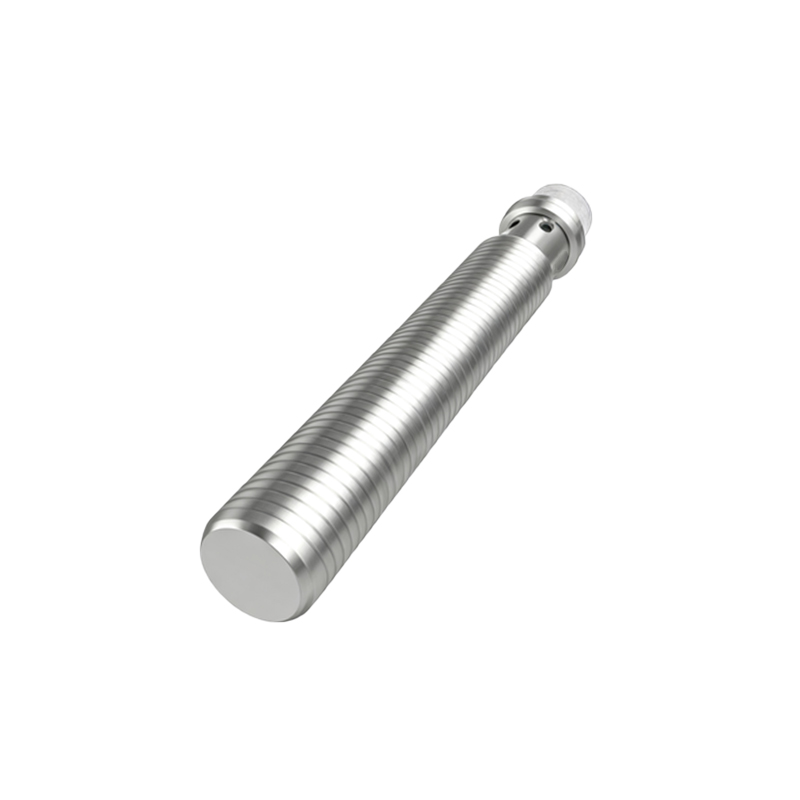
Several key factors critically influence the shape and size of a sensor's sensing area. The most prominent is the sensor's technology. Inductive sensors, designed for metal detection, have a sensing area heavily dependent on the target's material properties. Ferrous metals like steel typically yield the largest sensing distance, while non-ferrous metals like aluminum or copper may reduce it significantly, often by 30-60%. Capacitive sensors, used for detecting a wider range of materials including liquids and plastics, have a sensing area more influenced by the target's dielectric constant. Ultrasonic and photoelectric sensors present more complex, often conical or beam-shaped sensing areas.
The physical size and design of the sensor's active face directly correlate with the sensing area. Generally, a larger sensor face allows for a larger nominal sensing distance and a broader sensing field. However, this is not a linear relationship and is constrained by the sensor's internal coil or oscillator design. The mounting conditions also play a crucial role. Flush-mountable sensors (shielded) have a reduced sensing area compared to non-flush (unshielded) types, as their magnetic or electrostatic field is concentrated directly in front, minimizing lateral detection. This makes them ideal for tight installations but with a shorter range.
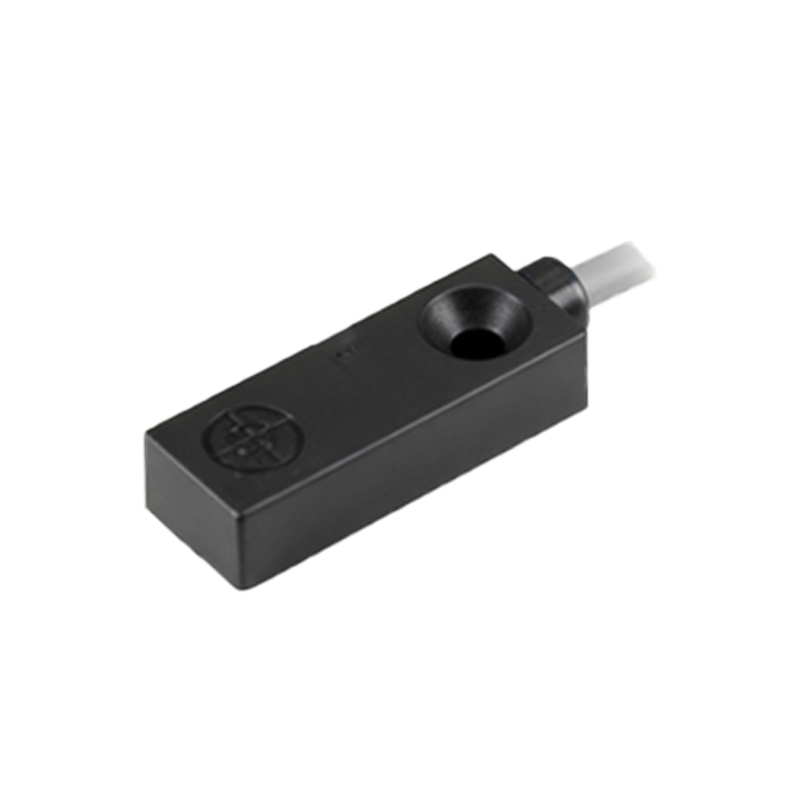
Target characteristics are equally decisive. For inductive sensors, as mentioned, material is paramount. The target's size also matters; a target smaller than the sensor's active face will reduce the effective sensing distance. The standard target, used for specifying the nominal range (Sn), is typically a square of mild steel (Fe360) with a side length equal to the sensor's diameter or three times the Sn for rectangular sensors. In real-world applications, if the target is smaller, thinner, or made of a different material, the sensing area effectively shrinks. The approach direction is another variable. Axial approach (head-on) usually provides the maximum range, while a lateral or radial approach might require the target to be closer to the sensor face to trigger detection.
Understanding the sensing area is not an academic exercise; it has direct consequences for application reliability and safety. A primary concern is avoiding false triggers. If the sensing area is too large or poorly defined, the sensor might detect non-target objects like machine frames, fasteners, or passing personnel, leading to erroneous signals and potential machine malfunctions. Conversely, an insufficiently understood sensing area can lead to missed detections if the target operates on the fringes of an irregular field. This is critical in positioning applications or safety interlocks.
Environmental factors can also distort the sensing area. Extreme temperatures can affect oscillator circuits, potentially altering the field. The presence of strong electromagnetic fields near inductive sensors, or conductive dust/condensation for capacitive sensors, can extend or interfere with the sensing area. For photoelectric sensors, ambient light or highly reflective backgrounds can create phantom sensing zones.
Therefore, meticulous installation and commissioning are required. Engineers must consult the sensor's datasheet, which often includes diagrams showing the sensing area contours for different conditions. During installation, it is a best practice to use the actual target material and simulate the worst-case operational path to verify reliable detection throughout the entire required zone. Adjusting the sensor's sensitivity potentiometer, if available, can fine-tune the effective boundary of the sensing area to suit the specific application, providing a margin of safety against environmental drift.
In high-precision applications like robotic tool changers or assembly verification, the repeatability of detection within the sensing area is more critical than the absolute range. Here, a well-defined, stable sensing area ensures that the trigger point is consistent every time, which is vital for process quality. For safety-rated devices (e.g., Type 4 ESPE), the characteristics of the sensing area (like resolution and response time) are rigorously defined and tested to ensure reliable personnel detection for hazard prevention.
In conclusion, the sensing area of a proximity sensor is a dynamic three-dimensional characteristic, not a fixed distance. Its effective size and shape are a function of sensor technology, design, target properties, and installation environment