In the realm of precision measurement and condition monitoring, laser vibration sensors have emerged as a cornerstone technology. Unlike traditional contact-based sensors such as accelerometers, which require physical attachment to the target, laser vibration sensors offer a non-contact, non-invasive method for measuring vibration velocity and displacement. This capability is invaluable across industries where contact measurement is impractical, such as on hot, rotating, fragile, or hazardous surfaces. The fundamental principle behind these sensors is laser Doppler vibrometry. A coherent laser beam is directed at the target surface. The vibration of the surface induces a Doppler shift in the frequency of the reflected light. This shift is directly proportional to the velocity of the vibration. The sensor's interferometric system detects this minute frequency change, processes the signal, and outputs precise vibration data—typically as velocity (mm/s or in/s) or displacement (µm or mils).
The advantages of this technology are manifold. First, the non-contact nature eliminates mass-loading effects, where the sensor's own weight could alter the vibration characteristics of lightweight or delicate structures. It also allows for measurements on surfaces that are inaccessible or unsafe for personnel. Second, laser vibrometers provide exceptional spatial resolution, enabling engineers to map vibration patterns across a component with high detail. This is crucial for modal analysis and identifying specific resonance nodes. Third, they offer a wide dynamic range and frequency bandwidth, capable of detecting vibrations from sub-Hz levels (like slow structural deflections) up to several MHz (relevant in ultrasonic testing and MEMS device characterization).
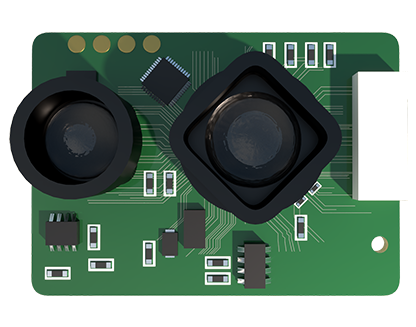
Key application areas are diverse. In industrial manufacturing, laser vibration sensors are used for predictive maintenance on critical machinery like turbines, pumps, and motors. By monitoring vibration trends, engineers can detect imbalances, misalignments, or bearing defects early, preventing catastrophic failure and unplanned downtime. In the automotive and aerospace sectors, they are indispensable for NVH (Noise, Vibration, and Harshness) testing, helping to refine vehicle and aircraft designs for comfort and safety. In electronics, they assess the reliability of components like circuit boards and microchips. Furthermore, in civil engineering, they monitor the health of large structures such as bridges, wind turbine blades, and historical buildings, detecting subtle changes that may indicate structural weakness.
Selecting the right laser vibration sensor requires careful consideration of several parameters. The required measurement range in terms of displacement and velocity must align with the application. Frequency response is critical; for example, analyzing gear meshing requires a high-frequency capability, while monitoring building sway needs excellent low-frequency response. The stand-off distance (the working distance between sensor and target) and spot size are also vital. Longer distances may require a more powerful laser, and a smaller spot size allows for more precise localized measurements. The reflectivity and roughness of the target surface can affect signal quality; some sensors come with built-in reflectors or trackers for poor-reflectivity surfaces. Finally, integration with data acquisition systems and analysis software is a practical necessity for most industrial applications.
Despite their strengths, users must be aware of limitations. Measurements can be sensitive to environmental factors like air turbulence, temperature gradients, and ambient light. The target surface must have a clear line-of-sight to the sensor. Highly irregular or transparent surfaces may return a weak or noisy signal. However, ongoing advancements, such as the integration of video tracking for moving targets and the development of compact, fiber-optic-based sensors, continue to expand their usability.
In conclusion, laser vibration sensors represent a powerful and flexible tool for the modern engineer. By providing accurate, non-contact vibration data, they enable deeper insights into the dynamic behavior of systems and structures. From ensuring the reliability of high-speed manufacturing lines to safeguarding public infrastructure, their role in proactive maintenance and advanced research is set to grow even more significant as technology evolves.