In the demanding world of industrial automation and quality control, precise and reliable measurement is non-negotiable. Environmental factors like moisture, dust, and temperature fluctuations pose significant challenges to sensitive electronic equipment. This is where the waterproof laser displacement sensor emerges as a critical technological solution. Unlike standard laser sensors, these robust devices are engineered to withstand harsh conditions, delivering consistent, high-accuracy data where it matters most.
The core principle of a laser displacement sensor is based on triangulation or time-of-flight measurement. A laser diode projects a focused beam onto a target surface. The reflected light is captured by a receiving element, such as a CCD or PSD. By analyzing the position or phase shift of the reflected spot, the sensor's internal processor calculates the exact distance to the target with micron-level precision. Waterproof variants encapsulate this sophisticated optics and electronics within a sealed housing, typically rated to IP67, IP68, or IP69K standards. These ingress protection (IP) ratings certify the sensor's resilience against powerful water jets, temporary immersion, and the ingress of dust, ensuring operational integrity in washdown environments common in food & beverage, pharmaceutical, and outdoor applications.
Key advantages of implementing waterproof laser displacement sensors are substantial. First and foremost is reliability. In automotive manufacturing, for instance, these sensors perform flawlessly in body-in-white inspection processes, even when exposed to coolant mists or cleaning cycles. Their sealed construction prevents internal condensation and corrosion, leading to a dramatically extended service life and reduced maintenance costs. Secondly, they maintain high performance metrics—including resolution, linearity, and sampling speed—regardless of the wet or dirty environment. This allows for continuous monitoring of thickness, warpage, vibration, and presence detection on production lines without interruption.
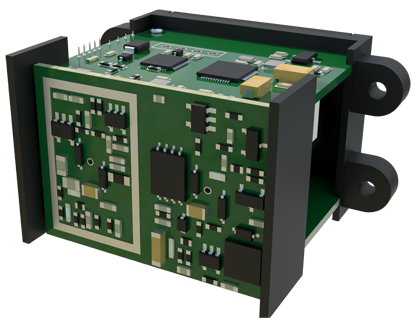
Selecting the appropriate sensor requires careful consideration of several parameters. The required measurement range and stand-off distance must be matched to the application. The choice between a red laser or a blue laser is also crucial; blue lasers offer superior performance on organic surfaces or transparent materials like glass or plastic films, as they are less prone to penetration and scatter. The output interface (analog, digital, or fieldbus protocols like IO-Link) must integrate seamlessly with the existing control system. Furthermore, the specific IP rating should be chosen based on the severity of exposure, with IP69K being essential for high-pressure, high-temperature washdown stations.
Real-world applications are diverse and impactful. In steel mills and foundries, waterproof sensors measure the thickness of red-hot slabs, enduring extreme heat and steam. In agricultural machinery, they guide autonomous vehicles and monitor crop levels in all weather conditions. Within semiconductor fabrication cleanrooms, they ensure wafer positioning accuracy despite frequent decontamination procedures. The marine and offshore industries utilize them for hull deformation monitoring and docking assistance, facing constant saltwater spray.
Installation and maintenance, while simplified by the robust design, still demand attention. Ensuring a clean, stable mounting point free from excessive vibration is fundamental. Even with a waterproof rating, it is advisable to position the sensor to avoid direct, sustained high-pressure spray onto the laser window. Regular, gentle cleaning of the protective window with appropriate solvents will prevent buildup of residues that could attenuate the laser signal. Most modern sensors feature built-in diagnostics and stability indicators, providing alerts for potential issues like window contamination or marginal signal strength.
Looking ahead, advancements in laser technology and miniaturization continue to push the boundaries. The integration of smarter features, such as embedded environmental compensation algorithms and enhanced connectivity for Industry 4.0 data pipelines, is making waterproof laser displacement sensors more intelligent and indispensable. They are evolving from simple measurement tools into critical nodes in the industrial IoT ecosystem, providing not just data, but actionable insights for predictive maintenance and process optimization.
In conclusion, the waterproof laser displacement sensor is far more than a niche product; it is an enabling technology for automation in challenging environments. By guaranteeing precision and durability where standard sensors would fail, it unlocks new possibilities for quality assurance, safety, and efficiency across a vast spectrum of industries. For engineers and system integrators, investing in a high-quality waterproof sensor is an investment in long-term system resilience and data integrity.