In modern industrial automation systems, pneumatic cylinder actuators remain a cornerstone for linear motion applications due to their simplicity, reliability, and cost-effectiveness. However, precise control and position feedback of these cylinders are critical for optimizing cycle times, ensuring safety, and improving overall system accuracy. This is where proximity sensors, particularly inductive and capacitive types, play a transformative role in interfacing with and controlling pneumatic push-rod cylinders.
The fundamental operation involves integrating a non-contact proximity sensor at strategic points along the cylinder's stroke path—typically at the fully retracted and fully extended positions, and sometimes at intermediate points for mid-stroke positioning. When the cylinder's piston rod or a metallic target attached to it moves within the sensor's detection range, the sensor generates an electrical signal. This signal is transmitted to the system's programmable logic controller (PLC) or a dedicated pneumatic valve manifold. Upon receiving the signal, the controller can execute programmed logic: it may command the directional control valve to halt, reverse, or change the speed of the cylinder's movement. For instance, a sensor detecting the rod at the extended position can signal the valve to exhaust air from the forward port, initiating retraction. This closed-loop feedback enables precise end-of-stroke control, eliminating the reliance on mechanical limit switches or timers, which are prone to wear and timing inaccuracies.
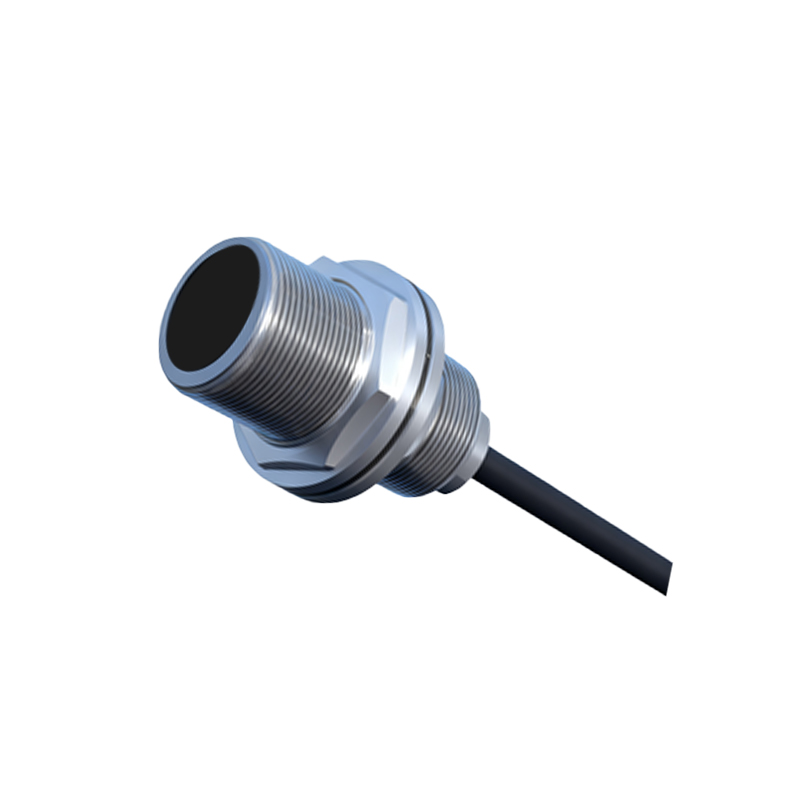
Selecting the appropriate proximity sensor is paramount. Inductive sensors are the most common choice for metallic cylinder rods or targets, detecting ferrous and non-ferrous metals without physical contact. Their sensing range, typically a few millimeters, is suitable for the precise positioning required in cylinder applications. For non-metallic materials or specific environmental conditions, capacitive proximity sensors can detect materials like plastics, liquids, or even the cylinder's piston itself if it contains dielectric material. Key selection criteria include the sensing distance, response frequency (critical for high-speed cycling), environmental robustness (IP ratings for dust and moisture), and output type (PNP/NPN, NO/NC compatible with the control system).
The integration process requires careful mechanical mounting to ensure consistent alignment between the sensor and the moving target. Electrical wiring must adhere to standards, with proper shielding to prevent electromagnetic interference from solenoids or motors. In programming the PLC, the sensor's digital input is used to trigger immediate actions or as part of more complex sequential logic, enabling functions like automatic homing, stroke length adjustment, or fault detection (e.g., a cylinder failing to reach a sensed position within a time window indicates a potential jam or pressure loss).
Advanced applications leverage multiple sensors for proportional control or adaptive positioning. By using analog-output proximity sensors or a series of digital sensors, the system can obtain continuous or multi-point position feedback, allowing for velocity control or stopping the cylinder at any programmable point within its stroke. This is invaluable in applications like soft gripping, variable clamping force, or precise assembly tasks. Furthermore, integrating these sensors with Industrial Internet of Things (IIoT) platforms allows for predictive maintenance by monitoring cycle counts and detecting deviations in actuation time, signaling the need for maintenance before failure occurs.
In summary, the marriage of proximity sensors with pneumatic cylinder actuators creates a robust, precise, and intelligent motion control solution. It enhances the traditional pneumatic system from an open-loop, time-dependent operation to a responsive, feedback-driven component of automated machinery. This synergy not only boosts productivity and repeatability but also significantly reduces downtime and maintenance costs, solidifying its status as a best practice in fields ranging from packaging and automotive manufacturing to material handling and robotics.