In the realm of precise measurement, laser rangefinder displacement sensors stand as a pinnacle of non-contact metrology. These sophisticated instruments harness the properties of coherent light to determine the distance to a target or the change in its position with exceptional accuracy. Unlike traditional contact methods that can deform soft materials or wear over time, laser sensors provide a clean, reliable, and high-speed solution for a multitude of industrial and scientific challenges.
The fundamental operating principle is based on either time-of-flight (ToF) or triangulation. Time-of-flight sensors measure the round-trip time for a laser pulse to reflect off a target and return to a detector. Given the constant speed of light, this elapsed time is directly proportional to the distance. This method is ideal for long-range measurements, from several meters to kilometers, commonly used in surveying, forestry, and large-scale industrial automation. For shorter ranges demanding micron-level precision, triangulation is the preferred technique. Here, a laser spot is projected onto the target surface. The reflected light is focused onto a position-sensitive detector, such as a CCD or CMOS array. As the target moves, the position of the reflected spot shifts on the detector. Using simple trigonometric calculations, the sensor's internal processor converts this positional shift into a precise displacement value.
The core advantages of these sensors are manifold. They offer high resolution, often down to the sub-micron level for triangulation models, and high sampling rates, sometimes exceeding 100 kHz. This makes them indispensable for dynamic measurements like vibration analysis or high-speed production line monitoring. Their non-contact nature eliminates the risk of damaging delicate surfaces such as semiconductor wafers, painted car bodies, or soft food products. Furthermore, they are largely immune to the environmental factors that plague other sensors, such as magnetic fields, and can measure on a wide variety of materials, colors, and surface textures, though highly reflective or transparent surfaces may require special treatment or sensor settings.
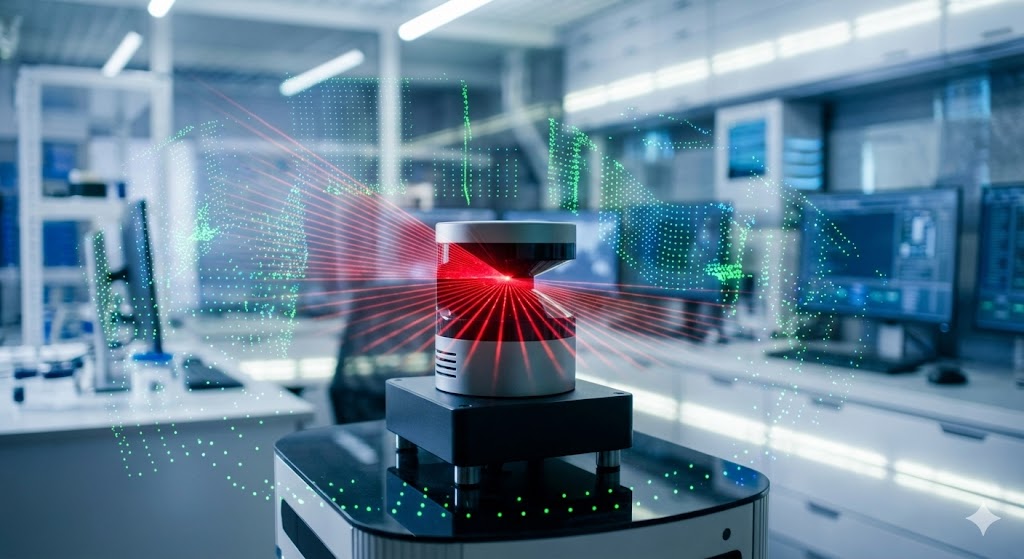
The applications of laser displacement sensors are vast and continually expanding. In the manufacturing sector, they are deployed for quality control, performing tasks like thickness gauging of rolled metal or plastic films, profile measurement of extruded components, and coplanarity inspection of electronic chip leads. In robotics, they provide critical feedback for precise positioning and guidance, enabling automated assembly and bin-picking operations. Research and development laboratories rely on them for material testing, measuring deformation under stress, and monitoring microscopic movements. Emerging fields like autonomous vehicles utilize advanced LiDAR (Light Detection and Ranging) systems, a form of laser rangefinder, to create real-time 3D maps of the surrounding environment.
Selecting the appropriate laser displacement sensor requires careful consideration of several parameters. The required measuring range, resolution, and linearity are primary concerns. The stand-off distance, which is the optimal working distance from the sensor head to the target, must suit the application layout. The target's characteristics—its size, material, surface finish, and color—will influence the choice of laser wavelength (typically red or blue) and sensor type. Environmental conditions like ambient light, temperature fluctuations, and the presence of dust or steam also play a critical role in sensor selection and may necessitate protective housings or air purge systems.
Installation and calibration are crucial for optimal performance. The sensor must be mounted stably to minimize vibration, and the laser beam must be aligned perpendicular to the target surface for most triangulation sensors to ensure accuracy. Regular calibration against known standards maintains measurement integrity over time. Modern sensors often feature intuitive software interfaces for configuration, real-time data visualization, and integration with PLCs (Programmable Logic Controllers) and data acquisition systems.
Looking ahead, the evolution of laser rangefinder displacement sensors is geared towards even greater miniaturization, higher speeds, and enhanced intelligence. Integration with AI and machine vision systems will enable more complex inspection tasks, such as identifying defects not just by dimension but by texture or shape anomaly. As the demand for precision and automation grows across all industries, from micro-electronics to mega-construction, the laser displacement sensor will remain a fundamental tool, pushing the boundaries of what can be measured and controlled without ever making physical contact.