In the ever-evolving landscape of technology, the drive towards miniaturization has unlocked new possibilities across industries. Among the most impactful innovations are miniature laser rangefinder sensors. These compact devices pack the sophisticated principles of time-of-flight or phase-shift measurement into a footprint often smaller than a matchbox, delivering high-precision distance data where space and weight are at a premium.
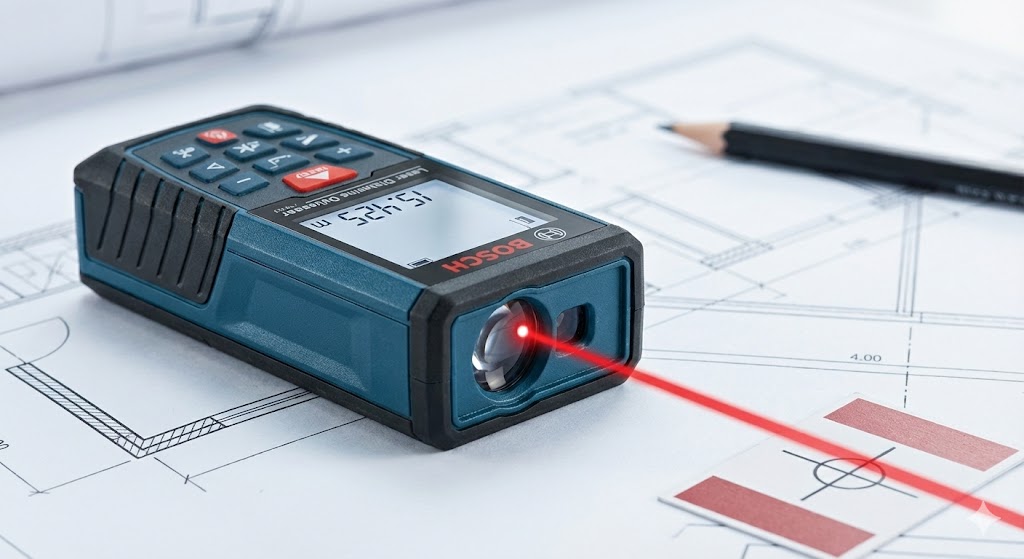
The core technology remains fundamentally similar to its larger counterparts. A laser diode emits a focused beam of light toward a target. The sensor then precisely measures the time it takes for the reflected light to return. By knowing the constant speed of light, the sensor's internal processor calculates the distance with remarkable accuracy, often down to the millimeter level. The miniaturization achievement lies in integrating the laser emitter, the high-speed receiver, and the computational circuitry into a single, low-power module.
The applications for these tiny titans of measurement are vast and growing. In consumer electronics, they are integral to the depth-sensing capabilities of modern smartphones, enabling advanced photography features like portrait mode and accelerating the development of augmented reality applications. In robotics, especially within the burgeoning field of service and domestic robots, miniature LIDAR sensors—which often use laser rangefinding principles—create detailed 3D maps of environments for navigation and obstacle avoidance. Their small size allows for seamless integration into the robot's chassis without compromising design or mobility.
Industrial automation heavily relies on these sensors for precise positioning and inspection. They can be mounted on robotic arms for bin-picking tasks, used to measure roll diameters in manufacturing, or employed for alignment in assembly lines. Their robustness and speed are critical in high-throughput environments. Furthermore, the drone industry utilizes miniature laser rangefinders for terrain following, altitude hold, and autonomous landing sequences, providing reliable data that complements GPS and visual systems.

The benefits of miniaturization extend beyond just saving space. These sensors typically consume less power, a critical factor for battery-operated devices like phones, drones, and portable instruments. Advances in manufacturing have also driven down costs, making precision laser ranging accessible for a wider range of products and projects. Modern modules often come with digital interfaces like I2C, UART, or USB, simplifying integration for engineers and developers.
However, designing and deploying miniature laser rangefinders comes with its own set of considerations. The reduced aperture size can limit the maximum effective range compared to larger, lens-based systems. Performance can also be susceptible to environmental factors such as heavy rain, fog, or highly reflective target surfaces. Designers must carefully balance range, accuracy, power consumption, and field of view to meet specific application needs.
Looking ahead, the trajectory for miniature laser rangefinder sensors points toward even greater integration, enhanced performance in challenging conditions, and lower power consumption. Innovations in vertical-cavity surface-emitting lasers (VCSELs) and single-photon avalanche diode (SPAD) arrays promise to improve efficiency and enable new capabilities in 3D sensing. As the Internet of Things continues to expand, these sensors will become ubiquitous eyes for smart devices, providing the spatial awareness necessary for truly intelligent and autonomous systems.
From unlocking our smartphones with facial recognition to guiding autonomous warehouse vehicles, miniature laser rangefinder sensors are a foundational technology of the modern age. They exemplify how sophisticated engineering, condensed into a tiny package, can solve significant challenges and enable a future where machines perceive and interact with the physical world with unprecedented precision.