Laser sensors have become indispensable tools across countless industries, from manufacturing and robotics to construction and autonomous vehicles. A frequent and critical question engineers and system integrators ask is: "How high can a laser sensor measure?" The answer, however, is not a single number. The effective measuring range, or "height," of a laser sensor is determined by a complex interplay of its core technology, target properties, and environmental conditions. Understanding these factors is key to selecting the right sensor for your application.
At its heart, a laser sensor measures distance by projecting a focused beam of light onto a target and analyzing the reflected signal. The primary technologies used are triangulation, time-of-flight (ToF), and interferometry, each with its own range capabilities. For example, laser triangulation sensors, excellent for high precision at short distances, typically have ranges from a few millimeters up to about one meter. In contrast, time-of-flight sensors, which calculate distance based on the time it takes for a laser pulse to return, can measure over much longer distances—from a few meters to several hundred meters, even kilometers for specialized LiDAR units used in topography.
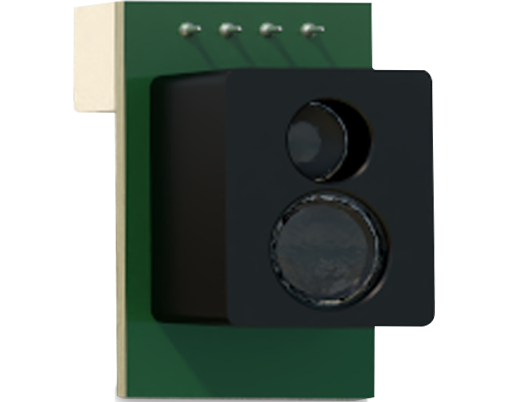
The specification sheet of a laser sensor will list its "measuring range." This is the distance over which the sensor can operate within its stated accuracy. It's crucial to distinguish this from the "maximum range," which might be the absolute farthest distance at which the sensor can detect a return signal, but likely with degraded performance. The "reference distance" or "standoff distance" is also important; this is the optimal working distance from the sensor head to the target.
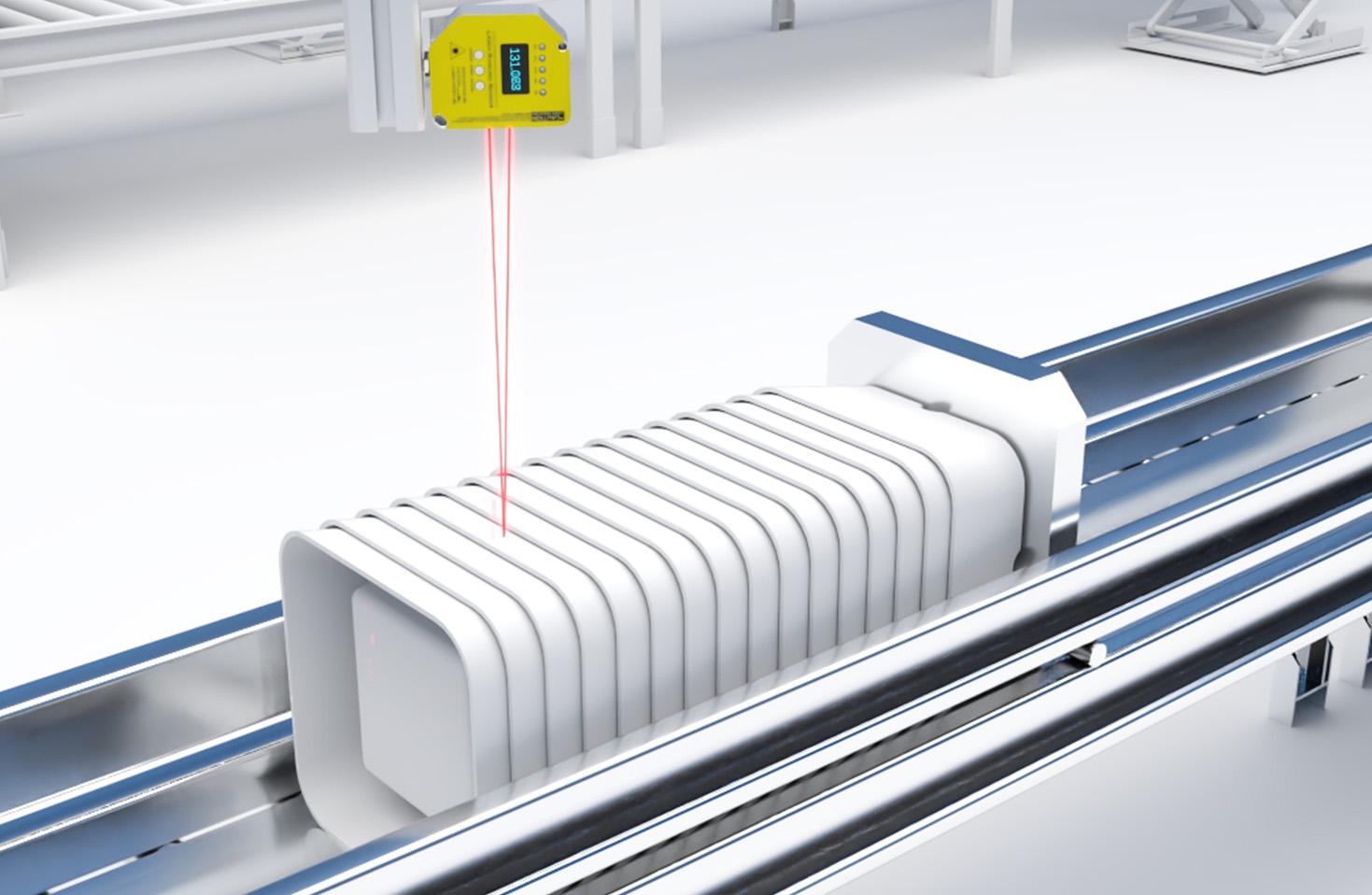
The target itself dramatically influences the effective measuring height. A sensor's range is calibrated for a specific surface, usually a matte white material. A highly reflective or shiny target can cause saturation or multiple reflections, reducing effective range. A dark, matte, or absorbent target scatters the laser light, weakening the return signal and also limiting range. For challenging surfaces, sensors with automatic exposure control or diffuse reflection technology are necessary. The target's size matters too; a very small object might not reflect enough light for a reliable measurement at long range.

Environmental factors are often the limiting constraint. Ambient light, especially direct sunlight which contains intense infrared (the wavelength used by many sensors), can overwhelm the sensor's receiver, drastically cutting its effective range. Dust, fog, steam, or rain can scatter or absorb the laser beam. For outdoor or harsh environments, sensors with higher laser power (Class 2 or 3R), robust housing (IP67/IP69K), and specialized filters to combat sunlight interference are essential. Temperature fluctuations can also affect the sensor's electronic components and the wavelength of the laser diode, necessitating models with built-in temperature compensation.
Accuracy and resolution are intrinsically linked to range. A sensor might have a long maximum range, but its accuracy specification (e.g., ±1 mm) is only valid within a smaller portion of that range, known as the linearity range. As you operate closer to the extremes of the sensor's capability, errors tend to increase. For high-precision height measurement in a controlled setting, a shorter-range, high-accuracy triangulation sensor is preferable. For monitoring the fill level in a large silo, a longer-range ToF sensor with slightly lower accuracy is the correct choice.
In practical terms, applications define the required "height." On a factory floor, a laser sensor might measure the height of components on a conveyor with sub-millimeter precision over a 300mm range. In warehouse automation, sensors guide autonomous mobile robots (AMRs) by measuring distances to walls and racks over 10-30 meters. In agriculture, laser scanners map terrain and crop height from vehicles. In civil engineering, long-range laser trackers monitor dam or bridge deformation over hundreds of meters.
Therefore, when asking "how high," one must first define the application's needs: What is the minimum and maximum distance to the target? What is the required accuracy and resolution? What are the target's surface characteristics (color, material, reflectivity)? What are the environmental conditions (light, contaminants, temperature)? With these answers, you can navigate sensor specifications to find a model whose *effective* measuring range—its reliable "height"—matches your specific challenge. The most capable sensor is not the one with the longest maximum range, but the one whose performance envelope aligns perfectly with your operational reality.