In the realm of industrial automation, robotics, and advanced measurement, laser 3D sensors have emerged as a cornerstone technology, enabling machines to perceive and interact with their environment with unprecedented precision and speed. Unlike traditional 2D vision systems or simple proximity sensors, these devices capture the complete spatial geometry of an object or scene, generating a dense point cloud that represents its exact shape and dimensions in three-dimensional space. This capability is revolutionizing how tasks are performed across a diverse spectrum of industries.
At the heart of a laser 3D sensor lies the principle of triangulation. The sensor projects a precise line or pattern of laser light onto the target surface. A camera, positioned at a known angle relative to the laser emitter, observes the deformation of this laser line. By analyzing the displacement of the laser line in the camera's image plane, sophisticated algorithms calculate the distance to each point along the line, building up a height profile. By scanning the laser line across an object or by moving the object itself, a full 3D profile is assembled. Other advanced methods, such as time-of-flight (ToF), are also employed, particularly for longer-range applications, measuring the time it takes for a laser pulse to reflect back to the detector.

The core advantages of laser 3D sensing are manifold. First and foremost is accuracy. These sensors can achieve micron-level resolution, making them indispensable for quality control. They provide absolute measurements, not relative ones, which is critical for manufacturing tolerances. Speed is another key benefit; modern sensors can capture thousands of profiles per second, enabling real-time inspection on high-speed production lines. Furthermore, they are largely immune to ambient lighting variations and surface color or texture differences that often plague 2D vision systems, as they rely on their own controlled, structured light source.
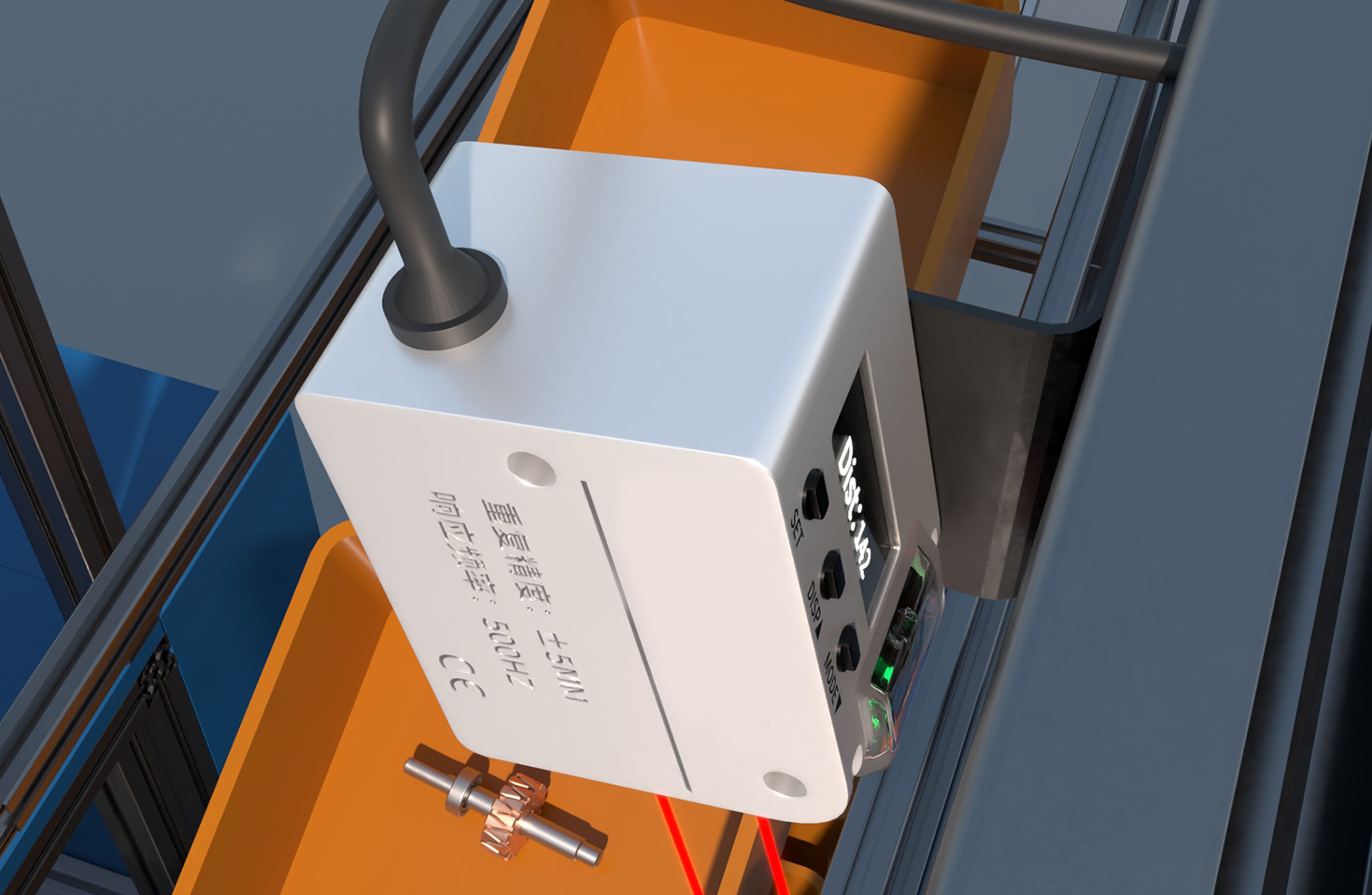
The applications of this technology are vast and growing. In automotive manufacturing, laser 3D sensors are used for robotic guidance in bin picking, precise weld seam inspection, and gap-and-flush measurement of body panels to ensure perfect fit and finish. In electronics, they verify the coplanarity of component leads, inspect solder paste volume, and measure the thickness of coatings. The logistics and warehousing sector leverages them for automated parcel dimensioning, volume calculation, and palletizing guidance, optimizing storage space and shipping costs.
Beyond traditional industry, laser 3D sensors are enabling breakthroughs in other fields. In agriculture, they are mounted on autonomous vehicles for crop monitoring and yield estimation. In archaeology and cultural heritage, they are used for non-contact digitization of artifacts and historical sites. Even in consumer electronics, they form the basis of facial recognition systems and augmented reality experiences.
Selecting the right laser 3D sensor requires careful consideration of several parameters. The working distance, field of view, and depth of field must match the physical constraints of the application. Resolution and accuracy specifications must align with the required measurement tolerances. The scan rate must be high enough to keep pace with production throughput. Environmental factors like exposure to dust, vibration, or extreme temperatures may necessitate sensors with specific ingress protection (IP) ratings.

Integration is a crucial step. While the sensor itself is a powerful data acquisition tool, its value is unlocked through seamless integration with machine vision software and factory control systems. This software processes the raw point cloud data, extracting features, performing comparisons against CAD models, and making pass/fail decisions or providing coordinate data to robotic arms.
Looking ahead, the evolution of laser 3D sensing continues. Trends include miniaturization of sensors, reduction in cost, and the integration of artificial intelligence directly at the sensor level for edge computing. This will allow for even more complex scene understanding and decision-making in real-time. Furthermore, the fusion of 3D laser data with 2D color imagery and other sensor modalities is creating richer, more comprehensive perception systems.
In conclusion, laser 3D sensors are far more than just sophisticated measuring devices. They are the enabling eyes for intelligent automation, providing the critical spatial awareness that allows robots to work collaboratively with humans, ensures product quality at microscopic levels, and drives efficiency in material handling. As technology advances, their role in shaping the future of smart factories and beyond will only become more profound, moving from simple inspection tools to core components of autonomous, intelligent systems.