In the realm of precision measurement and industrial automation, German engineering stands as a global benchmark for quality, reliability, and innovation. Among its many technological exports, the German laser rangefinder sensor exemplifies this tradition of excellence. These devices are not merely tools for measuring distance; they are sophisticated systems that integrate advanced optics, high-speed electronics, and robust software to deliver unparalleled accuracy in a multitude of demanding applications.
At its core, a laser rangefinder sensor operates on the time-of-flight (ToF) principle. It emits a focused pulse of laser light towards a target and precisely measures the time it takes for the reflection to return to the sensor. Given the constant speed of light, this time interval is directly converted into an exact distance measurement. German manufacturers have perfected this technology, focusing on key components that define performance. The laser diodes used are of exceptional quality, ensuring stable, coherent light emission over long operational lifetimes and across wide temperature ranges. The photodetectors are highly sensitive, capable of capturing faint return signals even from low-reflectivity surfaces or over very long distances. Furthermore, the embedded signal processing algorithms, often developed in-house, filter out ambient noise and compensate for environmental variables, guaranteeing consistent and reliable data.
The applications for these precision sensors are vast and critical. In industrial automation and robotics, they are indispensable for tasks such as positioning, contour mapping, and collision avoidance. On a production line, a German laser sensor can continuously monitor the dimensions of components with micron-level precision, ensuring quality control without physical contact. In logistics and warehousing, they enable automated guided vehicles (AGVs) to navigate complex environments safely and efficiently by creating real-time 3D maps of their surroundings. The construction and surveying sectors rely on them for accurate distance measurement, volume calculation, and alignment, significantly improving project efficiency and safety.
A defining characteristic of German laser rangefinder sensors is their exceptional build quality and design philosophy. Housings are typically crafted from hardened aluminum or stainless steel, providing IP67 or higher ingress protection against dust and water. This makes them suitable for harsh industrial environments, whether in a dusty factory, a humid warehouse, or an outdoor construction site. The internal components are mounted to withstand significant vibration and shock, ensuring calibration remains intact. This ruggedness is matched by a commitment to long-term stability; these sensors are engineered to maintain their specified accuracy for years, minimizing downtime and total cost of ownership.
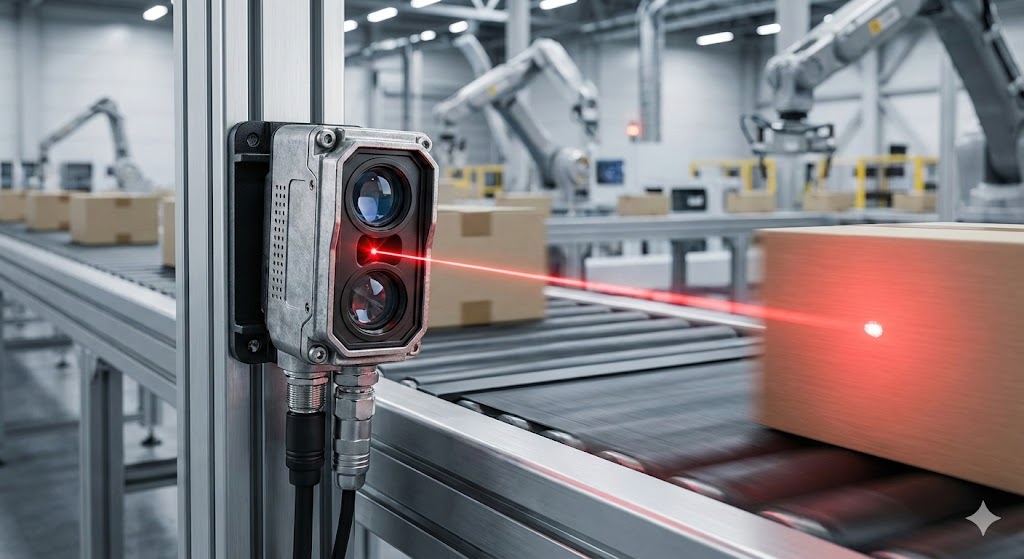
Beyond hardware, integration and communication capabilities are paramount. Leading German sensor companies design their products with open, standardized interfaces. Common protocols like IO-Link, PROFINET, EtherCAT, and analog outputs are standard fare, allowing for seamless integration into existing control systems from Siemens, Beckhoff, and other automation leaders. This plug-and-play philosophy, backed by comprehensive software development kits (SDKs) and detailed technical documentation, reduces engineering time and simplifies system architecture.
The development of these sensors is also increasingly influenced by the trends of Industry 4.0 and the Internet of Things (IoT). Modern German laser rangefinders are smart devices. They can perform self-diagnostics, monitor their own health, and communicate performance data to higher-level systems for predictive maintenance. This connectivity transforms them from simple data providers into intelligent nodes within a larger data ecosystem, enabling optimized processes and data-driven decision-making.
When selecting a laser rangefinder sensor, engineers and system integrators prioritize specifications that German manufacturers consistently excel in: measurement range, accuracy (often sub-millimeter), repeatability, response time (in microseconds), and the ability to measure on difficult surfaces like glass or black rubber. The reputation of German brands is built on delivering on these precise specifications without compromise.
In conclusion, the German laser rangefinder sensor represents the confluence of theoretical physics, practical engineering, and meticulous craftsmanship. It is a key enabling technology for automation, quality assurance, and spatial intelligence across industries. By choosing a sensor born from this engineering tradition, users invest not just in a measurement device, but in a foundation of reliability, precision, and innovation that drives operational excellence forward. The continuous evolution of this technology, focusing on miniaturization, enhanced connectivity, and even greater precision, ensures that German laser rangefinders will remain at the forefront of the measurement world.