The landscape of industrial automation, autonomous systems, and precision measurement is undergoing a profound transformation, driven largely by advancements in laser sensor technology. At the heart of this revolution are specialized laser sensor companies, whose innovations are enabling machines to perceive their environment with unprecedented accuracy, speed, and reliability. These firms are not merely component suppliers; they are pivotal enablers for a smarter, more connected, and efficient world.
Laser sensors operate by emitting a focused beam of light and analyzing the reflected signal. This fundamental principle allows for the non-contact measurement of distance, position, displacement, and even the detection of minute objects. The core advantages—high precision, fast response times, and the ability to function in challenging environments—make them indispensable. From ensuring a robotic arm places a component within microns of its target on an assembly line to enabling a self-driving vehicle to identify obstacles hundreds of meters away, the applications are vast and critical.
The competitive arena of laser sensor manufacturing is populated by a diverse mix of established giants and agile innovators. Companies like Keyence and SICK AG have built formidable reputations over decades, offering extensive portfolios that cater to virtually every industrial need. Keyence is renowned for its user-friendly design and integrated solutions, often combining sensors with intuitive software. SICK AG, with its deep roots in factory automation and safety, provides robust sensors known for their durability and performance in harsh conditions. These industry leaders continuously push the envelope, developing sensors with higher resolutions, longer ranges, and enhanced resistance to environmental interference like dust or ambient light.

Simultaneously, a wave of specialized companies is addressing niche and emerging markets. Firms such as LMI Technologies excel in 3D laser profiling for quality control in industries like electronics and lumber, where capturing complex geometries is essential. Others are pioneering novel technologies like Frequency Modulated Continuous Wave (FMCW) lidar, which offers superior performance for autonomous navigation by providing direct velocity measurement alongside distance. This specialization drives progress in specific verticals, from logistics and agriculture to healthcare and consumer electronics.
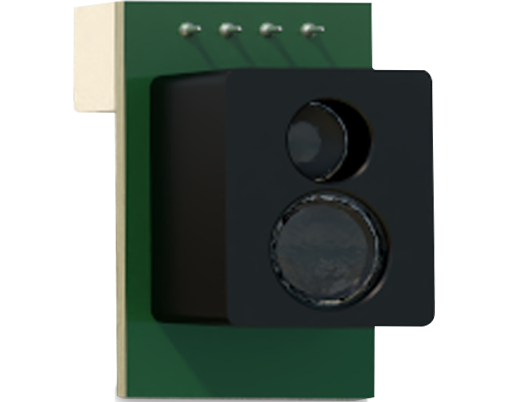
The current trajectory of innovation is focused on several key areas. Miniaturization is a major trend, allowing laser sensors to be integrated into compact devices like smartphones and wearable tech. The integration of smarter onboard processing, powered by edge computing and AI algorithms, is creating "intelligent sensors" that can make preliminary decisions, filter noise, and communicate only relevant data, reducing system latency and bandwidth needs. Furthermore, the push for cost reduction, particularly in lidar for automotive applications, is fueling new manufacturing techniques like solid-state designs, which have no moving parts and promise greater reliability and lower production costs.
The impact of these technological strides extends across the global economy. In manufacturing, laser sensors are the backbone of Industry 4.0, facilitating real-time quality inspection, predictive maintenance, and flexible production lines. In logistics, they enable automated guided vehicles (AGVs) to navigate warehouses and ensure precise package sorting. The automotive sector relies on them for advanced driver-assistance systems (ADAS) and the development of fully autonomous vehicles. Beyond industry, they are crucial in environmental monitoring, medical diagnostics, and scientific research.
However, the path forward is not without challenges. Companies must navigate intense global competition, complex supply chains for specialized components, and the need for continuous R&D investment. Standards and safety regulations, especially for lidar in public spaces, are still evolving. Moreover, educating the market and demonstrating a clear return on investment for increasingly sophisticated sensors remains an ongoing task for sales and engineering teams.
In conclusion, laser sensor companies are fundamental architects of our technological future. Through relentless innovation in precision, intelligence, and application-specific design, they are providing the "eyes" for machines that build our products, transport our goods, and enhance our safety. As the demand for automation and data-driven insights grows, the role of these companies will only become more central, shaping industries and everyday life in ways we are only beginning to imagine. Their success hinges not just on engineering excellence, but on a deep understanding of the complex problems their technologies are tasked to solve.