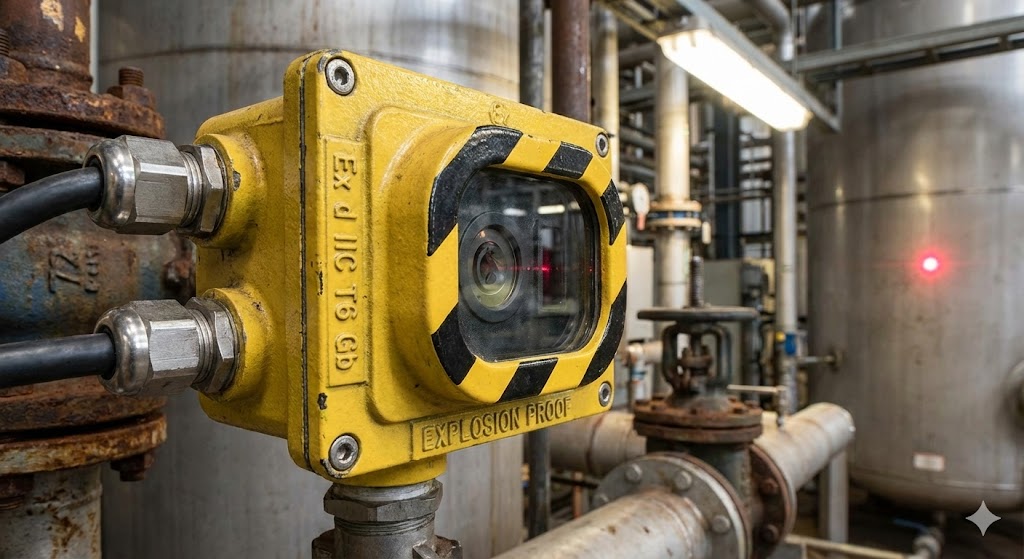
In the realm of industrial automation, precision, reliability, and durability are paramount. All-metal laser sensors have emerged as a critical technology, offering unparalleled performance in challenging environments. Unlike their plastic-housed counterparts, these sensors are encased entirely in robust metal, typically stainless steel or aluminum alloys, providing exceptional resistance to physical impact, corrosive chemicals, extreme temperatures, and intense washdown procedures common in food processing, pharmaceuticals, and heavy machinery sectors.
The core operating principle of an all-metal laser sensor involves the emission of a focused, coherent laser beam towards a target. The sensor then detects the reflected light. Depending on the specific type—such as through-beam, retro-reflective, or diffuse reflective—the presence, absence, or precise position of an object is determined with micron-level accuracy. The laser's small, intense spot allows for the detection of minute objects and precise edge detection, even at considerable distances. This makes them ideal for applications like wafer handling in semiconductor manufacturing, precise part positioning on assembly lines, and fill-level monitoring in transparent containers where other optical sensors struggle.

A key advantage of the all-metal construction is its superior electromagnetic compatibility (EMC) and shielding. In facilities dense with variable frequency drives (VFDs), motors, and wireless communication systems, electrical noise can plague sensor performance. The metal housing acts as a Faraday cage, effectively isolating the sensitive internal electronics from electromagnetic interference (EMI), ensuring stable and false-trigger-free operation. Furthermore, the hermetic sealing achievable with metal casings often results in higher Ingress Protection (IP) ratings, such as IP67, IP68, or IP69K, guaranteeing functionality in dusty, humid, or submerged conditions.
When selecting an all-metal laser sensor, several technical specifications demand careful consideration. The sensing range, often extending from a few millimeters to several hundred meters, must match the application. Response time, measured in microseconds, is crucial for high-speed production lines. The choice of laser class (typically Class 1 or Class 2, which are eye-safe under normal operating conditions) is vital for workplace safety. Additionally, output configurations (PNP/NPN, analog, or IO-Link) must be compatible with the existing control system architecture. Modern variants also incorporate advanced features like background suppression (BGS) to ignore objects beyond a set distance, and programmable logic functions for standalone simple control tasks.
Installation and maintenance are streamlined due to the rugged design. Many models feature built-in M8 or M12 connectors with locking mechanisms, ensuring vibration-proof electrical connections. The use of stainless steel often allows for cleaning with aggressive solvents without degradation. However, it is important to note that the reflective properties of the target material significantly influence performance. Highly reflective surfaces may require sensitivity adjustment, while dark, absorbent materials may reduce the effective sensing range. Some sensors offer automatic teaching functions to calibrate themselves to the target's surface.
In conclusion, the adoption of all-metal laser sensors represents a strategic investment for industries where equipment failure equates to significant downtime and cost. Their resilience against environmental and electrical disturbances, combined with high precision, makes them indispensable for ensuring continuous, efficient, and accurate automated processes. As Industry 4.0 evolves, integrating these sensors with smart factory networks via IO-Link will further enhance predictive maintenance and data-driven optimization, solidifying their role as a cornerstone of modern industrial sensing.