Photoelectric proximity sensors are indispensable components in modern industrial automation, offering non-contact detection capabilities for a wide range of applications. These sensors operate on the fundamental principle of using light to detect the presence, absence, or distance of an object. Unlike mechanical limit switches or inductive sensors, photoelectric sensors provide versatility in sensing diverse materials, including glass, plastic, metal, and liquids, making them a preferred choice in complex manufacturing environments.
The core working mechanism involves three primary components: an emitter (light source), a receiver (photodetector), and associated signal processing circuitry. The emitter generates a modulated light beam, typically using an LED (Light Emitting Diode) for visible red, infrared, or laser light. This modulation is crucial as it allows the sensor to distinguish its own light from ambient environmental light, thereby enhancing reliability and noise immunity. The receiver, often a phototransistor or photodiode, detects the light beam. When an object interrupts or reflects this beam (depending on the sensor type), the receiver's electrical output changes, triggering a switch signal in the processing circuit.
There are three main operational modes: through-beam, retro-reflective, and diffuse (proximity) sensing. Through-beam sensors consist of separate emitter and receiver units placed opposite each other. Detection occurs when an object breaks the light beam path between them. This mode offers the longest sensing ranges and highest reliability, as it is less affected by object surface properties like color or reflectivity. Retro-reflective sensors house both emitter and receiver in a single housing, using a reflector to bounce the light beam back. An object is detected when it obstructs the beam's return path. These sensors are easier to install than through-beam types but require a dedicated reflector.
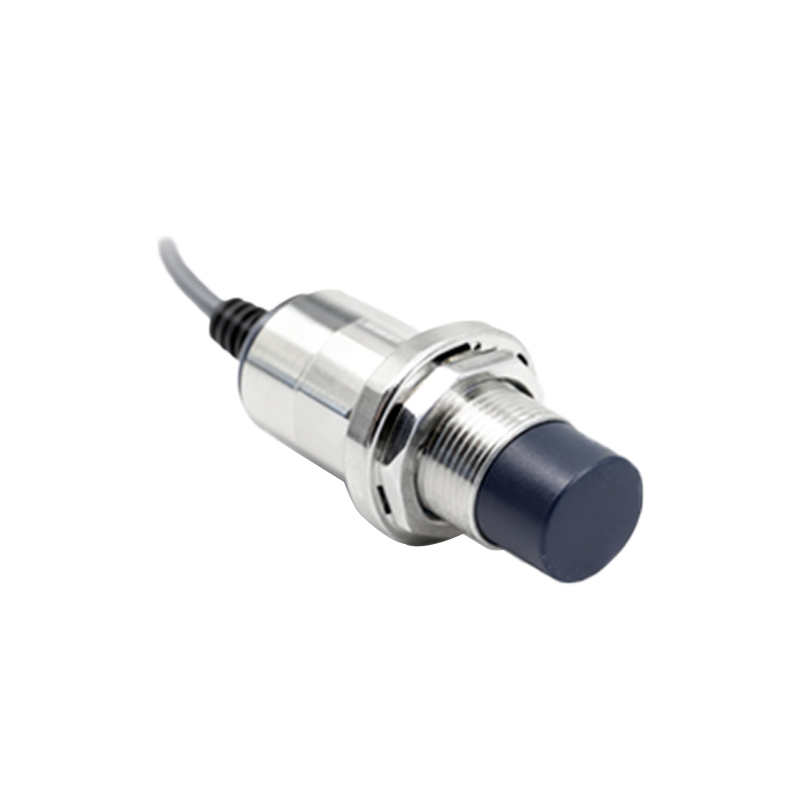
The most common type for proximity detection is the diffuse sensor. Here, the emitter and receiver are also co-located. The sensor detects light that is reflected directly off the target object itself. The distance at which an object can be reliably detected (the sensing range) depends heavily on the object's size, color, and surface texture. Light-colored, matte surfaces reflect more light and can be sensed at greater distances than dark, shiny surfaces that may scatter or absorb light. Advanced diffuse sensors, sometimes called background suppression or fixed-field sensors, use triangulation or specialized optics to define a precise sensing field, minimizing false triggers from objects beyond the set range.
Key performance specifications include sensing range, response time, repeat accuracy, and environmental ratings. Sensing range can vary from a few millimeters to over 50 meters, depending on the model and mode. Fast response times, often in microseconds, enable high-speed counting and positioning tasks. Robust housings (typically metal or high-grade plastic) and ingress protection (IP) ratings like IP67 ensure reliable operation in harsh conditions with dust, moisture, and vibration.
Modern advancements integrate smart features such as IO-Link communication, which allows for parameter setting, condition monitoring, and diagnostic data exchange with PLCs. This facilitates predictive maintenance and easier integration into Industry 4.0 frameworks. Laser-based versions provide extremely small, precise spot sizes for detecting minute objects or edges.
In application, these sensors are pivotal in packaging, material handling, assembly line automation, and safety systems. They count bottles on a conveyor, detect the level of liquid in a translucent container, ensure correct positioning of components in a robotic cell, and act as safety curtains to halt machinery when a person enters a hazardous zone. Understanding their operating principle—modulated light emission, reception, and intelligent signal evaluation—is key to selecting the right sensor for reliability, precision, and efficiency in any automated system. Proper consideration of the target object's characteristics and the environmental conditions is essential for optimal performance.