In the realm of industrial automation, robotics, and precision measurement, laser distance sensors have emerged as a cornerstone technology. These devices offer unparalleled accuracy, speed, and reliability for non-contact distance measurement, enabling a vast array of applications from simple object detection to complex 3D profiling. This article delves into the operating principles, key technologies, diverse applications, and critical selection criteria for laser distance sensors.
At its core, a laser distance sensor operates by emitting a focused beam of coherent light—a laser—towards a target object. The sensor then analyzes the light that returns to its receiver. The two most prevalent measurement principles are Time-of-Flight (ToF) and triangulation.

Time-of-Flight sensors measure the time it takes for a laser pulse to travel to the target and back. Since the speed of light is a constant, the distance can be calculated precisely using the formula: Distance = (Speed of Light × Time of Flight) / 2. ToF sensors are ideal for long-range measurements, typically from a few meters up to several hundred meters, with good accuracy. They are commonly used in applications like vehicle detection, bulk material level monitoring, and large-scale surveying.
Triangulation-based sensors, on the other hand, are the go-to choice for high-precision, short to medium-range measurements. In this method, the laser emitter, the reflected spot on the target, and the position-sensitive detector (PSD) or CMOS/CCD receiver form a triangle. As the target distance changes, the position of the reflected spot on the receiver shifts. By calculating this shift, the sensor determines the distance with micron-level resolution. This principle is extensively used in precision assembly, thickness gauging, and surface contour inspection.
Key performance parameters define a laser sensor's capability. Measurement Range specifies the minimum and maximum distances it can reliably measure. Accuracy and Resolution indicate how close the reading is to the true value and the smallest detectable change, respectively. Repeatability is crucial for process control, referring to the sensor's ability to produce the same reading under identical conditions. Response Time or sampling rate determines how quickly the sensor can update its measurement, which is vital for high-speed production lines. Additionally, factors like the laser class (for safety), spot size, and environmental robustness against dust, moisture, and ambient light interference are critical.
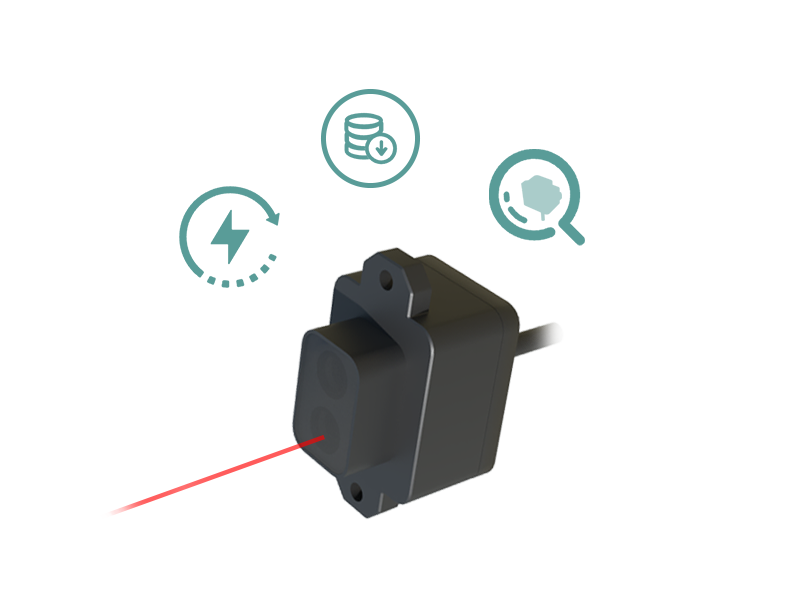
The applications of laser distance sensors are virtually limitless in industrial settings. In factory automation, they are used for precise positioning of robotic arms, checking part presence or absence on conveyor belts, and measuring dimensions for quality control. The logistics industry employs them for palletizing, warehouse vehicle guidance, and package dimensioning. In process industries, they monitor fill levels in silos or tanks. Furthermore, they are integral to Advanced Driver Assistance Systems (ADAS) in vehicles for adaptive cruise control and collision avoidance.
Selecting the right laser distance sensor requires a careful analysis of the application needs. First, define the required measurement range and the desired accuracy. For sub-millimeter precision at close range, a red or blue laser triangulation sensor is optimal. For longer ranges where moderate accuracy suffices, a ToF sensor is more suitable. Consider the target surface properties; dark, matte, or transparent surfaces can absorb or scatter laser light, potentially requiring sensors with higher laser power or specialized algorithms. The operating environment is paramount; harsh conditions necessitate sensors with high IP ratings for ingress protection and robust housings. Finally, the output interface (analog voltage/current, digital IO, Ethernet, PROFIBUS, etc.) must be compatible with the existing control system.
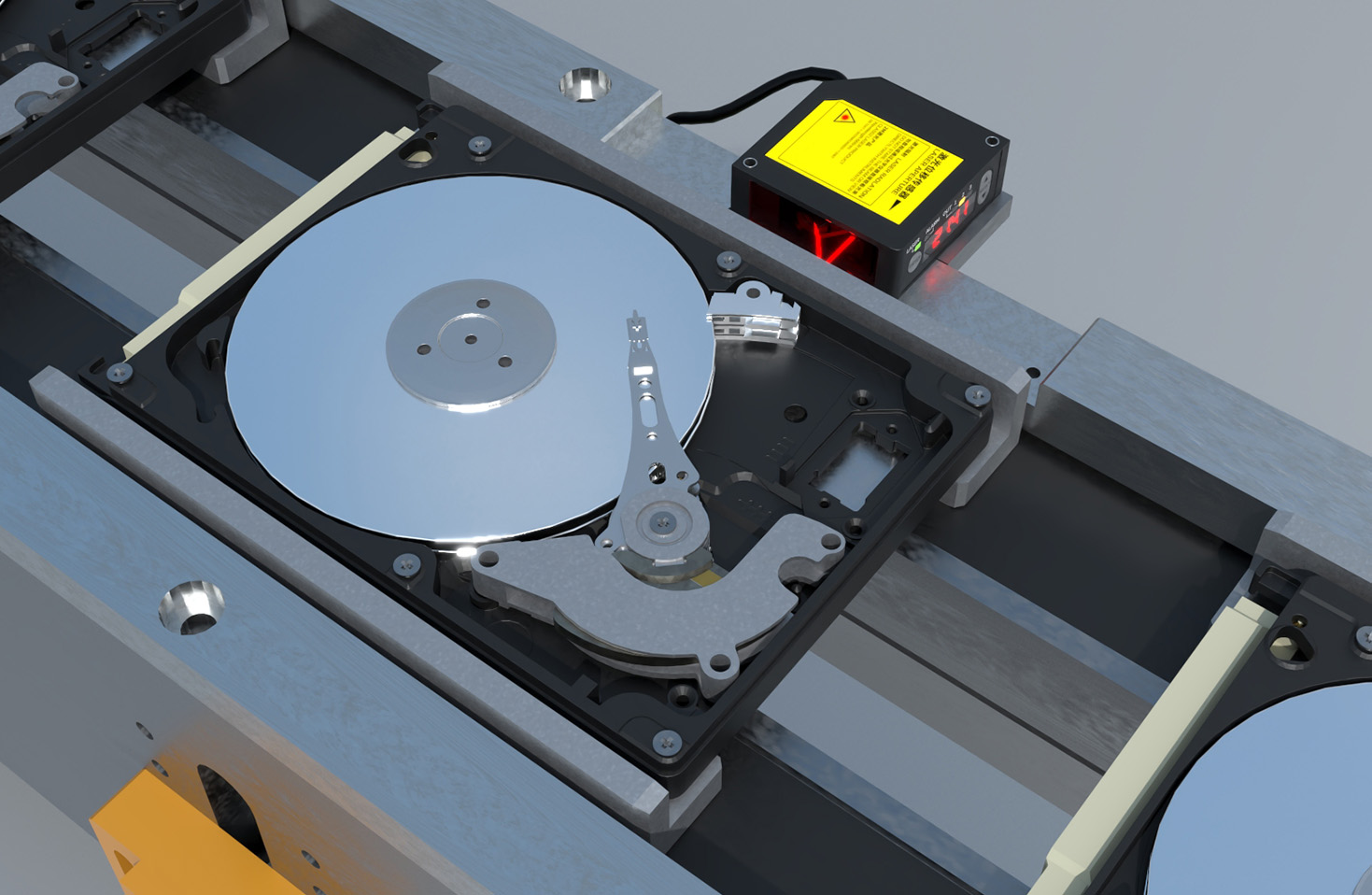
Modern advancements continue to push the boundaries. Sensors with integrated IO-Link capability provide detailed diagnostic data and simplify parameterization. Background suppression technology allows sensors to ignore objects beyond a set distance. The development of laser line profilers, which use a laser line instead of a single point, enables rapid 2D and 3D contour measurement for complete inspection tasks.
In conclusion, laser distance sensors are powerful, versatile tools that bring a high degree of precision and automation to modern industrial processes. By understanding the fundamental principles of ToF and triangulation, along with a clear assessment of application requirements against sensor specifications, engineers and system integrators can effectively harness this technology to enhance efficiency, ensure quality, and enable innovative solutions across countless industries.