Proximity sensor embedding represents a critical advancement in industrial automation, enabling seamless integration of detection capabilities into machinery and equipment without compromising design or functionality. Embedded proximity sensors are designed to be mounted flush with or within surfaces, providing discrete and robust sensing solutions in environments where space constraints, mechanical stress, or aesthetic considerations are paramount. This article delves into the technical principles, implementation strategies, and practical benefits of embedded proximity sensing, tailored for electrical engineers and automation professionals.
The core technology behind embedded proximity sensors typically relies on inductive, capacitive, or magnetic principles. Inductive sensors, widely used for metal detection, generate an electromagnetic field. When a metallic target enters this field, eddy currents are induced, altering the oscillation amplitude and triggering a switch signal. Embedding these sensors requires careful consideration of the surrounding material—non-metallic enclosures or coatings are essential to prevent interference. Capacitive sensors, suitable for both metallic and non-metallic targets, detect changes in capacitance caused by the presence of an object. Their embedding often involves insulating materials to shield from false triggers due to environmental humidity or contamination. Magnetic sensors, including reed switches or Hall effect sensors, respond to magnetic fields and are ideal for embedding in harsh conditions where seals against dust, water, or vibrations are needed.
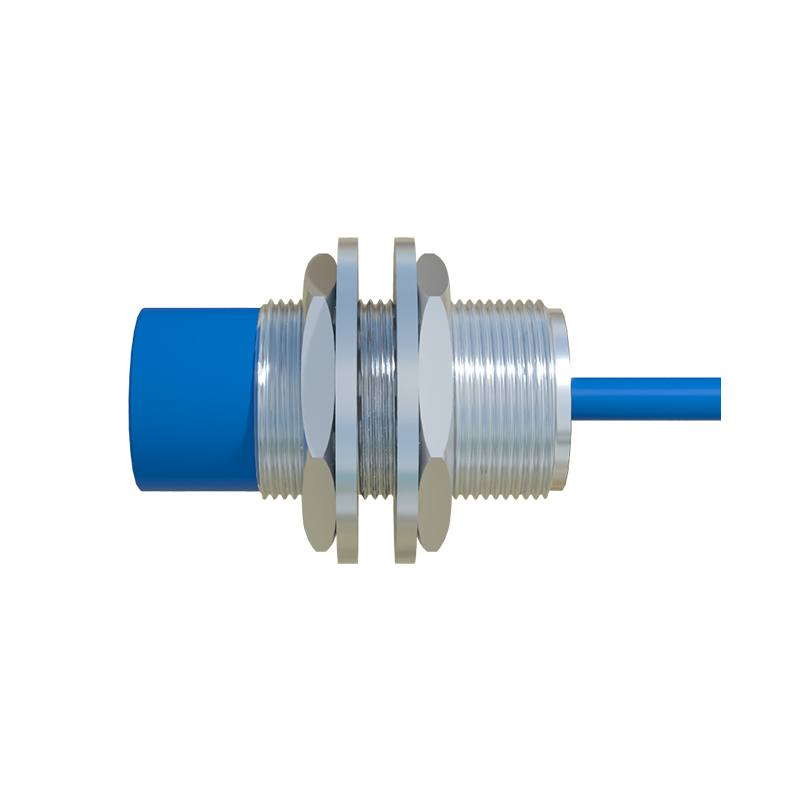
Embedding techniques vary based on application requirements. Flush mounting is common, where the sensor face aligns perfectly with the mounting surface, allowing detection without protrusion. This method minimizes physical damage risks and is preferred in automated assembly lines or robotic arms. For deeper integration, sensors can be fully encapsulated within machine parts, such as within piston rods or conveyor frames, using potting compounds or custom housings to ensure durability. Key considerations include sensing range reduction—embedding often decreases the nominal range by up to 50% due to material barriers—and alignment precision to maintain detection accuracy. Engineers must account for factors like temperature fluctuations, which affect sensor performance, and electromagnetic compatibility (EMC) to avoid interference from nearby motors or drives.
In practice, embedded proximity sensors enhance system reliability and safety. For instance, in CNC machining centers, they monitor tool position or workpiece presence without exposed wiring, reducing downtime from mechanical failures. In automotive manufacturing, they enable non-contact detection in tight spaces like engine blocks or door mechanisms, improving assembly speed. The benefits extend to maintenance: embedded designs protect sensors from oil, coolant, or debris, extending lifespan and reducing calibration needs. However, challenges persist, such as limited accessibility for troubleshooting or replacement, necessitating robust diagnostic features like LED indicators or IO-Link communication for real-time monitoring.
Future trends point toward miniaturization and smart integration. Micro-sensors with embedded processors allow for adaptive sensing thresholds and predictive maintenance alerts. Wireless embedding, using energy-harvesting techniques, is emerging for applications in rotating parts or mobile equipment. As Industry 4.0 evolves, embedded proximity sensors will increasingly interface with IoT platforms, providing data for analytics and optimization. Engineers must stay abreast of standards like IEC 60947-5-2 for performance validation and material compatibility testing to ensure seamless deployment.
In summary, proximity sensor embedding is a sophisticated practice that balances electrical engineering with mechanical design. By selecting appropriate sensor types, mounting methods, and protective measures, professionals can achieve efficient, durable, and discreet automation solutions. Continuous innovation in materials and connectivity will further expand its role in smart industrial ecosystems.