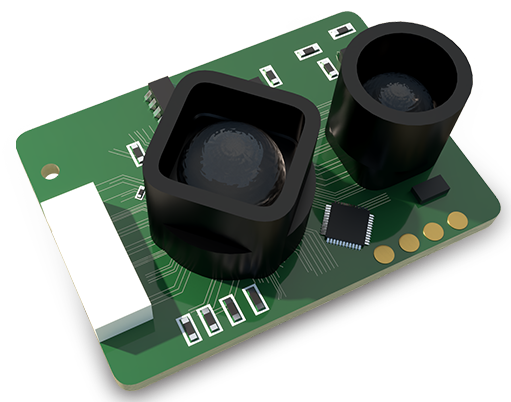
Methane detection is a critical aspect of safety and environmental monitoring within natural gas distribution networks. At the heart of many modern monitoring systems lies a sophisticated technology: the laser-based methane sensor, specifically deployed at pressure regulating stations (PRS). Unlike traditional catalytic bead or infrared point sensors, laser sensors offer a transformative approach to leak detection and concentration measurement.
The core principle of this technology is Tunable Diode Laser Absorption Spectroscopy (TDLAS). A laser diode emits a beam of light at a very specific wavelength that corresponds to an absorption line of the methane molecule. This light is directed across an open path—either within a sampling chamber for extractive systems or as an open-beam across a potential leak area. As the light travels, methane molecules present in its path absorb a portion of the light energy at that precise wavelength. A detector on the opposite side measures the intensity of the received light. The degree of light attenuation is directly proportional to the methane concentration along the beam path, a relationship defined by the Beer-Lambert law. By tuning the laser's wavelength minutely around the absorption line, the sensor can precisely distinguish methane from other gases, eliminating cross-sensitivity issues common with older technologies.
The deployment of these sensors at pressure regulating stations is strategic. PRS are key nodes where high-pressure transmission gas is reduced to lower distribution pressures. This process involves regulators, valves, and piping that are potential leak points. Continuous, reliable monitoring here is non-negotiable for preventing hazardous accumulations. Laser sensors excel in this environment for several reasons. Their response time is extremely fast, often in the range of seconds, allowing for near-instantaneous leak detection. They require minimal maintenance as they have no consumable parts and are not prone to poisoning or drift like catalytic sensors. Their high specificity and sensitivity enable the detection of very low concentration leaks (ppm-meter levels) before they escalate, facilitating a predictive maintenance approach.
There are two primary configurations for laser methane detection at PRS: point and open-path. Point sensors typically draw a sample into a measurement chamber where the laser analysis occurs. They provide a precise concentration reading at a specific location, ideal for monitoring enclosed spaces or specific valve seals. Open-path sensors, on the other hand, project a laser beam over a distance (from a few meters up to hundreds of meters). They measure the integrated methane concentration along the entire beam path, offering wide-area surveillance for fence-line monitoring or covering large sections of the station. This capability to screen vast areas from a single point is a significant advantage for perimeter safety.

The integration of laser sensor data into modern Supervisory Control and Data Acquisition (SCADA) and Internet of Things (IoT) platforms represents the next frontier. Real-time concentration data, combined with wind speed/direction information and advanced analytics, can pinpoint leak locations with high accuracy, estimate emission rates, and trigger automated alerts or even shutdown sequences. This data-driven approach transforms safety management from a reactive to a proactive and predictive model.
While the initial investment for laser-based systems can be higher than for conventional detectors, the total cost of ownership is often lower due to reduced calibration needs, minimal maintenance, and the prevention of costly incidents or regulatory fines. Furthermore, their accuracy supports environmental, social, and governance (ESG) reporting requirements by providing verifiable data on methane emissions.
In conclusion, the adoption of methane laser sensor technology at pressure regulating stations marks a significant advancement in industrial safety and environmental stewardship for the gas industry. By providing fast, accurate, and reliable methane monitoring, these systems form a robust first line of defense against leaks, protecting infrastructure, personnel, communities, and the environment. As technology continues to evolve, with improvements in laser diode cost, robustness, and data analytics integration, their role is set to become even more central to the safe and efficient operation of global gas distribution networks.