In the realm of industrial monitoring and condition-based maintenance, the demand for precise, reliable, and robust sensing technologies is ever-increasing. Among the most significant advancements in this field is the development and deployment of fiber optic laser vibration sensors. These sophisticated devices represent a paradigm shift from traditional electromechanical and piezoelectric sensors, offering unparalleled advantages in challenging environments. This article delves into the operational principles, key benefits, diverse applications, and emerging trends of fiber optic laser vibration sensors.
At its core, a fiber optic laser vibration sensor operates on the principle of interferometry. The system typically consists of a coherent laser light source, an optical fiber that acts as both the sensing element and the signal transmission medium, and a photodetector for signal analysis. The most common configuration is the Mach-Zehnder or Michelson interferometer, integrated into the fiber optic path. When the fiber is subjected to external vibrations, these mechanical disturbances induce minute changes in the physical length and refractive index of the fiber. This alters the phase of the light propagating through it. By comparing the phase of the light in the sensing arm with that in a reference arm, the interferometer converts these phase modulations into intensity variations, which are then detected and processed to quantify the vibration parameters—displacement, velocity, and acceleration.
The superiority of fiber optic laser vibration sensors stems from their intrinsic characteristics. First and foremost is their exceptional immunity to electromagnetic interference (EMI). Since the sensing mechanism is purely optical, these sensors perform flawlessly in environments saturated with strong electromagnetic fields, such as near high-voltage transformers, large motors, or in power generation facilities, where conventional electronic sensors would fail or provide noisy data. Secondly, they offer high sensitivity and a broad dynamic range, capable of detecting vibrations from sub-nanometer displacements to large-amplitude shocks. Their passive nature is another critical advantage; the sensing fiber contains no electrical components at the measurement point, making them inherently safe for use in hazardous, explosive, or corrosive atmospheres. Furthermore, their small size, lightweight, and flexibility allow for installation in confined or complex geometries where traditional sensors cannot be mounted. Finally, they enable distributed sensing over long distances (tens of kilometers) using a single fiber, facilitating the monitoring of large-scale infrastructure like pipelines, railways, and bridges with a minimal number of interrogation units.

The applications of these sensors span numerous industries. In aerospace and aviation, they are used for structural health monitoring of aircraft wings and fuselages, detecting delamination, impact damage, and fatigue cracks. The energy sector employs them for condition monitoring of wind turbine blades, gearboxes, and generators, as well as for pipeline integrity monitoring to prevent leaks. In the manufacturing industry, they enable precise vibration analysis of rotating machinery—such as pumps, compressors, and turbines—facilitating predictive maintenance and preventing catastrophic failures. Civil engineering benefits greatly from their use in monitoring the vibrational characteristics of bridges, dams, and tall buildings, assessing their response to traffic, wind, and seismic activity. Additionally, they are finding roles in scientific research, including geophysical studies for earthquake detection and in high-energy physics experiments.
Looking ahead, the future of fiber optic laser vibration sensing is intertwined with advancements in photonics and data analytics. The integration of Fiber Bragg Gratings (FBGs) for multiplexed, multi-point sensing along a single fiber is becoming more prevalent, allowing for detailed spatial resolution of vibration patterns. The development of more compact, cost-effective, and high-speed interrogators is making the technology more accessible. Furthermore, the convergence with the Internet of Things (IoT) and Artificial Intelligence (AI) is a major trend. Sensor networks can now stream vast amounts of vibrational data to cloud platforms, where AI algorithms perform real-time analysis for anomaly detection, fault diagnosis, and even prediction of remaining useful life of assets. Research is also ongoing in enhancing the sensors' capabilities for extreme environments, such as very high temperatures in nuclear reactors or deep-sea exploration.
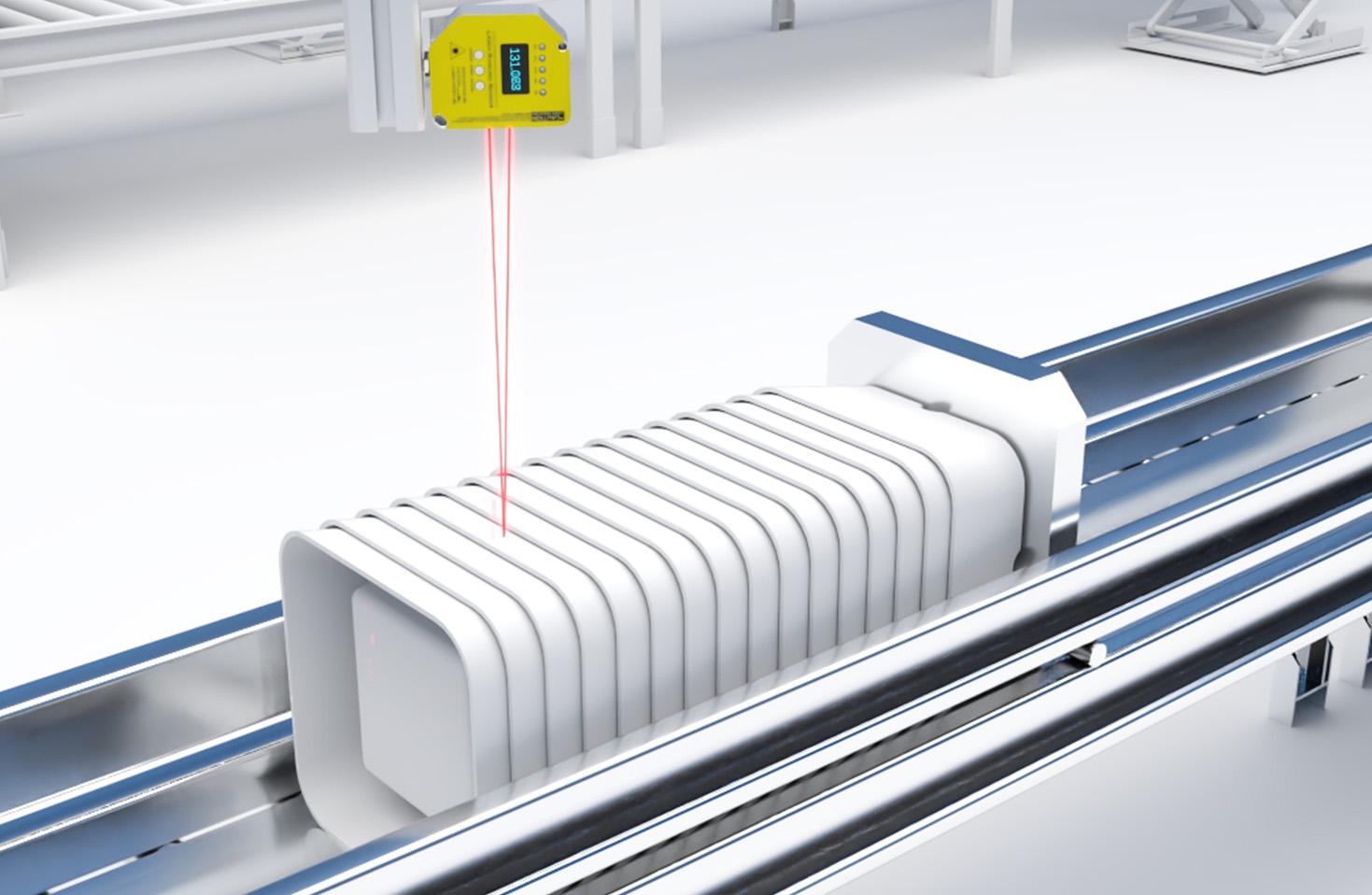
In conclusion, fiber optic laser vibration sensors have established themselves as a transformative technology for industrial monitoring. Their unique combination of EMI immunity, high sensitivity, safety, and multiplexing capability addresses the limitations of traditional sensors. As the technology continues to mature and synergize with digitalization trends, its adoption is set to expand, driving greater efficiency, safety, and reliability across critical infrastructure and industrial operations worldwide. Engineers and asset managers seeking next-generation monitoring solutions would be well-advised to consider the profound benefits this optical sensing approach offers.