Laser sensor technology has become a cornerstone of modern industrial automation, robotics, and precision measurement systems. As an electrical engineer deeply involved in this field, analyzing recent patent trends reveals a fascinating trajectory of innovation focused on enhancing accuracy, robustness, and integration. This article delves into key patented advancements, their underlying principles, and their practical implications for system design and application.
A dominant theme in recent patents is the refinement of Time-of-Flight (ToF) measurement techniques. Patents from major industrial players detail methods to compensate for environmental variables such as ambient light interference, temperature fluctuations, and atmospheric conditions. One notable patent family describes a multi-pulse averaging algorithm coupled with real-time signal processing on an integrated circuit. This approach significantly reduces measurement noise, enabling sub-millimeter accuracy at ranges exceeding several meters. For engineers, this translates to more reliable sensors for autonomous guided vehicles (AGVs) and complex 3D mapping, even in dynamically lit factory environments.
Another significant area of patent activity surrounds the miniaturization and integration of laser diode drivers and photodetector arrays. Recent filings showcase monolithic designs where the laser emitter, driver circuitry, and receiver are fabricated on a single chip or tightly integrated module. Key patents highlight innovations in thermal management and optical alignment at the micro-scale, which are critical for maintaining performance in compact devices. This trend is pivotal for the next generation of consumer electronics, wearable tech, and miniaturized industrial inspection tools, demanding that engineers master both high-frequency circuit design and micro-optics packaging techniques.
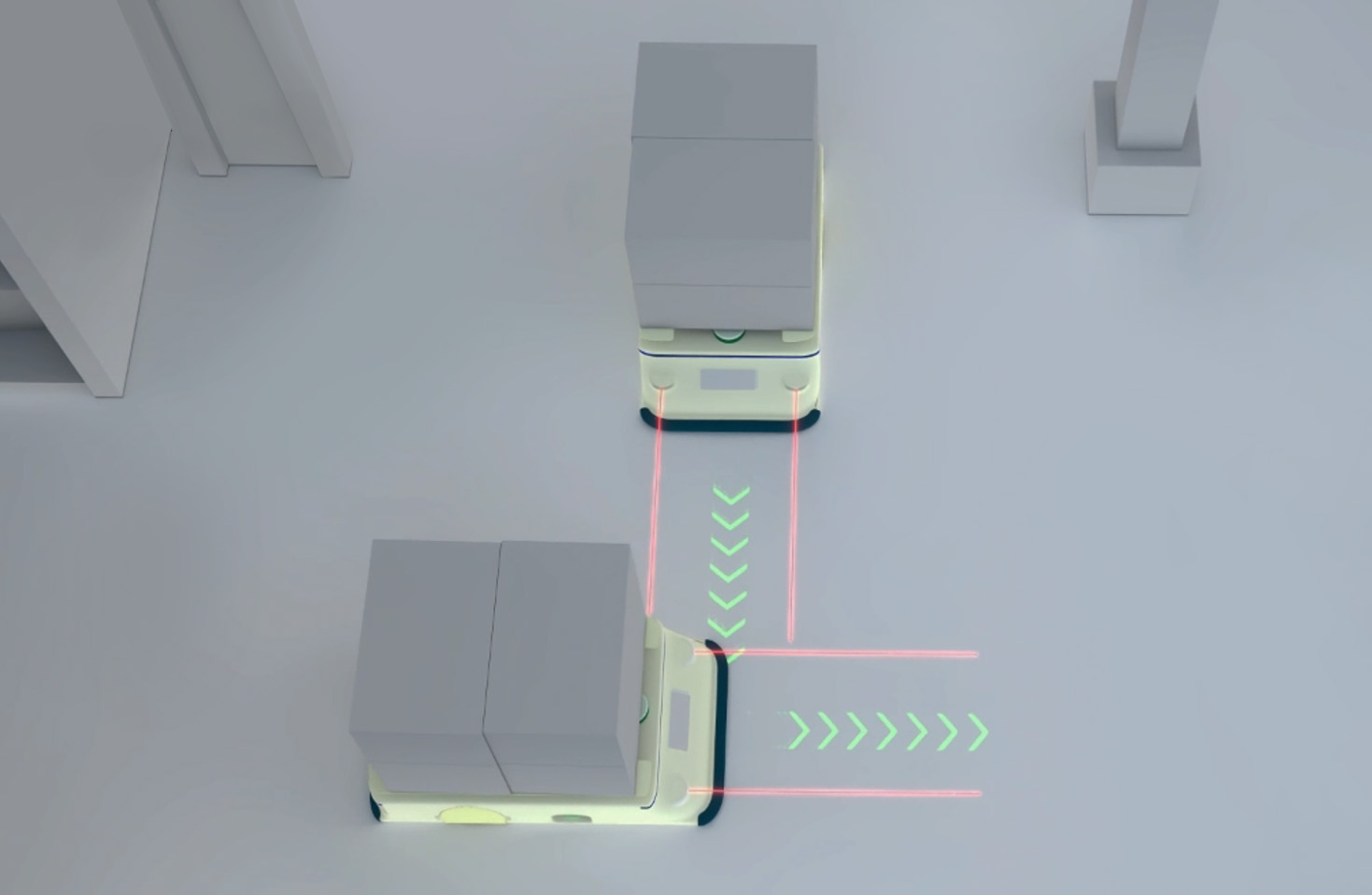
The integration of Artificial Intelligence (AI) and machine learning with laser sensing is a rapidly expanding patent frontier. Patents are emerging for "smart" sensors that do not merely collect distance or profile data but interpret it contextually. For instance, several patents describe systems where a laser line profiler's data stream is processed by an embedded neural network to classify surface defects, identify object types, or predict maintenance needs in real-time. This shifts the engineering challenge from pure hardware optimization to developing co-designed hardware-software platforms, requiring expertise in edge computing and data fusion algorithms.
Safety and reliability, especially for Class 1 eye-safe operation, remain a critical driver of patent filings. Innovations here include novel optical designs that diffuse laser power, advanced modulation schemes that keep peak power low while maintaining signal integrity, and fail-safe monitoring circuits. A prominent patent in this domain details a closed-loop control system that continuously monitors output power and automatically shuts down the emitter if a fault is detected, a feature becoming standard for sensors used in collaborative robot workspaces. Engineers must now rigorously consider functional safety standards (like IEC 61496) early in the sensor subsystem design phase.
Finally, the push towards multi-modal sensing is evident. Patents increasingly cover hybrid systems that combine laser triangulation with complementary technologies like inertial measurement units (IMUs), capacitive touch sensing, or vision cameras. One comprehensive patent describes a sensor fusion algorithm that merges high-frequency laser distance data with lower-frequency visual data to create a robust, six-degree-of-freedom pose estimation for robotic manipulation. This interdisciplinary approach necessitates a systems engineering mindset, where the laser sensor is optimized as part of a broader sensory ecosystem.
In conclusion, the patent landscape for laser sensors is vibrant and points toward a future of intelligent, integrated, and inherently safe systems. For practicing electrical engineers, staying abreast of these developments is not merely academic; it is essential for designing competitive, next-generation products. The convergence of photonics, high-speed electronics, and embedded intelligence within these patents defines the skill set required to lead in fields ranging from advanced manufacturing to autonomous systems. Continuous learning and cross-disciplinary collaboration will be the keys to leveraging these patented innovations into practical, groundbreaking applications.