In the realm of advanced manufacturing and automation, laser sensor ejector pins represent a critical fusion of precision mechanics and sophisticated optical sensing technology. These components are integral to high-stakes processes such as injection molding, die-casting, and automated assembly lines, where the reliable ejection of finished parts is paramount. Unlike traditional mechanical or pneumatic ejector systems, laser sensor-integrated pins provide non-contact, real-time feedback on the ejection process, enabling unprecedented levels of control, quality assurance, and predictive maintenance.
The core functionality hinges on a compact, robust laser displacement sensor embedded within or adjacent to the ejector pin. Typically, a low-power, focused laser beam is projected onto the surface of the molded part or the pin's target area. The reflected light is captured by a receiver, and through triangulation or time-of-flight principles, the sensor calculates minute distances with micron-level accuracy. This data is transmitted instantaneously to the machine's programmable logic controller (PLC).
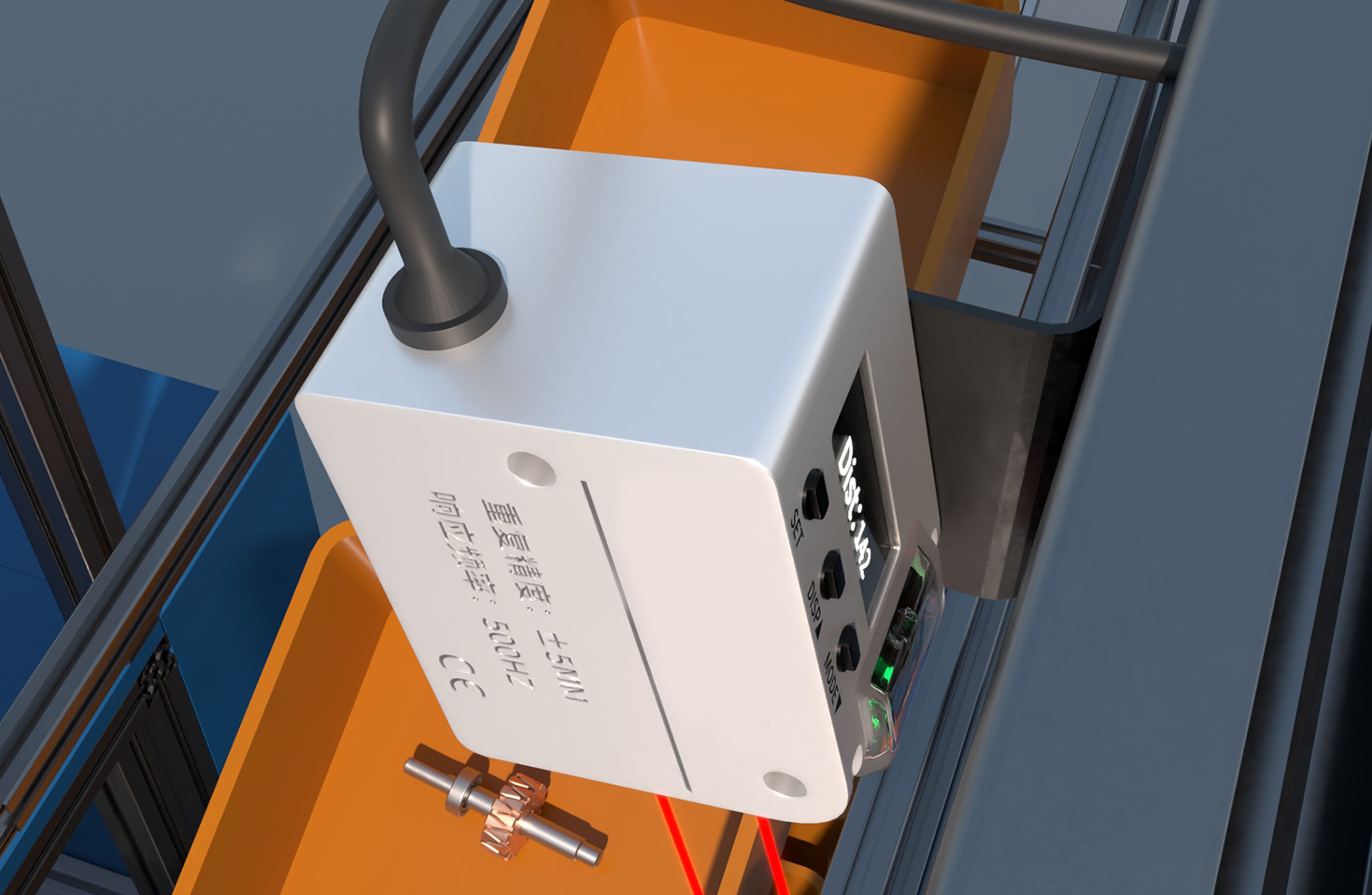
The applications and benefits are transformative. Firstly, they ensure complete part ejection. A failed ejection, where a part sticks to the mold, can cause catastrophic damage in the next cycle. The laser sensor detects the precise position of the part as the pin retracts. If the part does not clear the mold cavity as expected, the system halts the cycle immediately, preventing costly collisions and downtime. Secondly, they monitor pin wear and alignment. Ejector pins are subject to immense mechanical stress and thermal cycling. Gradual wear or slight bending can compromise performance. Continuous distance monitoring establishes a baseline "fingerprint" for a healthy ejection stroke. Deviations from this profile signal emerging issues like pin fatigue, lubrication failure, or misalignment, allowing for scheduled maintenance before a breakdown occurs.

Furthermore, these systems enable process optimization and data analytics. By analyzing the exact force profile (inferred from pin movement resistance) and ejection timing for every cycle, manufacturers can fine-tune parameters like cooling time, injection pressure, and pin speed. This leads to higher consistency in part quality, reduced cycle times, and less material stress. In high-volume production, this data stream contributes to a digital twin of the manufacturing process, enabling predictive analytics and Industry 4.0 integration.
Designing and implementing laser sensor ejector pins requires careful engineering. The sensor must withstand harsh environments: high temperatures (often exceeding 200°C in molding), exposure to release agents, vibrations, and electromagnetic interference from industrial machinery. Housing is typically made from hardened tool steel or specialized alloys, with the laser window utilizing sapphire or other durable, transparent ceramics to resist scratching and chemical attack. The signal cabling must be rugged and designed for continuous flexing if the pin is in a moving plate.
Integration with existing machinery is a key consideration. Modern systems offer analog outputs (4-20 mA) and digital communication protocols like IO-Link, PROFINET, or EtherCAT. IO-Link, in particular, is gaining traction as it allows not only for data transmission but also for parameterization and diagnostics of the sensor itself through the control system, simplifying setup and troubleshooting.
The future of this technology points toward miniaturization, enhanced connectivity, and smarter sensors. We are seeing the development of pins with integrated micro-electromechanical systems (MEMS) lasers and onboard processing chips that can perform initial data analysis. Wireless power and data transfer for rotating or complex mold stacks are active areas of research. Additionally, the fusion of laser distance data with other sensor inputs, such as thermal imaging of the part surface, will provide even more comprehensive process insights.
In conclusion, laser sensor ejector pins are no longer niche accessories but essential components for achieving zero-defect manufacturing, maximizing equipment uptime, and embracing the data-driven future of industry. They transform a simple mechanical action into a rich source of diagnostic and process information, embodying the shift from reactive maintenance to proactive, intelligent operation. For engineers and plant managers aiming to push the boundaries of efficiency and quality, investing in this technology is a strategic imperative.