In the realm of detection and navigation, ferrous magnetic target proximity tracking stands as a critical technology with profound implications across defense, security, and industrial sectors. This methodology leverages the fundamental principles of magnetism to detect, locate, and monitor the movement of objects containing ferromagnetic materials, primarily iron, nickel, and cobalt. Unlike optical or acoustic systems, magnetic tracking operates effectively in conditions where visibility is zero, ambient noise is high, or through certain non-conductive barriers, offering a unique and robust sensing capability.
The core principle hinges on detecting perturbations in the Earth's magnetic field. The Earth generates a weak but relatively stable magnetic field. When a ferrous object enters this field, it becomes magnetized, creating its own localized magnetic anomaly. This distortion, often a dipole field, is detectable by sensitive magnetometers. By analyzing the strength, gradient, and vector of this anomaly, sophisticated algorithms can determine not only the presence of a target but also estimate its distance, size, orientation, and trajectory—hence the term "proximity tracking."
The technological heart of this system is the magnetometer. Modern implementations predominantly use fluxgate, magneto-resistive, or increasingly, atomic magnetometers (like SERF). These sensors offer exceptional sensitivity, capable of detecting nanotesla-level changes. For proximity tracking, sensors are often deployed in arrays. A single magnetometer can signal presence, but an array provides directional and gradient data, enabling precise triangulation and motion tracking. Data fusion algorithms integrate readings from multiple sensors in real-time, filtering out background magnetic noise from geological features or everyday electronics to isolate the signature of the moving target.
Applications of this technology are diverse and mission-critical. In naval defense, it is the foundational technology for Magnetic Anomaly Detection (MAD) systems used by maritime patrol aircraft to locate submerged submarines. The ability to track a submarine's proximity and course changes is vital for anti-submarine warfare. In ground security, ferrous magnetic tracking secures perimeters by detecting vehicles or individuals carrying significant ferrous material, such as weapons or tools, even if concealed. It provides a covert detection layer complementary to cameras and radar.
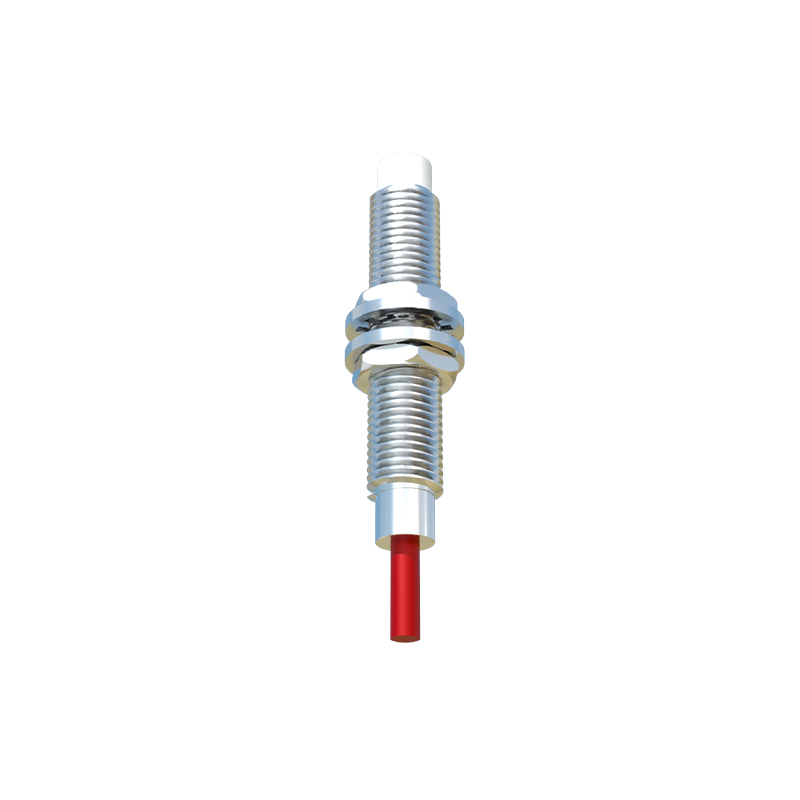
The industrial and commercial applications are rapidly expanding. In automotive safety, magnetic sensors track the proximity of vehicles for blind-spot detection and parking assistance. In logistics, it enables precise tracking of metal containers or pallets in warehouses. In the burgeoning field of augmented reality (AR), magnetic tracking can provide drift-free orientation data for headsets or controllers by creating local magnetic maps, though this requires careful calibration to avoid interference.
However, the technology is not without its challenges. The magnetic signature of a target is not uniform; it depends on the object's mass, shape, magnetic permeability, and history. A small, strongly magnetized tool can present a signal similar to a larger, demagnetized piece of machinery. Environmental magnetic noise, from power lines, reinforced concrete, or passing vehicles, presents a significant signal-to-noise challenge. Furthermore, tracking in urban or industrially dense areas, often termed "magnetically cluttered environments," requires advanced adaptive filtering and machine learning techniques to distinguish the target signature from the chaotic background.
Future advancements are focused on improving discrimination and intelligence. The integration of Artificial Intelligence and machine learning allows systems to learn and recognize specific magnetic fingerprints of different vehicle types or machinery, moving beyond simple detection to classification. Miniaturization of quantum magnetometers promises orders-of-magnitude increases in sensitivity in smaller packages, enabling deployment on drones or small autonomous vehicles for wide-area surveillance. Sensor fusion, combining magnetic data with inputs from LiDAR, radar, or acoustic sensors, creates a more resilient and comprehensive tracking picture, mitigating the limitations of any single modality.
In conclusion, ferrous magnetic target proximity tracking is a mature yet evolving field. It provides a passive, non-line-of-sight, and often covert means of detecting and monitoring objects fundamental to modern infrastructure and security. As sensor technology and data processing algorithms grow more sophisticated, the precision, range, and applicability of this tracking method will continue to expand, solidifying its role as an indispensable tool in an increasingly complex technological landscape.