In today's highly automated and safety-conscious industrial landscape, the reliability of proximity sensors is non-negotiable. These critical components, responsible for detecting the presence or absence of objects without physical contact, form the backbone of countless systems—from robotic assembly lines and automotive manufacturing to consumer electronics and smart appliances. Consequently, defining and adhering to stringent quality requirements is paramount for ensuring operational integrity, safety, and long-term cost-effectiveness.
The foundation of proximity sensor quality begins with its core performance parameters. Detection range, often specified as nominal (Sn) and effective (Sr), must be precise and stable. A high-quality sensor maintains a minimal deviation between its rated sensing distance and its actual performance under standard conditions, with minimal hysteresis. Repeat accuracy, the sensor's ability to consistently detect an object at the same point, is another vital metric, typically required to be within a tiny fraction of the nominal range. Response time, the speed at which the sensor reacts to a target's appearance or disappearance, is crucial for high-speed applications. Quality sensors offer fast and predictable switching frequencies, ensuring no missed detections in rapid cycles.
Environmental robustness constitutes a major pillar of quality requirements. Industrial sensors must be built to withstand harsh conditions. Ingress Protection (IP) ratings, such as IP67 or IP69K, certify resistance to dust and water immersion, essential for washdown environments in food processing or outdoor use. Temperature tolerance is critical; a quality sensor operates reliably across a wide specified range, from sub-zero cold storage to the intense heat near furnaces, without drift in sensing characteristics. Resistance to chemicals, oils, and coolants is mandatory for automotive and machining applications, often requiring specific housing materials like PBT or stainless steel.
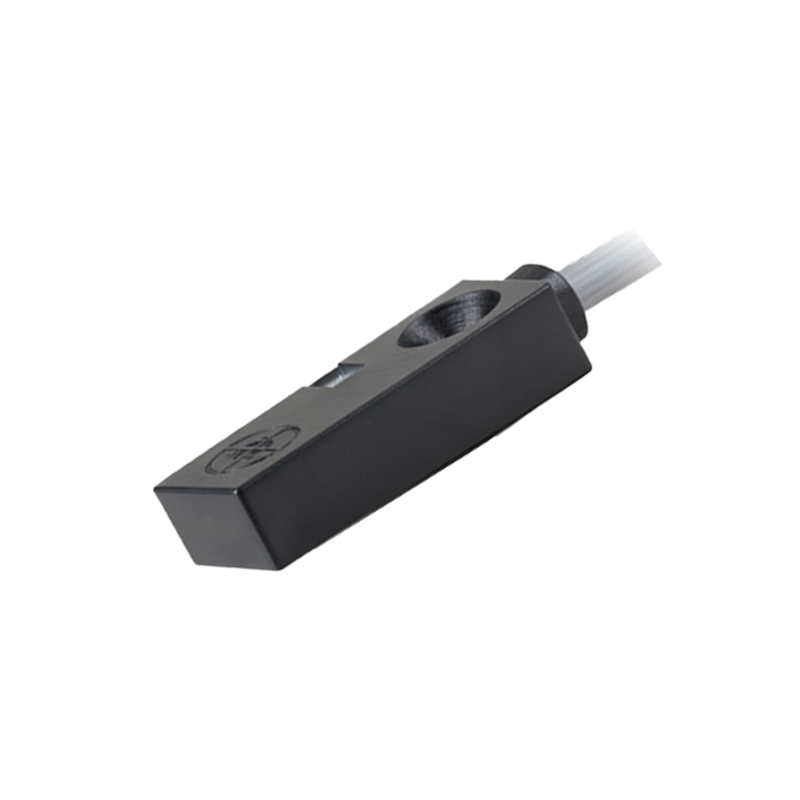
Electrical characteristics and interfacing reliability are equally important. Stable switching behavior, with clean signal edges and minimal bounce, prevents erroneous signals in control systems. Quality sensors provide protection against common electrical threats: reverse polarity, short-circuit, overload, and voltage spikes or transients. For analog output sensors, linearity and temperature drift of the output signal are key quality indicators. Electromagnetic Compatibility (EMC) is non-negotiable; a sensor must neither be susceptible to external electromagnetic interference nor emit excessive interference itself, complying with standards like IEC 60947-5-2.
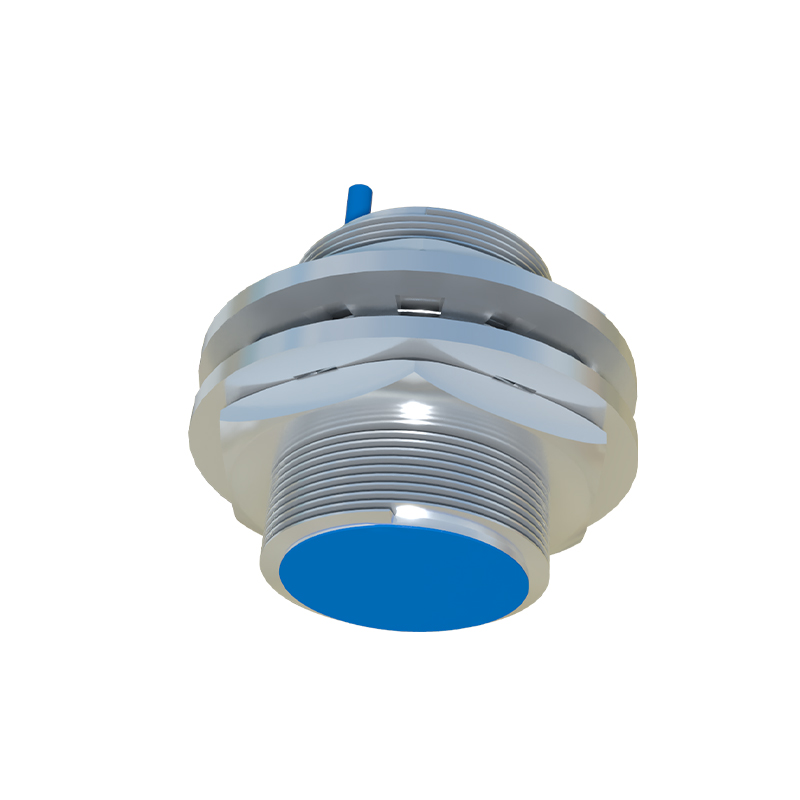
Mechanical construction and longevity are direct reflections of quality. The housing must be rugged, often vibration and shock-resistant per IEC standards, to survive in demanding mechanical environments. The sensing face material must be tough enough to resist abrasion from repeated contact with targets. Connector types (e.g., M8, M12) should be robust, with secure locking mechanisms, and cabling should feature high-flex ratings if used in moving applications. Mean Time Between Failures (MTBF) is a statistical measure of reliability, with quality sensors boasting tens of thousands or even hundreds of thousands of hours of operation.
Beyond the product itself, quality encompasses the entire supply chain. Reputable manufacturers adhere to international quality management systems like ISO 9001. Comprehensive documentation, including detailed datasheets with all performance graphs, dimensional drawings, and compliance certificates, is a hallmark of quality. Traceability of components and materials is increasingly important. Furthermore, consistent performance across large production batches—minimal unit-to-unit variation—is a true test of manufacturing quality control.
Finally, application-specific certifications often become de facto quality requirements. In safety systems, sensors may need to comply with Performance Levels (PL) per ISO 13849 or Safety Integrity Levels (SIL) per IEC 61508. For use in explosive atmospheres (ATEX, IECEx), intrinsically safe or explosion-proof designs are required. In the automotive sector, compliance with IATF 16949 and specific OEM standards is mandatory.
Selecting a proximity sensor based on a comprehensive view of these quality requirements, rather than price alone, prevents costly downtime, ensures personnel safety, and guarantees the smooth, predictable operation of automated systems. It is an investment in the resilience and efficiency of the entire production process.