In today's fast-paced industrial landscape, the demand for accurate, reliable, and instantaneous measurement solutions has never been greater. Real-time laser distance sensors have emerged as a cornerstone technology, enabling unprecedented levels of precision and efficiency across a multitude of applications. These advanced devices operate on the principle of emitting a focused laser beam towards a target and calculating the distance by analyzing the reflected light. The core measurement techniques predominantly include time-of-flight (ToF) and phase-shift analysis, each offering distinct advantages in terms of range, resolution, and response speed.
The operational superiority of real-time laser sensors lies in their non-contact nature. Unlike mechanical probes or ultrasonic sensors, they eliminate the risk of surface damage or wear, making them ideal for measuring delicate, hot, or moving objects. A key performance metric is the update rate, often reaching into the kilohertz range, which allows for continuous, high-speed monitoring. This capability is critical in dynamic environments such as robotic guidance, where a robotic arm requires millisecond-level feedback to adjust its path accurately. Similarly, in conveyor belt systems, these sensors perform real-time dimensional checks and sorting of products with sub-millimeter accuracy, ensuring consistent quality control without slowing down production lines.
Integration into automated systems is seamless, thanks to standardized digital interfaces like IO-Link, Ethernet/IP, and PROFINET. These protocols facilitate not only the transmission of distance data but also the remote configuration and diagnostics of the sensor itself, aligning with Industry 4.0 paradigms for smart factories. For instance, in automated storage and retrieval systems (AS/RS), laser sensors provide real-time positioning data of shuttle carts and inventory, optimizing storage density and retrieval times. Their high immunity to ambient light and electromagnetic interference ensures stable performance even in challenging industrial settings.
Another significant domain is structural health monitoring and alignment. In large-scale construction or machinery installation, laser sensors offer long-range measurement capabilities, sometimes exceeding hundreds of meters, with exceptional accuracy. They are employed to monitor minute deformations in bridges, settlements in foundations, or the precise alignment of turbine blades and rail tracks. The real-time data stream enables predictive maintenance, allowing engineers to address potential issues before they escalate into costly failures.
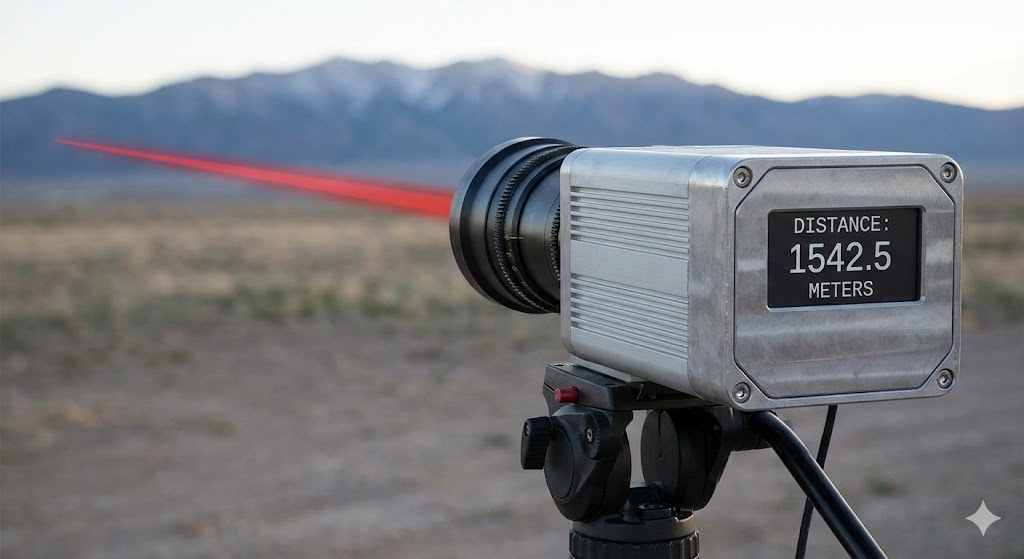
The evolution of laser diode and receiver technology has also led to miniaturization and enhanced robustness. Modern sensors are available in compact, rugged housings rated IP67 or higher, capable of withstanding vibrations, temperature extremes, and exposure to dust or moisture. This durability expands their use to outdoor and harsh environments, such as in agricultural machinery for terrain profiling or in mining vehicles for obstacle detection.
Looking ahead, the convergence of laser sensing with artificial intelligence and edge computing is set to unlock even greater potential. Sensors equipped with onboard processing can now perform initial data analysis, such as detecting specific patterns or anomalies, and trigger immediate actions within a control system. This reduces latency and bandwidth requirements for central processors. As industries continue to strive for higher automation, efficiency, and quality, real-time laser distance sensors will undoubtedly remain an indispensable tool, driving innovation and precision in measurement technology.
In conclusion, real-time laser distance sensors represent a critical fusion of optics, electronics, and software, delivering the speed and accuracy required by modern industrial automation. Their versatility and reliability make them a fundamental component in enhancing productivity, ensuring safety, and enabling the complex, data-driven operations that define contemporary manufacturing and engineering.
