In the realm of industrial automation and precision measurement, the MOS (Metal-Oxide-Semiconductor) laser sensor stands as a pivotal technology, enabling high-accuracy, non-contact detection across diverse and demanding environments. This article delves into the operational principles, key applications, and recent technological advancements of MOS laser sensors, providing a comprehensive overview for engineers and technical decision-makers.
Fundamentally, a MOS laser sensor integrates a laser diode as the light source and a MOS-based photodetector, typically a photodiode or a specialized MOS image sensor, as the receiving element. The laser diode emits a focused, coherent beam of light towards a target. Upon striking the surface, the light is reflected or scattered back. The MOS photodetector, characterized by its high sensitivity and fast response time, captures this returning light. The core measurement is based on one of several principles: triangulation, time-of-flight (ToF), or laser contrast. In triangulation, the position of the reflected light spot on the detector changes with the target's distance, allowing for precise displacement measurement. Time-of-flight sensors calculate distance by measuring the phase shift or the direct time delay between the emitted and received laser pulse. Laser contrast sensors are optimized to detect the presence or absence of a target based on the intensity of the reflected beam, excelling in applications requiring high-speed binary detection.
The advantages of MOS laser sensors are manifold. Their non-contact nature eliminates mechanical wear and prevents damage to delicate targets. They offer exceptional resolution, often in the micron or sub-micron range, and high repeatability. Furthermore, their response time is extremely fast, suitable for high-speed production lines. The integration of MOS technology in the detector allows for miniaturization, low power consumption, and the potential for on-chip signal processing, enhancing reliability and reducing system complexity.
Applications for MOS laser sensors are vast and critical to modern industry. In automotive manufacturing, they are used for precise gap and flush measurement between body panels, robot guidance, and weld seam tracking. Within the electronics sector, these sensors facilitate wafer alignment, component placement verification, and solder paste inspection. Packaging and logistics rely on them for height profiling, box dimensioning, and label detection. Furthermore, they are indispensable in quality control for measuring thickness, warpage, and surface defects of various materials, from metals and plastics to glass and ceramics.

Recent advancements continue to push the boundaries of MOS laser sensor capabilities. The development of multi-pixel MOS arrays and CMOS-based ToF sensors has enabled not just single-point measurement but also 3D profiling and contour scanning. Enhanced algorithms for background suppression and ambient light rejection have significantly improved performance in challenging lighting conditions. The integration of industrial communication protocols like IO-Link, PROFINET, and EtherNet/IP facilitates seamless data exchange and remote parameter configuration within Industry 4.0 frameworks. Additionally, miniaturization efforts have produced incredibly compact sensor heads, allowing installation in space-constrained applications.
Selecting the appropriate MOS laser sensor requires careful consideration of several parameters. The required measuring range, resolution, and accuracy are primary determinants. The target's material, color, and surface finish (e.g., shiny, matte, transparent) greatly influence the sensor's performance and may necessitate models with specialized laser wavelengths or receiver optics. Environmental factors such as temperature extremes, dust, humidity, and exposure to washdowns dictate the needed ingress protection (IP) rating and housing material. Finally, the output type (analog, digital switch, serial data) must align with the control system's requirements.
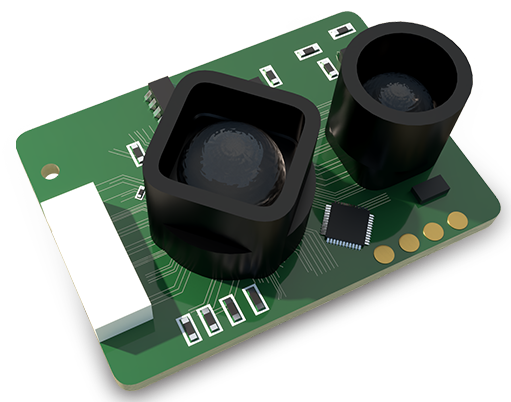
In conclusion, MOS laser sensors represent a sophisticated and versatile solution for precision sensing challenges. Their combination of laser-based measurement and MOS detection technology delivers unmatched performance in terms of speed, accuracy, and reliability. As innovation progresses, particularly in smart sensor functionalities and 3D imaging, their role in enabling advanced automation, robotics, and quality assurance will only become more profound. For engineers designing the next generation of industrial systems, a deep understanding of this technology is essential for optimizing processes and ensuring competitive advantage.
