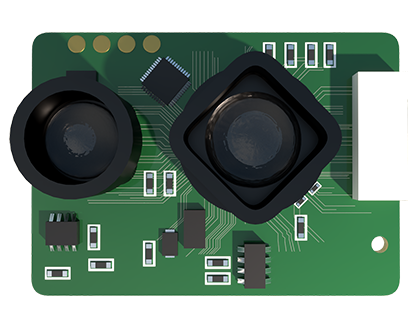
In the realm of industrial automation and environmental monitoring, laser dust sensors have emerged as pivotal components, driving precision and efficiency across various sectors. These sensors utilize laser scattering technology to detect and measure particulate matter (PM) concentrations in real-time, offering unparalleled accuracy compared to traditional methods. The core principle involves emitting a laser beam through a sampling chamber; when dust particles pass through, they scatter light, which is then captured by a photodetector. The intensity of scattered light correlates directly with particle size and concentration, enabling detailed analysis of PM levels, including PM1.0, PM2.5, and PM10.
The evolution of laser dust sensors has been marked by significant technological breakthroughs. Early iterations faced challenges such as sensitivity to ambient light and humidity, but modern designs incorporate advanced algorithms and optical filters to mitigate interference. For instance, the integration of temperature and humidity compensation modules ensures stable performance in diverse environments, from manufacturing floors to outdoor settings. Additionally, miniaturization has allowed these sensors to be embedded into portable devices, facilitating widespread use in air quality monitors, HVAC systems, and smart home appliances.
In industrial applications, laser dust sensors play a critical role in ensuring workplace safety and regulatory compliance. In manufacturing plants, they monitor airborne contaminants generated during processes like welding, cutting, or grinding, helping to prevent respiratory hazards and maintain cleanroom standards. The data collected can be integrated with IoT platforms for predictive maintenance, alerting operators to potential equipment failures or filter clogging before they escalate. Moreover, in the energy sector, these sensors are deployed in coal-fired power plants and refineries to track emissions, aiding in environmental protection efforts and adherence to stringent air quality regulations.

The automotive industry also benefits from laser dust sensors, particularly in cabin air quality management. Modern vehicles are equipped with these sensors to detect pollutants entering the cabin, automatically activating air purification systems to enhance passenger comfort and health. Similarly, in agriculture, they assist in monitoring dust levels in greenhouses or livestock facilities, optimizing ventilation and reducing disease risks. The versatility of laser dust sensors extends to research institutions, where they support studies on atmospheric pollution and climate change by providing high-resolution particulate data.
Despite their advantages, challenges persist, including calibration drift over time and high costs for premium models. Ongoing research focuses on enhancing durability and affordability, with innovations like self-cleaning mechanisms and machine learning-based calibration. As industries increasingly prioritize sustainability and smart technology, the demand for reliable laser dust sensors is projected to grow, fostering further advancements in sensor design and application. Ultimately, these devices are not merely tools for measurement but enablers of a cleaner, safer, and more efficient industrial landscape, underscoring their indispensable role in the future of automation and environmental stewardship.