In modern industrial automation, proximity sensors play a crucial role in object detection and counting without physical contact. A well-designed proximity sensor counting program is fundamental for inventory management, production line monitoring, and quality control across various manufacturing sectors. This guide explores the practical implementation of such programs, focusing on reliability, accuracy, and integration.
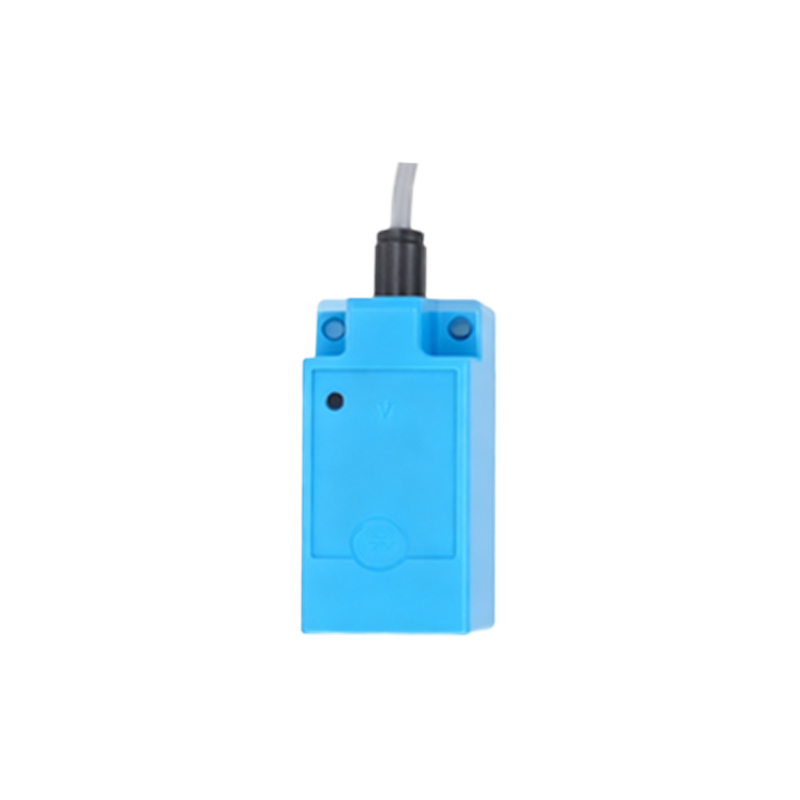
The core principle involves a proximity sensor, typically inductive, capacitive, or photoelectric, generating a digital signal when an object enters its detection field. This signal transition serves as the primary input for the counting logic. The most basic counting program increments a counter variable each time the sensor's output changes from a low to a high state, indicating the arrival of an object. However, industrial applications demand more sophistication to handle real-world challenges like object jitter, varying speeds, and sensor noise.
A robust program incorporates signal debouncing. Raw sensor signals can oscillate or "bounce" during a single detection event, potentially triggering multiple false counts. Effective software debouncing uses timing functions to ignore rapid, transient signal changes after the initial trigger. For instance, once a rising edge is detected, the program may implement a short delay (e.g., 50-100 milliseconds) before it becomes receptive to a new trigger, ensuring one count per physical object.
For high-speed production lines, timing-based validation becomes essential. The program can measure the time interval between successive sensor triggers. If objects are expected to pass at a minimum interval, any trigger occurring faster than this threshold can be flagged as noise or vibration and discarded. Conversely, missing an expected trigger within a maximum time window can signal a production jam or sensor fault, triggering an alarm.
Integrating the counter with a Human-Machine Interface (HMI) or Supervisory Control and Data Acquisition (SCADA) system is a standard requirement. The program should not only maintain the count in a volatile memory register but also log data to a non-volatile storage or a central database. This allows for shift-wise or batch-wise production analysis. Features like preset batch targets are common; once the count reaches a predefined value, the program can output a control signal to stop a conveyor, activate a diverter, or notify an operator.
Error handling and diagnostics are marks of a professional-grade program. The software should continuously monitor the sensor's health, perhaps by checking for a "stuck" signal state (continuously high or low for an abnormally long period). It should also manage counter overflow and provide manual reset functions under authorized conditions. Implementing a two-sensor system (entry and exit) can enable direction-sensitive counting and occupancy monitoring within a defined zone, adding another layer of intelligence.
The choice of programming environment depends on the control hardware. On platforms like programmable logic controllers (PLCs), counting is often implemented using dedicated counter function blocks (like CTU - Count Up) in ladder logic or structured text. These blocks are optimized for scan-cycle execution and come with built-in reset and preset parameters. In microcontroller-based systems (e.g., using Arduino), the program is typically written in C/C++, utilizing interrupt service routines attached to the sensor's digital input pin for immediate response, with the main loop handling the count logic and communication.
Testing and simulation are vital before deployment. Using a signal generator to simulate object passage at various frequencies helps verify the debouncing logic and maximum counting speed. The program should be tested under expected worst-case scenarios, such as rapid consecutive triggers and power interruptions. Proper documentation of the count logic, sensor parameters, and alarm conditions ensures maintainability and eases future modifications.
Ultimately, a successful proximity sensor counting program is a blend of precise hardware interfacing, intelligent software filtering, and seamless system integration. It transforms a simple binary detection event into a reliable stream of operational data, forming the backbone of automated production tracking and efficiency analytics.