In today's rapidly evolving technological landscape, the one-size-fits-all approach is becoming increasingly obsolete, especially in the realm of sensing technology. Customized proximity sensor solutions are emerging as a critical enabler for innovation across diverse industries, from advanced manufacturing and robotics to consumer electronics and automotive systems. These tailored sensors go beyond standard off-the-shelf components, offering precise detection capabilities engineered for specific operational environments, physical constraints, and performance requirements.
The drive for customization stems from the complex challenges faced by modern applications. A standard inductive sensor might work perfectly on a clean factory floor detecting metal, but fail miserably in a harsh, dusty environment or when tasked with sensing non-metallic materials. Similarly, a capacitive sensor designed for a touch interface may not provide the required range or immunity to interference in an agricultural machine. Customization addresses these gaps by considering factors such as the target material, required sensing distance (from a few millimeters to several meters), response speed, environmental conditions (temperature, humidity, contaminants), electrical interfaces, and physical form factor.
The process of developing a custom proximity sensor begins with a deep dive into the application's core needs. Engineers collaborate closely with clients to define the problem space: What exactly needs to be detected? Under what conditions? What constitutes a reliable detection event? This phase is crucial for selecting the underlying sensing principle. The primary technologies include Inductive sensors for metals, Capacitive sensors for both metallic and non-metallic materials, Ultrasonic sensors for longer ranges and various materials, and Optical sensors (including infrared and laser) for precise positioning. A hybrid approach is often the key to a robust solution.
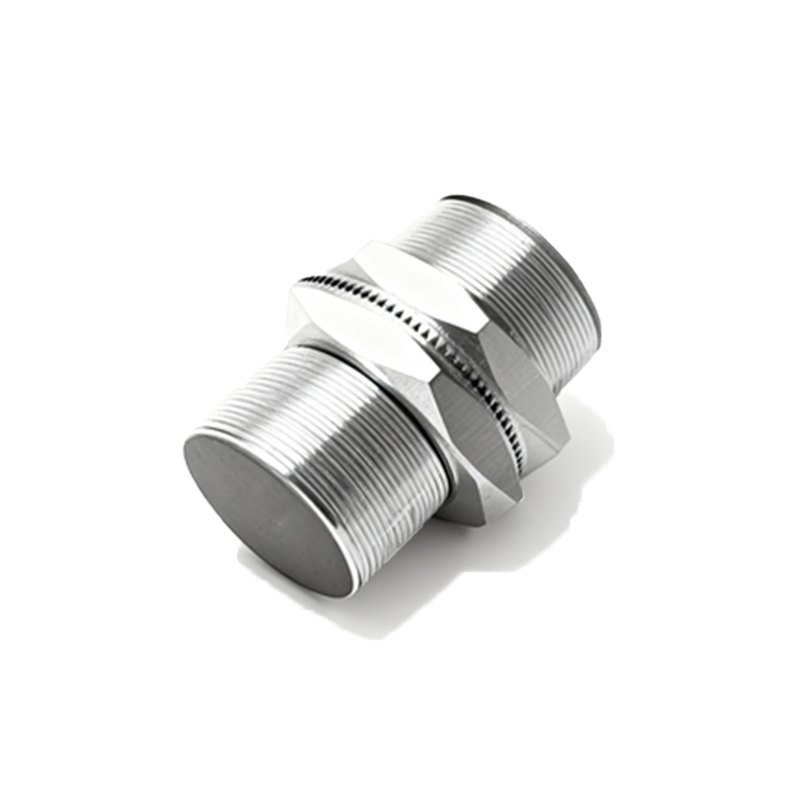
Once the technology is chosen, the customization journey focuses on the sensor's "personality." This involves tailoring the sensing field shape and size—creating a focused spot, a narrow beam, or a wide area field. The housing material and design are engineered for specific IP (Ingress Protection) ratings, chemical resistance, mechanical strength, and thermal management. Electronics are fine-tuned to achieve the desired switching frequency, hysteresis, output type (PNP/NPN, analog, IO-Link), and noise immunity. Calibration is performed for the exact target material and distance, ensuring repeatability and accuracy that generic sensors cannot match.
The benefits of such a tailored approach are substantial. It leads to enhanced system reliability and reduced false triggers, which directly translates to less downtime and higher productivity. A sensor designed to fit a specific space can enable more compact and efficient machine designs. Optimized performance often results in lower energy consumption. Perhaps most importantly, a custom sensor solves problems that standard products cannot, providing a definitive competitive advantage.
Real-world applications are vast. In automotive assembly, custom inductive sensors with specialized housings detect specific engine components on fast-moving lines. In food and beverage packaging, wash-down capacitive sensors with FDA-approved materials detect plastic or glass containers. In semiconductor fabrication, ultra-clean, high-precision optical sensors handle delicate wafers. Even consumer devices like smartphones and robotic vacuum cleaners rely on miniaturized, custom-tuned proximity sensors for intuitive user interactions and navigation.
Choosing the right partner for customization is critical. Look for a provider with proven expertise in multiple sensing technologies, a rigorous development and testing process, and the ability to scale from prototype to full production. They should act not just as a supplier, but as a solutions engineer. Investing in a customized proximity sensor is not merely a component purchase; it is an investment in optimizing a critical point within a larger system, driving efficiency, enabling new functionalities, and ultimately, fostering innovation. As machines and devices grow smarter and more specialized, the demand for sensing solutions that are equally intelligent and specific will only continue to rise.