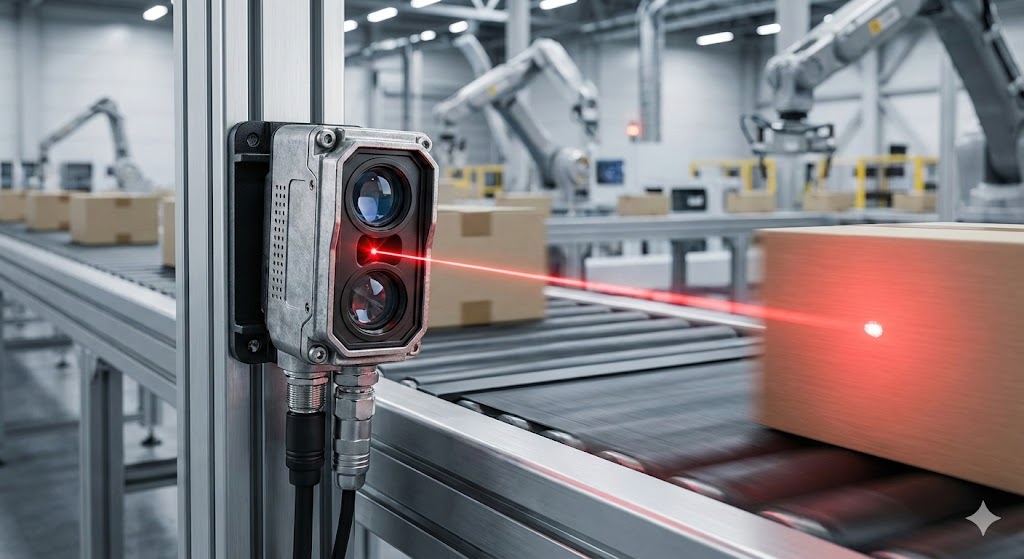
In the realm of modern measurement and sensing technology, high-precision laser rangefinder sensors stand as a cornerstone of accuracy and reliability. These sophisticated devices utilize the fundamental properties of light to determine distances with exceptional precision, often down to sub-millimeter levels. Unlike traditional measuring tools, they offer non-contact, rapid, and highly repeatable measurements, making them indispensable across a diverse spectrum of industries.
The core operating principle of most high-precision laser rangefinders is based on either time-of-flight (ToF) or phase-shift measurement. The time-of-flight method calculates distance by measuring the time it takes for a laser pulse to travel to a target and back. Given the constant speed of light, this elapsed time is directly proportional to the distance. For extreme precision, especially at shorter ranges, the phase-shift method is often employed. This technique involves modulating the amplitude of the laser beam with a high-frequency signal. The sensor measures the phase difference between the emitted and reflected modulated light. Since the wavelength of the modulation is known, calculating the distance from this phase shift allows for remarkably fine resolution.
The construction of these sensors is a marvel of optoelectronics. Key components include a laser diode, typically operating in the visible red or near-infrared spectrum for safety and performance balance; a high-sensitivity photodetector, such as an avalanche photodiode (APD), to capture the faint return signal; and advanced signal processing circuitry. This circuitry is crucial for filtering noise, accurately timing pulses or analyzing phase shifts, and converting the raw data into a stable, digital distance reading. Environmental compensation algorithms are also integrated to account for variables like air temperature and pressure, which can slightly affect the speed of light and thus the measurement.
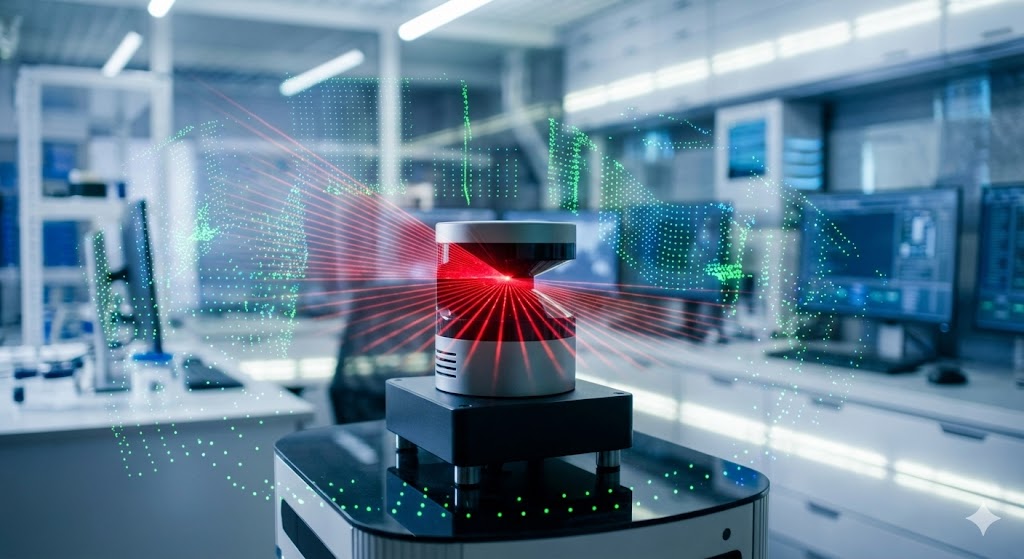
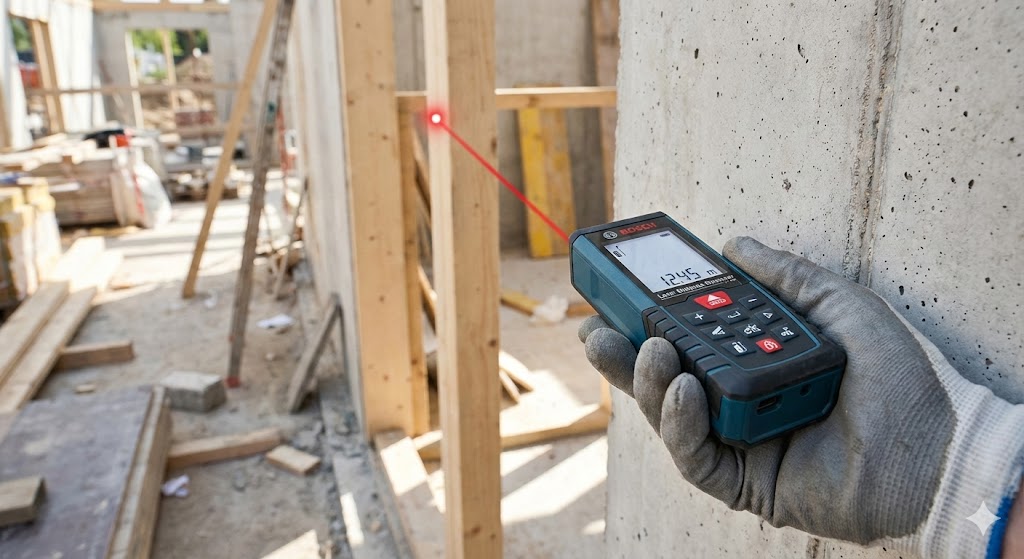
The applications for high-precision laser rangefinders are vast and growing. In industrial automation and robotics, they are used for precise positioning, object detection, and guidance of autonomous vehicles within factories and warehouses. The construction and civil engineering sectors rely on them for surveying, monitoring structural deformations, and aligning large machinery with pinpoint accuracy. In the burgeoning field of autonomous driving, LiDAR (Light Detection and Ranging) systems, which are essentially arrays of laser rangefinders, create detailed 3D maps of the vehicle's surroundings. Furthermore, they are critical in forestry for measuring tree height, in sports for tracking athletic performance, and in security systems for perimeter monitoring.
Selecting the right sensor requires careful consideration of several parameters. Range and accuracy are the most cited specifications, but measurement rate (how many readings per second) is vital for dynamic applications. The laser spot size determines the minimum target area, while the interface (e.g., RS232, Ethernet, USB, analog output) dictates how the sensor integrates with other systems. Operational conditions such as ambient light, dust, fog, and the reflectivity of the target material (from retro-reflective tape to dark, absorbent surfaces) can significantly impact performance. Modern sensors often feature automatic calibration and advanced filtering to mitigate these challenges.
Looking ahead, the future of high-precision laser rangefinding is geared towards even greater miniaturization, lower power consumption, and enhanced intelligence. The integration of these sensors into Internet of Things (IoT) networks will enable widespread, connected sensing for smart cities and infrastructure. Advances in semiconductor lasers and detectors promise higher performance at lower costs. Furthermore, the fusion of LiDAR data with other sensor inputs like cameras and radar through sophisticated sensor fusion algorithms will be key to developing more robust and capable autonomous systems. As the technology continues to evolve, high-precision laser rangefinders will undoubtedly unlock new possibilities in measurement, automation, and spatial awareness, solidifying their role as a critical enabling technology for the 21st century.