In industrial and scientific fields where operations push the boundaries of conventional technology, the demand for reliable measurement tools in extreme conditions is paramount. Among these critical tools, the high-temperature laser rangefinder sensor stands out as a specialized instrument engineered to deliver precise distance measurements in environments where heat would incapacitate standard sensors. This advanced technology is not merely an incremental improvement but a fundamental re-engineering of optical and electronic components to withstand and perform under thermal duress.
The core principle of a laser rangefinder—emitting a laser pulse towards a target and calculating distance based on the time-of-flight (ToF) or phase shift of the reflected signal—remains unchanged. However, the challenge of high-temperature environments, often exceeding 150°C and sometimes reaching 500°C or more, introduces a host of complications. Standard semiconductor lasers, photodetectors, and internal electronics experience performance degradation, wavelength drift, and accelerated failure when subjected to sustained high heat. A high-temperature variant addresses these issues through a multi-faceted approach involving material science, innovative cooling, and intelligent design.
Material selection is the first line of defense. Critical components are constructed from ceramics, specialized high-temperature plastics, and metal alloys with low thermal expansion coefficients. These materials maintain structural integrity and dimensional stability, ensuring optical alignment—the precise calibration between the laser emitter, receiver lens, and detector—does not falter under thermal stress. The laser diode itself may be a specialized type, such as a Vertical-Cavity Surface-Emitting Laser (VCSEL), chosen for its better thermal stability and efficiency at elevated temperatures compared to edge-emitting lasers.
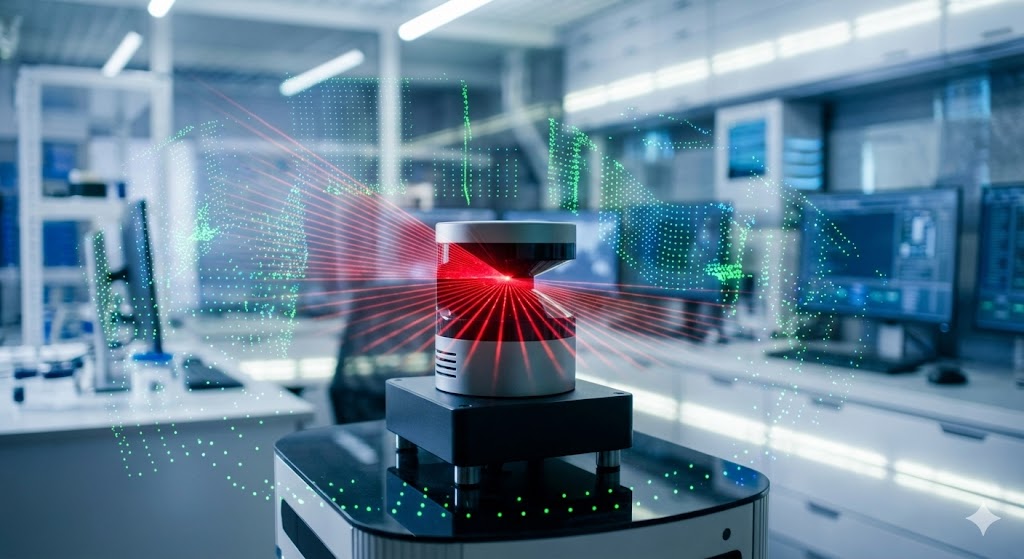
Thermal management is arguably the most critical subsystem. Passive cooling through strategic heat sinks made of materials like copper or aluminum with high thermal conductivity is essential. In more demanding applications, active cooling systems may be integrated. These can include miniature thermoelectric coolers (Peltier devices) that create a heat pump effect, or even micro-channel liquid cooling loops that circulate a coolant to draw heat away from sensitive electronic cores. This management system is designed not to bring the sensor to room temperature, which would be energetically impractical, but to maintain a stable, operational temperature window for the delicate internal circuitry.
Furthermore, the electronic signal processing unit is hardened against heat. This involves using components rated for high-temperature operation and implementing compensation algorithms within the firmware. These algorithms can adjust for known thermal effects on laser output power and detector sensitivity, ensuring the calculated distance remains accurate even as the sensor's internal temperature fluctuates. The housing is typically a sealed, ruggedized unit with high-temperature O-rings to protect against dust, moisture, and corrosive atmospheres often present in hot industrial settings.
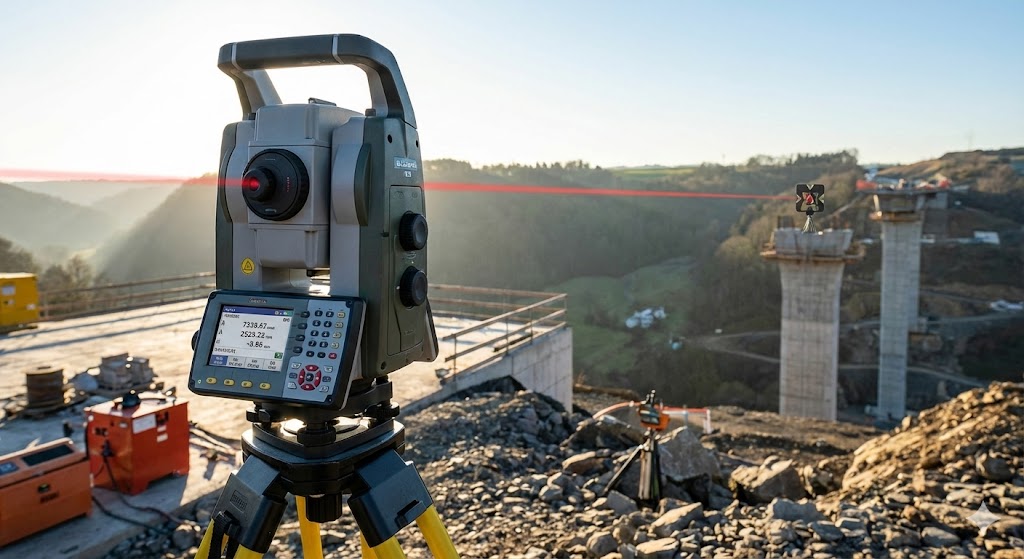
The applications for these robust sensors are found in industries where high temperatures are a constant. In metal production and processing, such as continuous casting or hot rolling mills, they are used to monitor the dimensions and position of glowing steel slabs or coils with millimeter precision, enabling automated control and improving yield. In glass manufacturing, they measure the thickness and contour of molten glass sheets. Within the energy sector, they play a role in monitoring refractory linings in boilers and furnaces, or in measuring coal pile levels in hot, dusty silos. Even in aerospace and automotive testing, they provide critical distance data during high-temperature component and engine tests.
Selecting the right high-temperature laser rangefinder requires careful consideration of several parameters beyond the maximum ambient temperature specification. The required measurement range, accuracy (which may slightly degrade at extreme temperatures), response speed, and the type of laser (eye-safe Class 1 is often mandatory in industrial workplaces) are all crucial. The sensor's ingress protection (IP) rating against solids and liquids and its resistance to vibration are equally important for survival in harsh plant environments.
In conclusion, the high-temperature laser rangefinder sensor represents a convergence of optical engineering, materials science, and thermal dynamics. It transforms a standard precision tool into a resilient workhorse capable of operating at the fiery heart of modern industry. By providing reliable, non-contact measurement data where few other devices can survive, it enhances process control, safety, and efficiency, proving that even in the most extreme conditions, technological innovation can maintain a clear and precise vision.