In the realm of industrial automation and precision fabrication, laser cutting and engraving systems have become indispensable. A critical component ensuring the accuracy and quality of these processes is the laser height control system, specifically the sensor that measures and maintains the optimal focal distance between the laser head and the workpiece. This article delves into the operational modes of laser height sensors, explaining their principles, applications, and how to select the appropriate mode for specific tasks.
The primary function of a laser height sensor is to maintain a consistent and precise distance. This is crucial because the laser's focal point—where the beam is at its smallest and most powerful—must be accurately positioned on the material's surface for optimal cutting or engraving results. Variations in material thickness, warping, or an uneven worktable can lead to defocusing, resulting in poor edge quality, incomplete cuts, or reduced engraving detail.
Laser height sensors typically operate in several distinct modes, each suited for different materials and applications. The most common modes are Contact Mode, Capacitive Mode, and the widely adopted Triangulation (or Laser Displacement) Mode.
1. Contact Mode (Mechanical Touch)

This is a traditional and straightforward method. A physical probe or nozzle touches the material surface to establish a reference height. Upon contact, the sensor signals the controller to record the Z-axis position. The head then retracts to a predefined working distance.
* How it works: The system drives the nozzle down until it makes physical contact. A micro-switch or pressure sensor detects the touch, triggering the height measurement.
* Best For: This mode is highly reliable for conductive materials like metals and is often unaffected by material color or transparency. It's commonly used in plasma cutting and some robust laser cutting applications where a slight physical touch is acceptable.
* Limitations: The contact force, however minimal, can mark or scratch sensitive surfaces like acrylic, polished metals, or coated materials. It is also slower for scanning uneven surfaces as it requires a touch-point for each measurement location.
2. Capacitive Mode
This non-contact mode functions by detecting changes in capacitance between the sensor probe and the conductive workpiece.
* How it works: The sensor acts as one plate of a capacitor, with the material acting as the other. The distance between them affects the capacitance. The sensor electronics measure this capacitance and convert it into a precise distance measurement.
* Best For: It excels with conductive materials, especially metals. It offers fast, non-contact measurement and is effective even with oily or painted metal surfaces, as long as the coating is not too thick and insulating.
* Limitations: Its major drawback is material dependency. It does not work reliably with non-conductive materials like wood, plastic, glass, or stone. Performance can also be influenced by the material's grounding and the size of the workpiece.
3. Triangulation (Laser Displacement) Mode
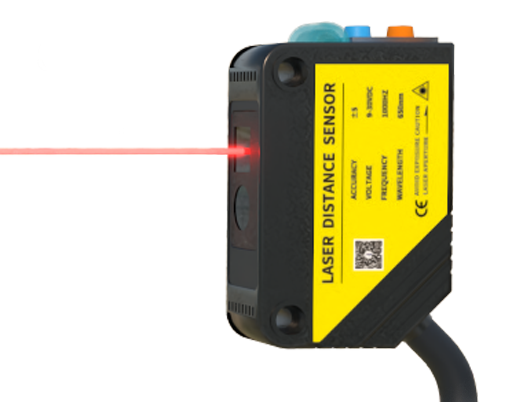
This is the most versatile and prevalent non-contact method in modern laser systems. It uses optical triangulation to measure distance with high speed and accuracy.
* How it works: A low-power laser diode projects a visible or infrared spot onto the material surface. The reflected light is focused onto a position-sensitive detector (PSD) or a CMOS/CCD sensor. As the distance to the target changes, the position of the reflected spot on the sensor shifts. Using trigonometric calculations, the controller determines the exact distance.
* Best For: This mode is incredibly flexible. It works on almost any solid material—metal, wood, plastic, ceramic, stone, fabric—regardless of conductivity. It is ideal for scanning uneven surfaces, 3D objects, or materials that are prone to warping. It enables real-time, dynamic height adjustment during cutting, which is essential for high-speed contour following.
* Limitations: It can be challenged by highly reflective surfaces (like mirrors) or transparent materials (like clear glass or acrylic), which may scatter or transmit the laser beam instead of providing a clear reflection. Some advanced sensors use special algorithms or modulated light to mitigate these issues.
Choosing the Right Mode: A Practical Guide
Selecting the appropriate sensor mode is key to process optimization.
* For dedicated metal cutting (especially with thick plates), Capacitive Mode is often a robust and cost-effective choice.
* For mixed-material workshops or applications involving non-conductives, Triangulation Mode is the undisputed champion for its versatility.
* Contact Mode remains relevant for specific, heavy-duty industrial environments where simplicity and reliability with conductive materials are paramount.
Modern laser controllers often allow for mode switching or even hybrid approaches. For instance, a system might use a quick capacitive touch to establish an initial height for a metal sheet before switching to triangulation for dynamic following during cutting. Understanding the material properties, surface conditions, and the required precision and speed will guide engineers and operators toward the most effective sensor mode configuration, ultimately ensuring cleaner cuts, finer engraving, and maximized machine productivity. Regular calibration and maintenance of the height sensor are equally critical to sustain long-term accuracy regardless of the mode employed.