In the rapidly evolving landscape of industrial automation and quality control, X-ray laser sensors have emerged as a pivotal technology, offering unparalleled precision in non-contact measurement and inspection. Unlike conventional optical or ultrasonic sensors, these devices utilize a highly focused beam of X-ray photons, generated through sophisticated laser-driven processes, to penetrate materials and gather detailed internal data. The core principle hinges on the interaction between X-ray photons and the atomic structure of the target object. As the beam passes through a material, it is attenuated based on the material's density, thickness, and composition. A detector on the opposite side captures the transmitted or scattered radiation, converting it into a high-resolution digital signal. This data is then processed by advanced algorithms to construct precise 2D or even 3D images, revealing internal features, defects, or dimensional characteristics invisible to the naked eye or other sensor types.
The technological foundation of modern X-ray laser sensors is built upon compact, high-brightness X-ray sources, often using laser-produced plasmas. A powerful, pulsed laser is focused onto a metal target, creating a micro-plasma that emits a burst of X-rays. This method allows for precise control over the X-ray pulse duration and energy, enabling tailored solutions for different applications. Coupled with highly sensitive detectors like CMOS flat panels or scintillation counters, these systems achieve exceptional spatial resolution and signal-to-noise ratios. The integration of real-time processing units and machine learning software further enhances their capability, allowing for automated defect recognition, thickness profiling, and compositional analysis at production-line speeds.
The industrial applications of X-ray laser sensors are vast and transformative. In electronics manufacturing, they are indispensable for inspecting solder joints, wire bonds, and internal connections within integrated circuits and PCB assemblies, ensuring reliability and preventing latent failures. The aerospace and automotive sectors rely on them for non-destructive testing (NDT) of critical components such as turbine blades, composite materials, and welded joints, detecting cracks, porosity, or inclusions that could compromise structural integrity. In food and pharmaceutical packaging, these sensors verify seal integrity, check for contaminants, and perform fill-level detection without compromising the sterile barrier. Furthermore, in additive manufacturing (3D printing), they provide in-situ monitoring of the printing process, identifying layer-by-layer defects like voids or incomplete fusion, which is crucial for certifying high-value parts.
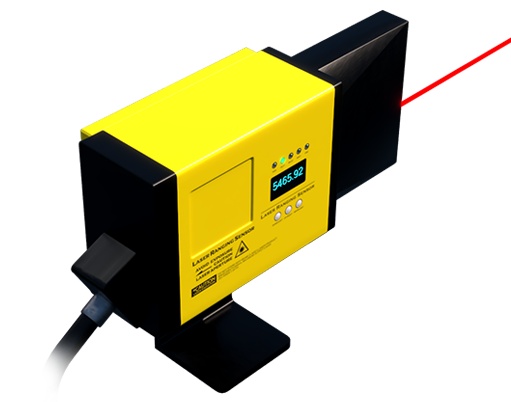
The advantages over traditional inspection methods are significant. X-ray laser sensors provide true volumetric inspection, unlike surface-only techniques. They are non-destructive, preserving the sample, and can operate in harsh environments where optical systems fail due to smoke, dust, or opaque materials. Their high speed and automation compatibility make them ideal for 100% inline inspection, drastically reducing waste and improving overall equipment effectiveness (OEE). However, implementing this technology requires careful consideration of safety protocols due to ionizing radiation, necessitating proper shielding and regulatory compliance. The initial capital investment and need for specialized expertise for operation and data interpretation are also factors to be weighed against the long-term ROI from improved quality and reduced recalls.
Looking ahead, the future of X-ray laser sensors is geared towards greater miniaturization, higher speeds, and enhanced intelligence. The development of laser-driven table-top X-ray sources continues to make the technology more accessible. Integration with artificial intelligence and digital twin systems will enable predictive quality control, where sensor data not only identifies defects but also predicts process deviations before they occur. As Industry 4.0 and smart factories become the norm, X-ray laser sensors will solidify their role as the eyes into the invisible, driving unprecedented levels of quality, safety, and efficiency across global manufacturing and beyond.