Time-of-Flight (TOF) laser distance sensors represent a cornerstone technology in modern industrial automation, robotics, and measurement systems. Their ability to provide fast, accurate, and reliable non-contact distance measurements has revolutionized numerous applications. This article delves into the operational principles, key performance parameters, diverse applications, and critical selection criteria for engineers integrating TOF sensors into their designs.
At its core, a TOF laser sensor measures distance by calculating the time it takes for a pulse of laser light to travel to a target and back to the sensor. The fundamental formula is straightforward: Distance = (Speed of Light × Time of Flight) / 2. Modern sensors emit short, modulated laser pulses (often in the near-infrared spectrum for eye safety and performance) and utilize highly sensitive photodetectors to capture the reflected signal. Advanced timing circuits, such as Time-to-Digital Converters (TDCs), measure the nanosecond-scale intervals with extreme precision. Some systems use continuous wave modulation, measuring the phase shift of the reflected light rather than a discrete pulse time, which can offer advantages in certain accuracy and range scenarios. The sensor's internal processor then converts this time or phase data into a precise distance value, typically output via analog voltage/current, digital interfaces like RS-232/485, or industrial protocols such as IO-Link, Ethernet/IP, or PROFINET.
Key performance specifications define a TOF sensor's suitability for an application. Measuring Range is the primary consideration, with sensors available from a few centimeters up to several hundred meters. Accuracy and Repeatability are distinct; accuracy refers to the deviation from the true distance, while repeatability indicates the consistency of measurements under unchanged conditions. High-performance models achieve sub-millimeter repeatability. Measurement Rate or frequency dictates how quickly the sensor updates its output, critical for dynamic applications like object tracking on fast conveyor belts. Laser Spot Size influences measurement stability on uneven or textured surfaces. Environmental Robustness is paramount in industrial settings, encompassing factors like Ingress Protection (IP) ratings for dust and water resistance, operating temperature range, and resistance to ambient light interference. Many industrial-grade sensors feature robust metal housings and are designed to withstand vibration and shock.
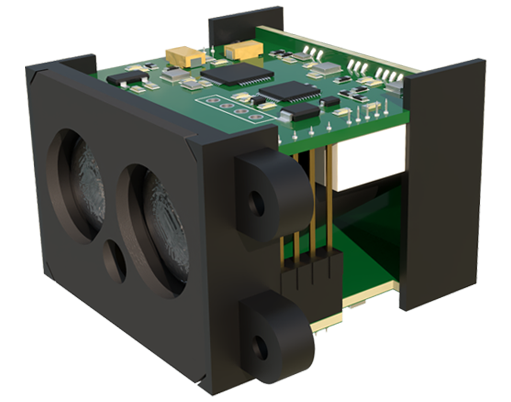
The application landscape for TOF laser sensors is vast and growing. In Factory Automation, they are indispensable for object presence detection, bin level monitoring, robotic pick-and-place guidance (especially for random bin picking), and conveyor belt profiling. The Automotive Industry employs them in assembly line verification, AGV (Automated Guided Vehicle) navigation and anti-collision, and in-vehicle systems for gesture control or occupancy detection. Logistics and Warehousing benefit from pallet dimensioning, forklift assistance systems, and automated storage/retrieval system (AS/RS) positioning. Building and Construction tools use TOF for area measurement, alignment, and surveying. Furthermore, they are key enablers in Mobile Robotics for SLAM (Simultaneous Localization and Mapping) and obstacle avoidance, and in Agricultural Machinery for implement control and yield monitoring.
Selecting the right TOF sensor requires a systematic evaluation of the application requirements. Begin by defining the minimum and maximum target distances and the required precision (accuracy and repeatability). Consider the target's properties: dark, matte, or absorbent surfaces reflect less light, potentially reducing the effective range, while retro-reflective targets maximize it. The sensor's response time must match the process speed. The physical installation environment dictates the necessary housing material, IP rating, and mounting options. Electrical integration involves choosing the appropriate supply voltage (e.g., 10-30 VDC) and output signal type. For complex systems, digital interfaces with advanced diagnostics and parameterization capabilities offer significant advantages. Finally, always consult the sensor's detailed data sheet, paying close attention to conditions under which specified accuracy is guaranteed, as performance can vary with target color, surface angle, and ambient conditions.

In conclusion, TOF laser distance sensors offer a powerful blend of speed, precision, and versatility. Their continued evolution, with trends pointing towards miniaturization, increased intelligence (sensor fusion), and lower costs, promises to unlock even more innovative applications. For engineers, a thorough understanding of their operating principles and a careful, requirement-driven selection process are essential to harnessing their full potential and ensuring reliable, long-term performance in demanding industrial environments.