In the world of industrial automation, process control, and robotics, the ability to accurately detect the presence of an object or measure its precise position is fundamental. Two critical sensor families that fulfill these roles are proximity sensors and displacement sensors. While their names might sound similar and their functions occasionally overlap, they are designed for distinct purposes and operate on different principles. Understanding the difference between sensing proximity and measuring displacement is crucial for selecting the right tool for the job, ensuring system reliability, accuracy, and cost-effectiveness.
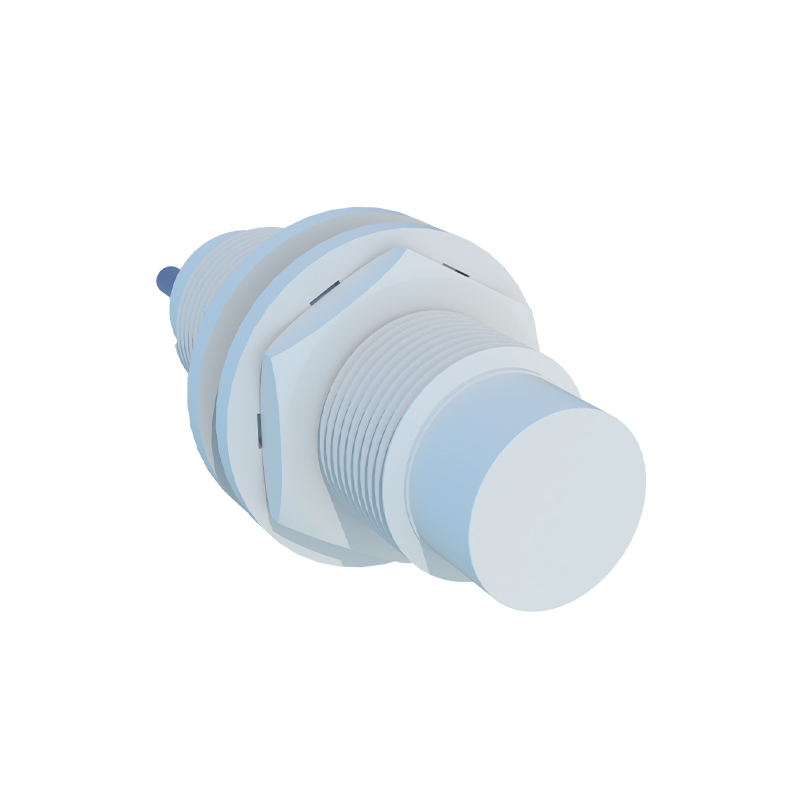
A proximity sensor is essentially a switch with no mechanical parts. Its primary function is to detect the presence or absence of a target object within a specified range without making physical contact. It answers a simple question: "Is an object there, or not?" The sensing range is typically limited and fixed, defined by the sensor's specification. When an object enters this detection zone, the sensor's output state changes—for instance, from a logical LOW to a HIGH or by closing a relay. This binary output makes them ideal for applications like object counting, limit switching, jam detection, or verifying part presence on an assembly line. Common technologies for proximity sensing include inductive (for metals), capacitive (for both metals and non-metals, including liquids), ultrasonic, and photoelectric sensors. Inductive sensors, for example, generate an electromagnetic field and detect the eddy currents induced in a metallic target, making them extremely robust in dirty environments.
In stark contrast, a displacement sensor is an analog measuring device. Its core purpose is to determine the exact distance or positional change of a target relative to the sensor itself. It answers the question: "How far away is the object, precisely?" Instead of a simple on/off signal, it provides a continuous output—such as voltage, current, or a digital value—that is directly proportional to the measured distance. This allows for precise monitoring of dimensions, thickness, vibration, runout, or alignment. The measurement range can vary from micrometers to several meters, depending on the technology. Key displacement sensor technologies include Linear Variable Differential Transformers (LVDTs), laser triangulation sensors, eddy-current sensors, and ultrasonic sensors (when used in measuring mode). An LVDT, renowned for its high accuracy and reliability, uses a movable core inside a transformer to produce an electrical signal proportional to the core's linear displacement.
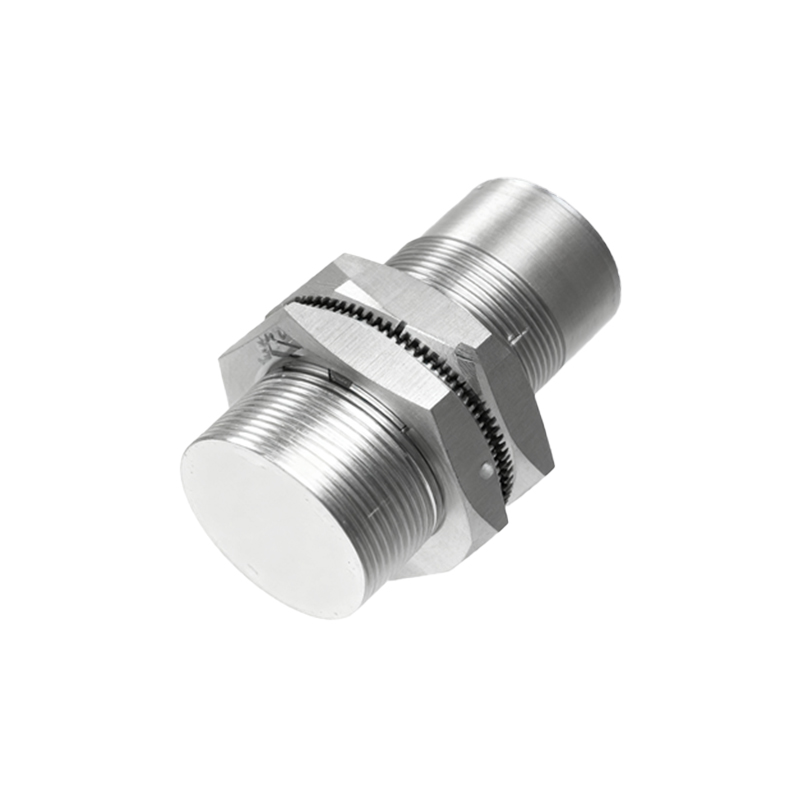
The choice between these sensors hinges on the application's requirements. Use a proximity sensor when you need a robust, cost-effective solution for detecting the presence of an object, often in challenging industrial environments. They are the workhorses for simple automation tasks. For instance, an inductive proximity sensor can reliably detect a metal gear passing by on a conveyor, triggering a counter. A capacitive sensor can detect the fill level of a liquid in a non-metallic tank by sensing the change in capacitance as the liquid rises to the sensor tip.
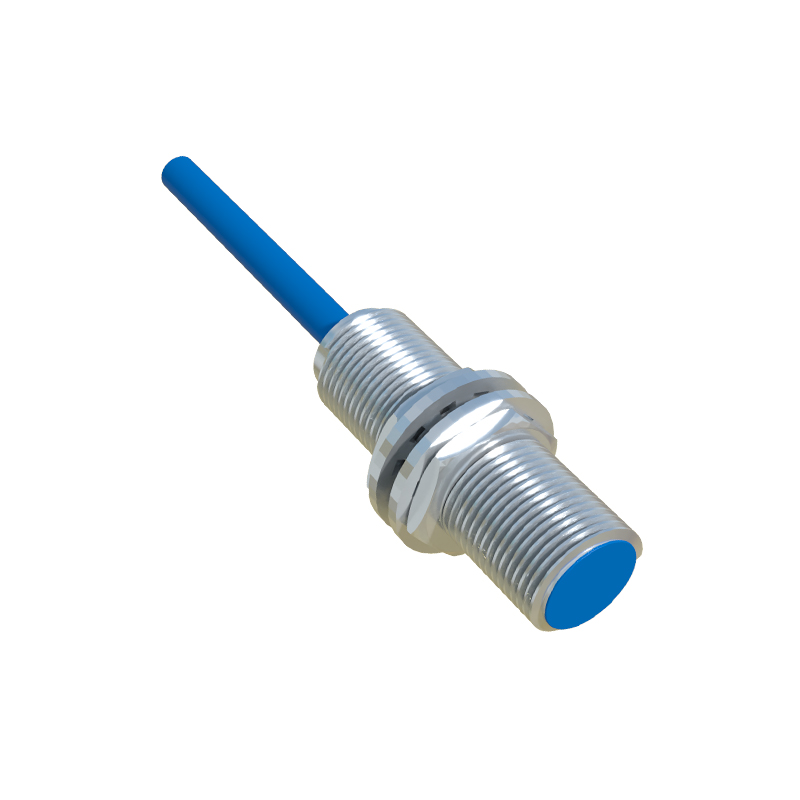
Opt for a displacement sensor when precise, quantitative measurement is paramount. In quality control, a laser triangulation sensor might measure the thickness of a manufactured sheet with micron-level accuracy. In predictive maintenance, an eddy-current sensor non-contactly monitors the vibration amplitude of a motor shaft to detect impending bearing failure. A key advantage of many displacement sensors is their ability to measure a moving target's position dynamically, providing real-time data for closed-loop control systems.
It is important to note the area of overlap, particularly with ultrasonic and laser sensors. Many ultrasonic sensors can operate in both a switching (proximity) mode and a measuring (displacement) mode, offering flexibility. Similarly, some laser sensors have a built-in switching function. However, a dedicated displacement sensor will generally offer superior resolution, linearity, and accuracy for measurement tasks compared to a proximity sensor used in a measuring context.
In summary, the divide is clear: proximity sensors are digital detectors for object presence, prized for their durability and simplicity. Displacement sensors are analog instruments for exact distance measurement, valued for their precision and resolution. Selecting the correct sensor not only ensures technical success but also optimizes system design and cost. Engineers and technicians must carefully define whether their application demands a simple "yes/no" detection or a precise "how much" measurement, guiding them to the most effective and efficient sensing solution for their specific challenge in automation and control.