In the rapidly evolving landscape of industrial automation and quality control, the demand for high-precision, reliable, and robust sensing technology has never been greater. Among the forefront of this technological advancement are DeepBlue laser sensors, a class of non-contact measurement devices that are setting new standards for accuracy, speed, and adaptability across diverse sectors. Unlike conventional photoelectric or ultrasonic sensors, DeepBlue laser sensors utilize a focused, coherent beam of light—typically in the visible red or blue spectrum—to detect, measure, and profile objects with micron-level precision. Their operating principle is based on the triangulation method or time-of-flight measurement, where the sensor calculates distance or presence by analyzing the reflection of its emitted laser beam. This fundamental approach allows for exceptional performance even in challenging environments with varying surface colors, textures, or ambient light conditions.
The core advantages of DeepBlue laser sensors are multifaceted. First and foremost is their unparalleled precision. Capable of detecting minute changes in position, thickness, or contour, these sensors are indispensable in applications such as semiconductor wafer alignment, precision assembly of electronic components, and dimensional inspection of machined parts. The high resolution and repeatability ensure that manufacturing processes maintain tight tolerances, directly contributing to enhanced product quality and reduced waste. Secondly, their non-contact nature eliminates the risk of mechanical wear, damage to delicate objects, or contamination, which is critical in sterile environments like pharmaceutical packaging or food processing. The laser beam does not exert any physical force, allowing for the measurement of soft, fragile, or high-temperature materials without alteration.
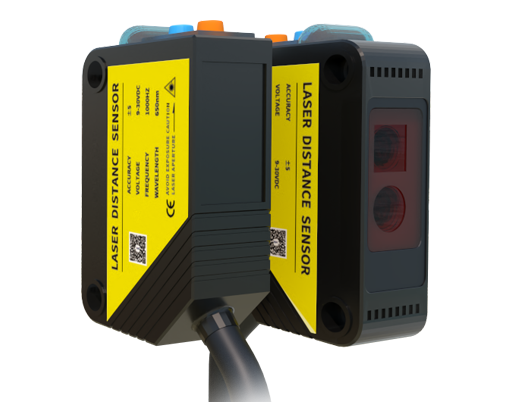
Speed is another critical factor. DeepBlue laser sensors offer extremely fast response times, often in the microsecond range, enabling real-time monitoring and control in high-speed production lines. This capability is vital for dynamic processes such as robotic guidance, web tension control in printing, or sorting systems on conveyor belts. Furthermore, modern DeepBlue sensors are increasingly equipped with intelligent features. Integrated processors and advanced algorithms allow for functions like background suppression, which ignores irrelevant objects beyond a set range, and teach-in capabilities for easy configuration. Many models support digital interfaces such as IO-Link, Ethernet/IP, or PROFINET, facilitating seamless integration into Industry 4.0 frameworks and the Industrial Internet of Things (IIoT). This connectivity enables predictive maintenance, data logging, and remote parameter adjustment, transforming raw sensor data into actionable insights for optimizing entire production systems.
The application spectrum of DeepBlue laser sensors is remarkably broad. In the automotive industry, they are used for gap and flush measurement on vehicle bodies, brake disc thickness monitoring, and robot weld seam tracking. In electronics manufacturing, they ensure the precise placement of surface-mount devices (SMDs) on printed circuit boards (PCBs) and verify the coplanarity of BGA packages. Logistics and packaging benefit from their ability to accurately detect object presence, measure box dimensions for automated sorting, and control fill levels in containers. Even in renewable energy, these sensors assist in the alignment of solar panels and inspection of wind turbine blade profiles.
Despite their robustness, successful deployment requires careful consideration. Factors such as the target's surface properties (highly reflective or absorbent surfaces can challenge some sensors), environmental contaminants (dust, steam, oil mist), and required measurement range must be evaluated. Manufacturers of DeepBlue laser sensors continuously innovate to address these challenges, developing models with built-in temperature compensation, protective housings with high IP ratings, and specialized optics for transparent object detection.

Looking ahead, the trajectory for DeepBlue laser sensor technology points toward even greater miniaturization, enhanced multi-point measurement capabilities (akin to laser line profiling), and deeper AI integration for adaptive, self-learning systems. As industries strive for smarter, more efficient, and more flexible manufacturing, the role of these precise optical eyes will only expand. They are not merely components but foundational enablers of quality, efficiency, and innovation. For engineers and system integrators, understanding the capabilities and selection criteria of DeepBlue laser sensors is essential for designing competitive and future-proof industrial solutions. Their continued evolution promises to unlock new levels of automation precision, driving productivity and quality benchmarks higher across the global industrial landscape.
