In the realm of industrial automation and machinery control, proximity position sensors stand as indispensable components, enabling precise, non-contact detection of objects. These sensors are pivotal in applications ranging from assembly lines and robotics to safety systems and material handling. Unlike mechanical limit switches that require physical contact, proximity sensors operate by detecting the presence or absence of a target object within a specified range without any direct touch. This non-contact nature minimizes wear and tear, enhances reliability, and allows for high-speed operation, making them ideal for harsh environments where dust, moisture, or vibrations are prevalent.
The fundamental principle behind proximity sensors lies in the use of electromagnetic fields, capacitive effects, or ultrasonic waves to sense objects. Among these, inductive and capacitive proximity sensors are the most common types in industrial settings. Inductive proximity sensors are specifically designed to detect metallic objects. They consist of a coil wound around a ferrite core, an oscillator, a signal conditioner, and an output circuit. When an alternating current is applied to the coil, it generates an oscillating electromagnetic field around the sensor's active face. When a metallic target enters this field, eddy currents are induced on the surface of the metal, causing a change in the oscillation amplitude. This change is detected by the sensor's circuitry, which then triggers an output signal—typically a switch from high to low voltage—indicating the object's presence. The sensing range depends on factors like the coil size, target material, and sensor design, with typical ranges from a few millimeters to several centimeters.
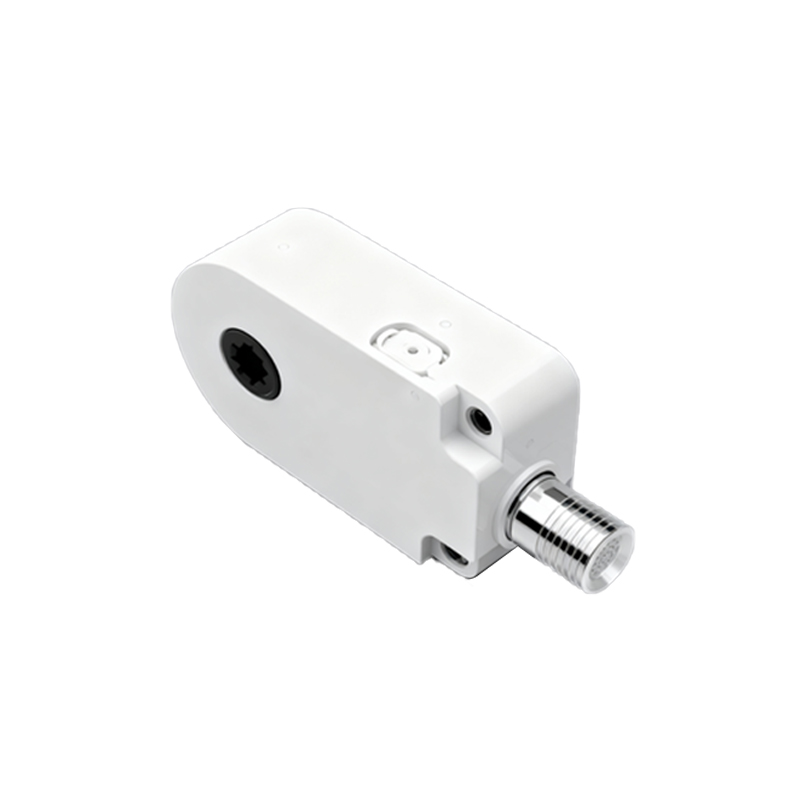
Capacitive proximity sensors, on the other hand, can detect both metallic and non-metallic objects, including liquids, plastics, and wood. They operate based on changes in capacitance. The sensor acts as one plate of a capacitor, with the target object acting as the other plate, and the air gap serving as the dielectric. When an object approaches the sensor, the capacitance between the sensor and the object increases. This change is measured by an internal circuit, which adjusts the oscillation frequency or amplitude. Once the capacitance reaches a predefined threshold, the sensor outputs a signal. Capacitive sensors are particularly useful in applications involving material level detection or presence sensing of non-conductive materials, though they may be more susceptible to environmental factors like humidity.
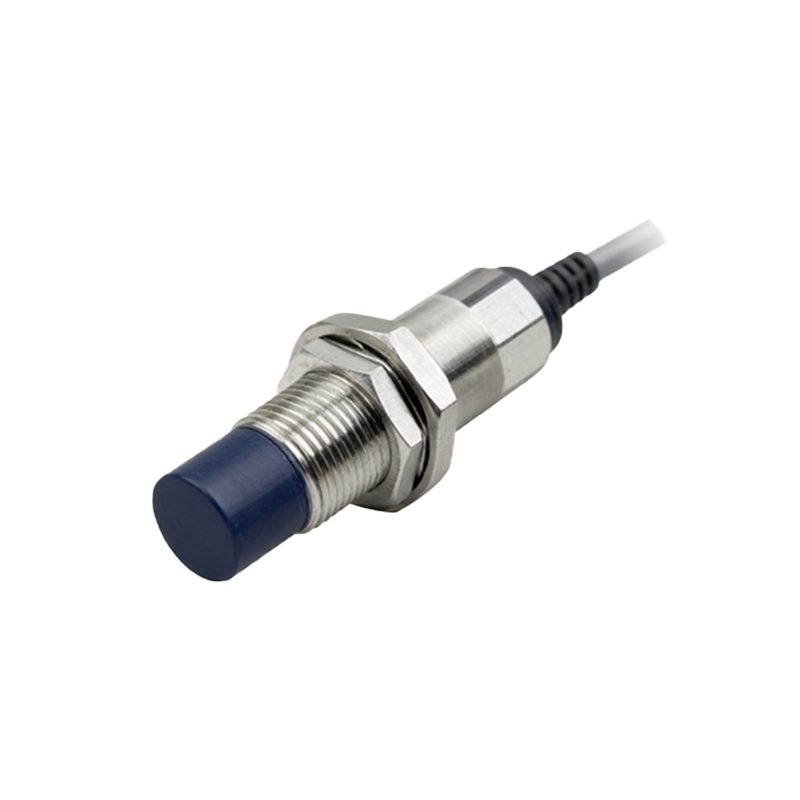
Another notable type is the ultrasonic proximity sensor, which uses sound waves to determine distance. It emits high-frequency ultrasonic pulses and measures the time taken for the echo to return after reflecting off an object. By calculating the time delay, the sensor can accurately gauge the object's position. This technology is effective for detecting objects of various materials and shapes, even in challenging conditions like transparent or glossy surfaces, but it may be influenced by temperature variations or acoustic interference.
The selection of a proximity sensor depends on several factors, including the target material, required sensing distance, environmental conditions, and response speed. For instance, inductive sensors excel in detecting metals with fast response times and high repeatability, while capacitive sensors offer versatility for diverse materials. Additionally, modern sensors often incorporate advanced features such as analog outputs for continuous position feedback, temperature compensation, and robust housing for industrial durability.
In practice, proximity sensors are integrated into control systems via programmable logic controllers (PLCs) or microcontrollers, enabling automated decision-making. They play a critical role in ensuring precision in positioning tasks, such as verifying part placement in manufacturing, monitoring conveyor belt movements, or triggering safety stops in machinery. Their ability to operate without physical contact reduces maintenance needs and extends service life, contributing to overall system efficiency.
As technology advances, proximity sensors continue to evolve with enhancements in miniaturization, sensitivity, and connectivity. Innovations like IO-Link communication allow for real-time data exchange and remote configuration, paving the way for smarter, more adaptive industrial ecosystems. Understanding these working principles empowers engineers to optimize sensor selection and deployment, driving improvements in automation reliability and productivity.