Proximity sensors are critical components in modern industrial automation, enabling non-contact detection of objects within a defined range. Their performance, durability, and suitability for specific environments heavily depend on the raw materials used in their construction. This article delves into the key materials that form the backbone of various proximity sensor types, including inductive, capacitive, and photoelectric sensors, explaining their roles and industry applications.
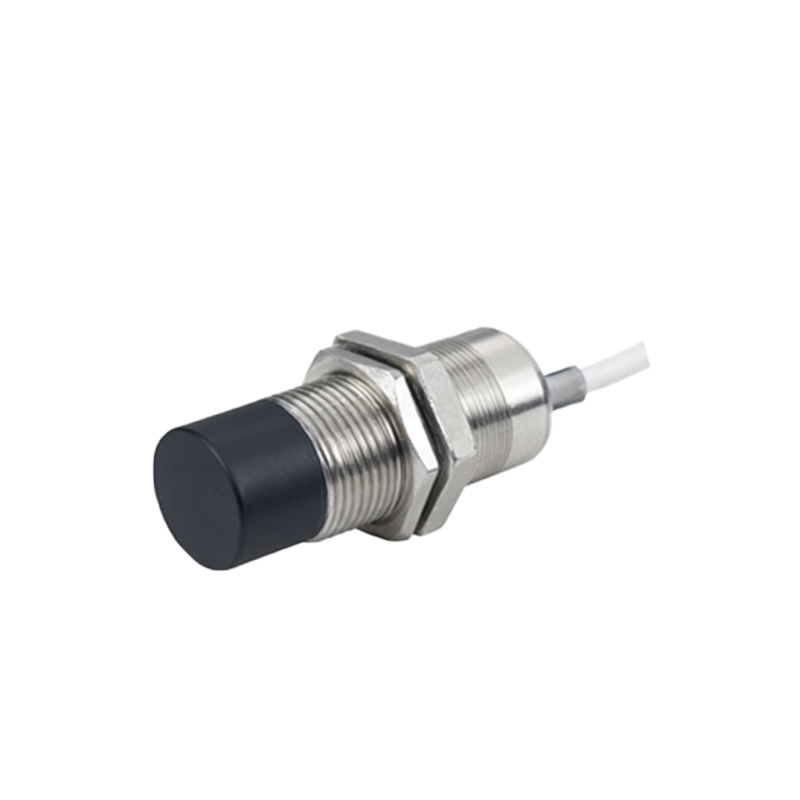
The core sensing element of an inductive proximity sensor is a coil wound around a ferrite core. This coil is typically made from high-purity copper wire due to its excellent electrical conductivity. The ferrite core, often composed of manganese-zinc or nickel-zinc ferrites, concentrates the electromagnetic field generated by the coil. The sensor's housing, or face, is usually constructed from materials like polyphenylene sulfide (PPS) or polybutylene terephthalate (PBT). These engineering plastics offer high mechanical strength, excellent resistance to chemicals and high temperatures, and minimal interference with the electromagnetic field. For more demanding environments, especially in the food and beverage or chemical industries, sensors may feature housings made of stainless steel (such as grades 303, 304, or 316) to ensure corrosion resistance, hygiene, and robustness.
Capacitive proximity sensors share some material similarities but have distinct requirements. Their sensing face is a critical electrode, often made from a conductive material like copper or a conductive polymer, which is then coated with a dielectric material. This dielectric coating, which can be made from plastics like PTFE (Teflon) or specific ceramics, determines the sensor's sensitivity and its ability to detect non-metallic objects. The choice of dielectric is crucial for applications involving liquid level detection or sensing through non-metallic container walls.
Photoelectric sensors rely on optical components. The light source is typically a light-emitting diode (LED). For standard applications, visible red or infrared LEDs are common, while specialized sensors may use laser diodes for precise positioning. The receiver is a phototransistor or photodiode made from semiconductor materials like silicon. The lenses that focus and direct the light beam are precision-molded from optical-grade plastics such as polycarbonate (PC) or acrylic (PMMA), which provide clarity and durability. For harsh environments where the lens might be exposed to abrasion or aggressive chemicals, manufacturers may use synthetic sapphire or hardened glass, offering exceptional scratch resistance and longevity.
Beyond the active elements, internal electronic components are mounted on printed circuit boards (PCBs). The PCB substrate is typically FR-4, a glass-reinforced epoxy laminate, chosen for its good insulation properties and mechanical stability. Conductive traces on the PCB are made of copper, and solder used for component attachment is a lead-free alloy, compliant with global environmental regulations like RoHS.
The selection of sealing materials is paramount for a sensor's Ingress Protection (IP) rating, which defines its resistance to dust and water. Epoxy resins are widely used to pot and seal internal electronics, providing a robust barrier against moisture and vibration. External seals and gaskets are often made from elastomers like nitrile rubber (NBR) or silicone, chosen for their flexibility, temperature tolerance, and sealing effectiveness over time.
In summary, the raw materials in a proximity sensor—from copper coils and ferrite cores to engineering plastics, stainless steel, optical polymers, and specialized seals—are meticulously selected to meet precise electrical, mechanical, and environmental specifications. This material science directly translates into sensor reliability, accuracy, and lifespan in diverse industrial settings, from clean manufacturing floors to gritty automotive assembly lines. Understanding these materials empowers engineers and maintenance personnel to make informed selection, installation, and troubleshooting decisions, ensuring optimal system performance and minimizing downtime.