In the realm of industrial automation and precision measurement, laser sensors have become indispensable tools. Among their various operational techniques, the pulsing method stands out for its ability to enhance accuracy, reduce interference, and extend operational range in challenging environments. This article delves into the principles, applications, and advantages of laser sensor pulsing methods, providing a comprehensive overview for engineers and technical professionals.
Laser sensors operate by emitting a beam of coherent light toward a target. The reflected light is then captured and analyzed to determine distance, position, or presence. The pulsing method, also known as pulsed time-of-flight (ToF), involves emitting short, high-intensity laser pulses rather than a continuous wave. The time taken for each pulse to travel to the target and back is measured with extreme precision. Since the speed of light is constant, this time interval directly correlates to the distance. For instance, a delay of 6.67 nanoseconds corresponds to a one-meter round trip. Modern electronics can resolve these intervals down to picoseconds, enabling sub-millimeter accuracy even over long distances.
One key advantage of the pulsing method is its immunity to ambient light interference. By synchronizing the sensor's receiver to the precise timing of the emitted pulse, it effectively filters out constant or slowly varying light sources, such as sunlight or indoor lighting. This makes pulsed laser sensors ideal for outdoor applications or brightly lit factory floors. Additionally, the high peak power of short pulses allows for longer measurement ranges compared to continuous-wave systems, as the intense burst can travel farther while maintaining a detectable signal upon return.
The technology finds extensive use across multiple industries. In automotive manufacturing, pulsed laser sensors are employed for robotic guidance, weld seam tracking, and part inspection. Their ability to perform reliably in environments with sparks, dust, or vibrations is crucial. In logistics, they facilitate automated warehouse management by precisely measuring parcel dimensions on conveyor belts. Furthermore, in aerospace, these sensors assist in aligning large components and monitoring structural deformations. The construction sector utilizes them for terrain mapping and crane positioning, where measurements over hundreds of meters are routine.
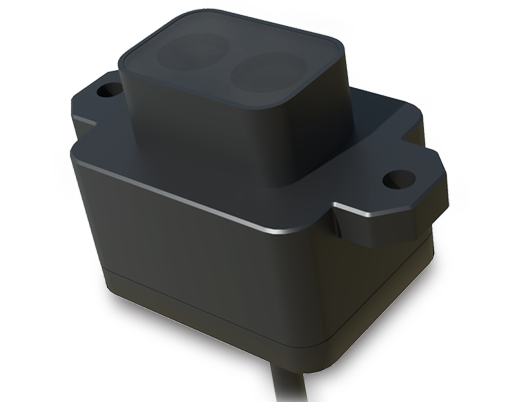
Implementing a pulsed laser sensor system requires careful consideration of several parameters. Pulse frequency, which can range from a few kilohertz to several megahertz, affects measurement speed and resolution. Higher frequencies allow for rapid data acquisition but may reduce maximum range due to average power limits. Pulse width is another critical factor; narrower pulses improve distance resolution but demand more sophisticated detection circuitry. Engineers must also account for target properties—highly reflective surfaces can cause signal saturation, while dark, absorbent materials may weaken the return pulse. Advanced sensors often incorporate automatic gain control and adaptive pulse shaping to compensate for such variations.

Recent advancements have focused on integrating pulsed laser sensors with digital interfaces and smart algorithms. Ethernet-based protocols like EtherCAT facilitate real-time data integration into industrial networks, enabling seamless control loops. Machine learning algorithms can now analyze pulse return patterns to distinguish between multiple targets or detect partial occlusions, enhancing functionality in complex scenarios. Moreover, miniaturization and reduced power consumption have led to the proliferation of these sensors in portable devices and drones for surveying applications.
Despite their robustness, pulsed laser sensors are not without limitations. They can be sensitive to atmospheric conditions; fog, rain, or extreme temperatures can attenuate the laser beam. However, many models include environmental compensation algorithms. Cost remains higher than simpler photoelectric sensors, but the return on investment through improved precision and reduced downtime justifies the expense for critical applications.
In conclusion, the pulsing method represents a sophisticated approach within laser sensing technology. By leveraging precise timing of high-intensity light pulses, it delivers exceptional accuracy and reliability across diverse industrial settings. As innovation continues to drive down costs and enhance capabilities, pulsed laser sensors are poised to play an even greater role in the advancement of automation and measurement science. For engineers, understanding these principles is key to selecting and deploying the right sensor for optimal performance.
