Proximity sensors are essential components in modern automation and control systems, widely used across industries such as manufacturing, automotive, robotics, and consumer electronics. These sensors detect the presence or absence of an object within a specified range without physical contact, relying on various physical principles to achieve accurate measurements. Understanding how proximity sensors measure involves exploring their working principles, types, and practical applications.
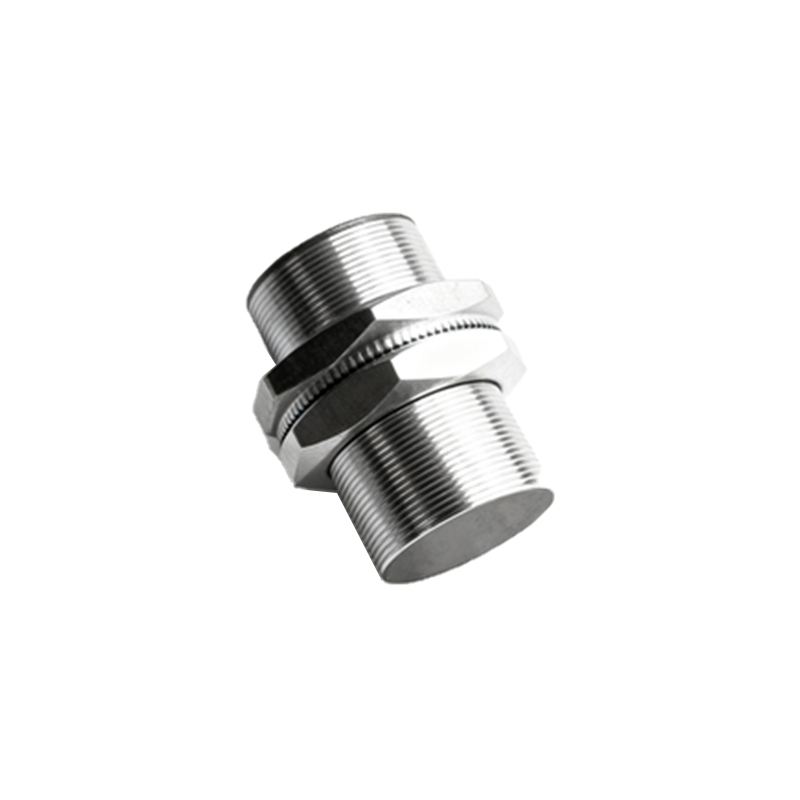
The core function of a proximity sensor is to measure distance or detect objects by emitting a field or signal and analyzing changes caused by a target. The most common types include inductive, capacitive, ultrasonic, and optical sensors, each suited to specific environments and materials. Inductive sensors, for instance, generate an electromagnetic field and detect metallic objects by monitoring disturbances in the field. They are ideal for industrial settings where metal detection is required, such as in conveyor systems or machine tools. The measurement process involves the sensor's oscillator creating a high-frequency field; when a metal object enters this field, eddy currents are induced, altering the oscillation amplitude. This change triggers the sensor's output circuit, signaling the object's presence and often estimating its distance based on signal strength.
Capacitive proximity sensors operate similarly but can detect both metallic and non-metallic materials, including liquids and plastics. They work by generating an electrostatic field between the sensor's electrode and the target. As an object approaches, the capacitance changes, affecting the sensor's oscillation. This variation is processed to determine proximity, making these sensors useful in applications like level detection in tanks or material handling. Ultrasonic sensors use sound waves beyond human hearing, emitting pulses and measuring the time taken for echoes to return. The distance is calculated using the speed of sound, allowing for precise measurements even in challenging conditions like dust or darkness. Optical sensors, including infrared and laser types, rely on light beams. They detect objects by measuring reflected light intensity or time-of-flight, offering high accuracy for tasks like object counting or positioning.
The measurement accuracy of proximity sensors depends on factors such as sensor type, target material, environmental conditions, and calibration. For example, inductive sensors may have reduced range with non-ferrous metals, while capacitive sensors can be affected by humidity. To ensure reliable operation, engineers must select sensors based on application requirements, considering parameters like sensing range, response time, and environmental robustness. In practice, proximity sensors are integrated into systems via analog or digital outputs, providing real-time data for control processes. They enable automation by triggering actions—like stopping a machine when an object is detected—enhancing safety and efficiency.
Advancements in technology have led to smart proximity sensors with embedded microprocessors, offering features like self-diagnostics, adjustable sensitivity, and communication protocols (e.g., IO-Link). These innovations improve measurement precision and adaptability in complex industrial setups. Overall, proximity sensors measure through a combination of field generation, signal analysis, and electronic processing, playing a critical role in modern engineering by enabling non-contact detection and distance assessment. Their versatility and reliability make them indispensable in achieving automated, efficient, and safe operations across diverse sectors.