In industrial automation and control systems, proximity sensors are indispensable components for detecting the presence or absence of objects without physical contact. Selecting the appropriate sensor is critical for ensuring system reliability, efficiency, and cost-effectiveness. This guide outlines the key factors engineers must consider during the selection process.
First, define the application's fundamental requirements. What is the target material? Proximity sensors are primarily categorized by their sensing principle: inductive, capacitive, ultrasonic, and photoelectric. Inductive sensors detect metallic objects, typically ferrous metals like steel and iron, and are ideal for harsh industrial environments. For non-metallic targets such as wood, plastic, liquids, or granular materials, capacitive sensors are the preferred choice. Photoelectric sensors use light beams and are excellent for long-range detection and sensing various materials, but they can be affected by environmental conditions like dust or ambient light. Ultrasonic sensors, which use sound waves, are versatile for detecting solids, liquids, and transparent objects, and can often measure distance as well.
Next, consider the sensing range. This is the maximum distance at which the sensor can reliably detect a standard target. Always choose a sensor with a nominal sensing range greater than your required operating distance, incorporating a safety margin of 10-20% to account for installation tolerances, temperature variations, and target inconsistencies. Do not operate the sensor at its absolute maximum rated distance.
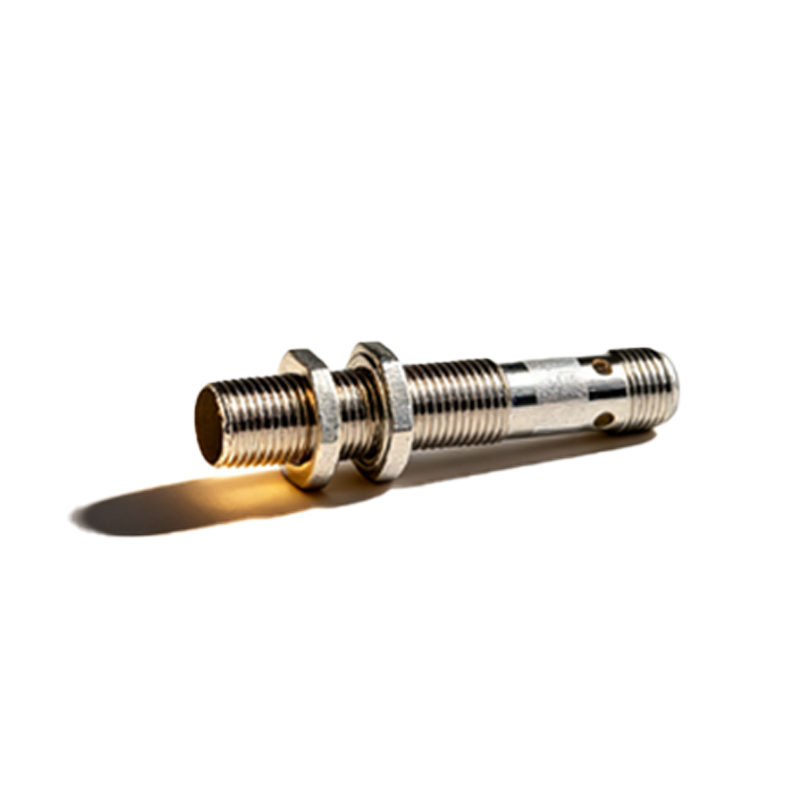
The physical size and form factor of the sensor are equally important. Space constraints in machinery often dictate a compact sensor design. Consider the mounting style: barrel-shaped sensors for threaded installation, rectangular block styles, or specialized designs. Also, note the sensing face orientation (front, side, or top-sensing) to ensure proper alignment with the target's approach path.
Environmental conditions pose significant challenges. Will the sensor be exposed to extreme temperatures, humidity, washdowns with high-pressure chemicals, oils, coolants, or conductive dust? For such demanding conditions, select sensors with appropriate Ingress Protection (IP) ratings (e.g., IP67, IP69K) and robust housing materials like stainless steel (V4A/AISI 316L) or PBT plastic. Inductive sensors are generally more resilient to harsh environments than photoelectric types.
Electrical characteristics must match the control system. Determine the required output type: discrete (digital) outputs like NPN (sinking) or PNP (sourcing) transistors, or analog outputs (4-20 mA, 0-10V) for distance-proportional signals. Ensure the output configuration is compatible with your PLC or controller input module. Supply voltage is another critical parameter; common DC voltages are 10-30V DC, while standard AC voltages are 90-250V AC. Also, check the sensor's current consumption and switching frequency (response time) to ensure it meets the speed requirements of your application.
Finally, do not overlook installation and wiring practicality. Consider cable length, connector types (e.g., M8, M12 connectors), and the need for built-in diagnostics like LED status indicators. For applications involving multiple sensors in close proximity, ensure they have short-circuit protection, overload protection, and immunity to mutual interference (anti-collision features).
In summary, a methodical approach to selection—analyzing target material, required range, environmental factors, electrical interface, and physical constraints—will lead to the optimal sensor choice. Consulting detailed datasheets and application notes from reputable manufacturers is always recommended to validate performance under your specific operating conditions. A correctly selected proximity sensor enhances machine performance, minimizes downtime, and provides long-term operational stability.