The landscape of industrial manufacturing is continuously reshaped by the relentless pursuit of precision, speed, and automation. Within metal fabrication, laser tube cutting stands as a pinnacle of this evolution, enabling complex geometries and high-throughput production. However, the true potential of a laser cutting system is unlocked not solely by the laser source itself, but by the sophisticated suite of sensors that guide, monitor, and protect the process. These laser tube cutting sensors are the unsung heroes, transforming a powerful tool into a reliable, intelligent, and highly adaptive manufacturing cell.
At the core of tube cutting precision is the capacitive or inductive height sensor. Maintaining the exact focal point distance between the cutting head nozzle and the tube surface is non-negotiable for cut quality. Tubes are never perfectly straight, and chucks can introduce minor runout. A height sensor continuously measures this gap, sending real-time data to the machine's CNC controller, which dynamically adjusts the Z-axis. This ensures the laser beam remains perfectly focused throughout the entire cut path, regardless of tube bow or fixture imperfections, guaranteeing consistent edge quality and kerf width from the first part to the thousandth.
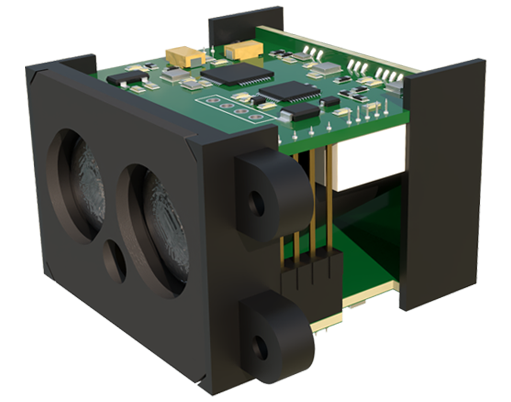
Beyond height control, vision and seam tracking systems represent a leap forward in automation. Prior to cutting, a vision sensor, often a high-resolution camera integrated into the cutting head, scans the tube. It identifies and locates pre-existing features like holes, notches, or weld seams. More importantly, it can detect the actual seam of the tube—the longitudinal weld line in fabricated tubes. The sensor software calculates the seam's position and orientation, and the CNC automatically rotates the tube and adjusts the cutting path to ensure features are placed correctly relative to this seam. This eliminates manual marking and guesswork, drastically reducing setup time and material waste from misaligned cuts.
Process monitoring sensors are critical for quality assurance and predictive maintenance. Photodiodes or coaxial cameras monitor the plasma plume and melt pool dynamics during cutting. By analyzing the light emission patterns, these sensors can detect anomalies such as piercing failures, incomplete cuts, or the onset of dross formation. When a fault is detected, the system can alert the operator or, in advanced setups, automatically adjust parameters like laser power or gas pressure to correct the issue in real-time. This moves quality control from a post-process inspection activity to an in-process, closed-loop correction, ensuring every cut meets specification.
Collision avoidance sensors protect the substantial capital investment of the laser system. The cutting head, with its delicate nozzle and lens assembly, is vulnerable to crashes with the tube, clamps, or even a misfed workpiece. Proximity sensors or tactile sensing systems create a protective field around the head. If an unexpected obstacle is detected, these sensors trigger an immediate emergency stop or a controlled retraction, preventing catastrophic damage and minimizing costly downtime for repairs and recalibration.

The integration of these sensors is the cornerstone for Industry 4.0 and the Smart Factory. Modern sensors are not isolated data collectors; they are intelligent nodes on a digital network. Data on cutting height, seam position, process emissions, and collision events is streamed to a central Manufacturing Execution System (MES) or cloud platform. This data aggregation enables comprehensive analytics. Machine learning algorithms can analyze historical sensor data to predict nozzle wear, optimize cutting parameters for different material batches, and schedule preventive maintenance before a failure occurs. This shift from reactive to predictive and prescriptive operations maximizes Overall Equipment Effectiveness (OEE).
Looking forward, sensor technology for laser tube cutting continues to advance. Multi-spectral monitoring systems that analyze specific wavelengths offer even finer insights into cut quality for exotic materials. The integration of 3D scanning for pre-cut tube profiling will further enhance accuracy for severely deformed stock. Furthermore, the development of more robust and miniaturized sensors will allow for their use in even more challenging environments, such as high-speed cutting or when processing highly reflective materials like copper.
In conclusion, laser tube cutting sensors are far more than auxiliary components. They are the essential sensory organs of an intelligent manufacturing system. From ensuring micron-level precision with height control to enabling fully automated, first-part-correct production with vision tracking, and safeguarding the process with real-time monitoring, these technologies are indispensable. As the industry marches towards greater autonomy and data-driven manufacturing, the role of advanced sensing will only become more profound, solidifying laser tube cutting's position as a flexible, reliable, and supremely precise fabrication technology.