In the realm of industrial automation and precision measurement, circular laser sensors have emerged as indispensable tools for a wide array of applications. These sensors project a circular or ring-shaped laser beam onto a target surface, enabling non-contact detection, profiling, and measurement with exceptional accuracy and reliability. Unlike traditional point or line lasers, the circular beam pattern offers unique advantages, particularly in scenarios involving complex geometries, surface irregularities, or the need for omnidirectional detection within a defined area.
The fundamental operating principle of most circular laser sensors is based on optical triangulation or time-of-flight (ToF) measurement. In triangulation-based sensors, a laser diode emits a circular beam that strikes the target. The reflected light is then captured by a receiving element, such as a CCD or CMOS array. By calculating the displacement of the reflected beam's position, the sensor can precisely determine the distance to the target or detect its presence. Time-of-flight sensors, on the other hand, measure the time it takes for a laser pulse to travel to the target and back, calculating distance based on the speed of light. The circular projection ensures that measurement is not dependent on a single point, averaging out minor surface imperfections and providing a more stable reading.
Key advantages of circular laser sensors include their robustness in challenging environments. They are less susceptible to errors caused by target color, reflectivity variations, or slight angular misalignments compared to point sensors. The circular beam can effectively detect objects regardless of their orientation within the beam's diameter, making them ideal for presence detection on conveyor belts, part positioning in assembly lines, and fill-level monitoring in containers. Furthermore, their ability to generate a consistent ring of light allows for precise edge detection and diameter measurement of cylindrical objects like wires, pipes, or shafts.

When selecting a circular laser sensor for a specific application, several critical parameters must be considered. Sensing range is paramount; it defines the minimum and maximum distances over which the sensor can operate effectively. The diameter of the projected laser circle at a given working distance is another crucial factor, as it determines the inspection area. Resolution, typically in micrometers, indicates the smallest detectable change in distance or position. Response time, often in milliseconds, dictates how quickly the sensor can process a detection event, which is vital for high-speed production lines. Environmental ratings, such as IP67 or IP69K for dust and water resistance, and operational temperature ranges are essential for deployment in harsh industrial settings like welding cells, wash-down areas, or foundries.
Common industrial applications are diverse. In robotics, circular laser sensors are used for precise tool alignment, seam tracking in welding, and bin-picking guidance by creating a profile of randomly oriented parts. In automotive manufacturing, they ensure proper gap and flushness between body panels. In electronics assembly, they verify component placement and solder paste height. The packaging industry relies on them for label detection, cap inspection, and ensuring products are correctly positioned within boxes. Their non-contact nature makes them perfect for measuring delicate or hot materials without causing damage.
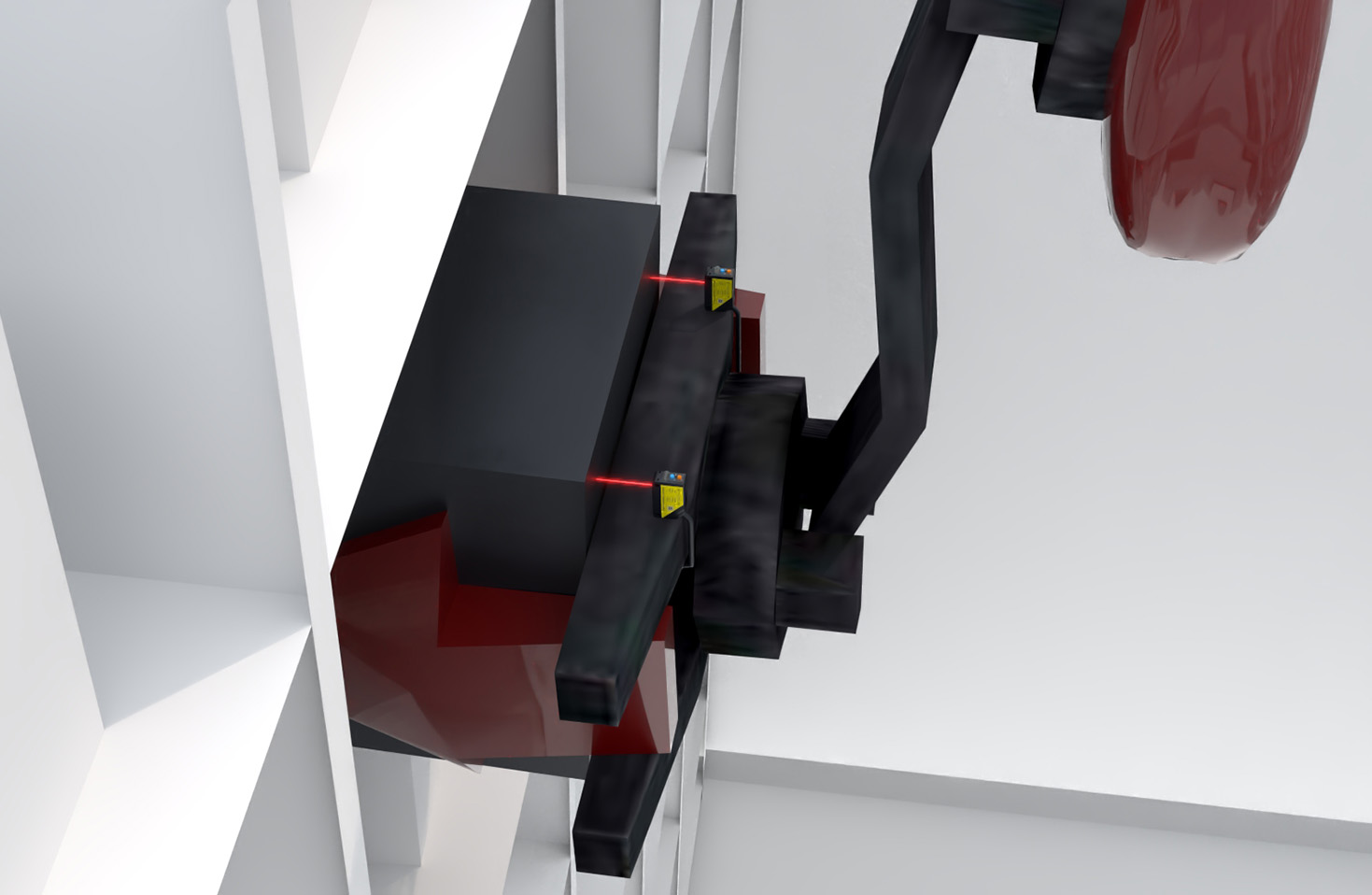
Integration of these sensors into automated systems is typically straightforward, thanks to standardized output options. Most models offer digital outputs (PNP/NPN) for simple on/off detection and analog outputs (0-10V, 4-20mA) for continuous distance measurement. Advanced sensors feature IO-Link communication, enabling parameter configuration, diagnostics, and process data exchange directly with the PLC, facilitating Industry 4.0 connectivity and predictive maintenance strategies.
Despite their robustness, optimal performance requires proper installation and calibration. The sensor should be mounted securely to minimize vibration. The working distance should be set within the specified range, and the beam must be aligned perpendicular to the target surface for most distance-measuring applications. For presence detection, the threshold can be adjusted to account for background interference. Regular maintenance, primarily keeping the lens clean from dust, oil, or debris, is necessary to ensure long-term accuracy.
Looking ahead, advancements in circular laser sensor technology focus on increased precision, miniaturization, and enhanced intelligence. The integration of more powerful processors allows for built-in logic functions, such as window comparators and peak-hold capabilities. Developments in blue laser technology offer improved performance on shiny or transparent surfaces that traditionally challenge red lasers. Furthermore, the fusion of laser sensing data with vision systems or AI algorithms is opening new frontiers for complex inspection tasks, such as surface defect detection and 3D contour analysis.
In conclusion, circular laser sensors represent a versatile and powerful category of photoelectric sensors. Their unique beam geometry provides solutions to measurement and detection challenges that other sensor types struggle with. By understanding their operating principles, key specifications, and application best practices, engineers and system integrators can leverage these devices to enhance automation efficiency, improve product quality, and enable more sophisticated robotic tasks across countless industries. Their role as a fundamental enabler of precision in the modern automated factory is firmly established and continues to grow with technological evolution.