In the realm of automation, security, and smart technology, detecting the presence of a person is a fundamental function. Human presence sensors, often referred to as proximity sensors, are pivotal components that enable devices to interact with their environment intelligently. Unlike simple motion detectors that react to any movement, these sensors are designed to specifically identify the presence of a human body, allowing for more nuanced and energy-efficient control of lighting, climate, security systems, and various appliances. The technology behind these sensors varies significantly, each with its own principles, advantages, and ideal applications. Understanding the different types is crucial for selecting the right solution for any project, from a smart home to an industrial facility.
One of the most common and cost-effective types is the Passive Infrared (PIR) sensor. PIR sensors work by detecting changes in infrared radiation levels within their field of view. All objects emit some level of infrared energy, and the human body, with its temperature, emits a distinctive signature. When a person moves into the sensor's detection zone, the infrared pattern changes, triggering the sensor. Their primary strength lies in reliability and low power consumption, making them ubiquitous in automatic lighting and basic security alarms. However, a key limitation is that they typically require movement to detect presence; a perfectly still person may not be registered.
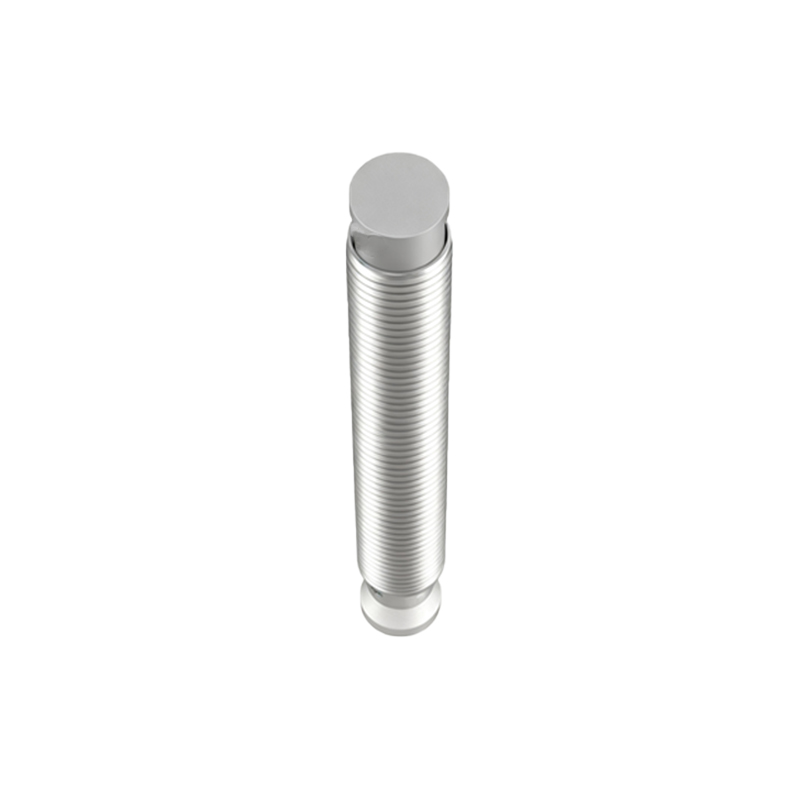
To address the limitation of movement-based detection, Microwave (Radar) sensors offer a more active solution. These sensors emit continuous or pulsed microwave signals and analyze the reflected waves. The Doppler shift principle allows them to detect even the slightest movements, such as breathing or subtle hand motions, making them excellent for detecting stationary occupants. They can also cover larger areas and penetrate non-metallic materials like drywall. The downside is that they are generally more expensive, consume more power, and can sometimes be prone to false triggers from moving objects like fans or curtains outside the target area.
A growing category in human presence sensing is Ultrasonic sensors. Operating similarly to radar but using sound waves at frequencies above human hearing, these sensors measure the time it takes for an emitted pulse to bounce back. Movement within the detection zone alters the echo's return time or frequency (Doppler effect). They are very effective in environments where other sensors might struggle, such as in bathrooms with steam or in areas with obstructions, as sound waves can navigate around objects. Like radar, they can detect very fine movements but may be triggered by air currents or high-frequency noises.
For applications requiring precise detection and additional data, Video-Based (Camera) sensors represent a sophisticated option. Utilizing image processing algorithms or, more recently, machine learning and computer vision, these systems can not only detect presence but also count people, analyze posture, and even gauge engagement in settings like offices or classrooms. Thermal imaging cameras, a subset, detect body heat without needing visible light, enhancing privacy. While powerful, these systems raise significant privacy concerns, require more processing power, and are the most expensive option, making them suitable for commercial or specialized use rather than general residential applications.
Emerging technologies are pushing the boundaries further. Capacitive sensors detect changes in an electrical field caused by the conductive properties of the human body. They can be embedded in furniture, like chairs or car seats, to detect occupancy without any visible movement. Similarly, Time-of-Flight (ToF) sensors, which measure the time for a light pulse to travel to an object and back, are becoming popular in consumer electronics for facial recognition and gesture control, offering high accuracy in short ranges.
Choosing the right human presence sensor depends on a careful evaluation of the environment, required sensitivity, power constraints, budget, and privacy considerations. For a simple hallway light, a PIR sensor is often sufficient. For a smart office aiming to optimize HVAC and lighting based on actual occupancy, a combination of radar and thermal sensors might be ideal. In healthcare settings monitoring patient presence in bed, capacitive or under-mattress pressure sensors could be the best choice. The future points toward sensor fusion, where multiple sensing technologies are combined in a single system to leverage their individual strengths, mitigate weaknesses, and provide the most reliable and context-aware human presence detection possible. As the Internet of Things (IoT) continues to expand, these intelligent sensors will form the silent, responsive backbone of our increasingly interactive world.