Proximity sensors are fundamental components in modern industrial automation, robotics, and safety systems. This experimental investigation delves into the operational principles, practical applications, and key performance metrics of various proximity sensor technologies. The primary objective is to provide a hands-on, analytical understanding that bridges theoretical knowledge with real-world implementation.
The core principle of a proximity sensor is to detect the presence or absence of an object within a specified range without physical contact. This non-contact detection is achieved through various physical phenomena. Our experimental setup focused on three dominant types: inductive, capacitive, and photoelectric sensors. Each type responds to different material properties and environmental conditions.
Inductive proximity sensors generate an electromagnetic field. When a metallic object enters this field, eddy currents are induced in the object, causing a change in the sensor's oscillation amplitude. This change triggers the sensor's output switch. In our lab tests, we evaluated sensors with sensing ranges from 2mm to 15mm. A key finding was the significant variation in effective sensing distance based on the target metal's properties. For instance, the sensing range for mild steel (the standard reference) was approximately 8mm, but for aluminum, it reduced to about 65% of that value, and for stainless steel, to around 85%. This "reduction factor" is critical for precise machine design. Hysteresis, the difference between the switch-on and switch-off points, was also measured to ensure reliable operation and prevent output chattering in dynamic applications.
Capacitive proximity sensors function by generating an electrostatic field. They can detect both metallic and non-metallic materials, such as plastics, liquids, and wood, by sensing changes in capacitance caused by the target object. Our experiments involved detecting levels of granular materials in a container and the presence of glass panels. A major challenge identified was sensitivity to environmental factors like humidity and temperature, which can cause drift. We calibrated the sensors' sensitivity potentiometers to distinguish between the target material and the background (e.g., a plastic container wall), a process known as background suppression. The effective sensing range proved highly dependent on the target material's dielectric constant.
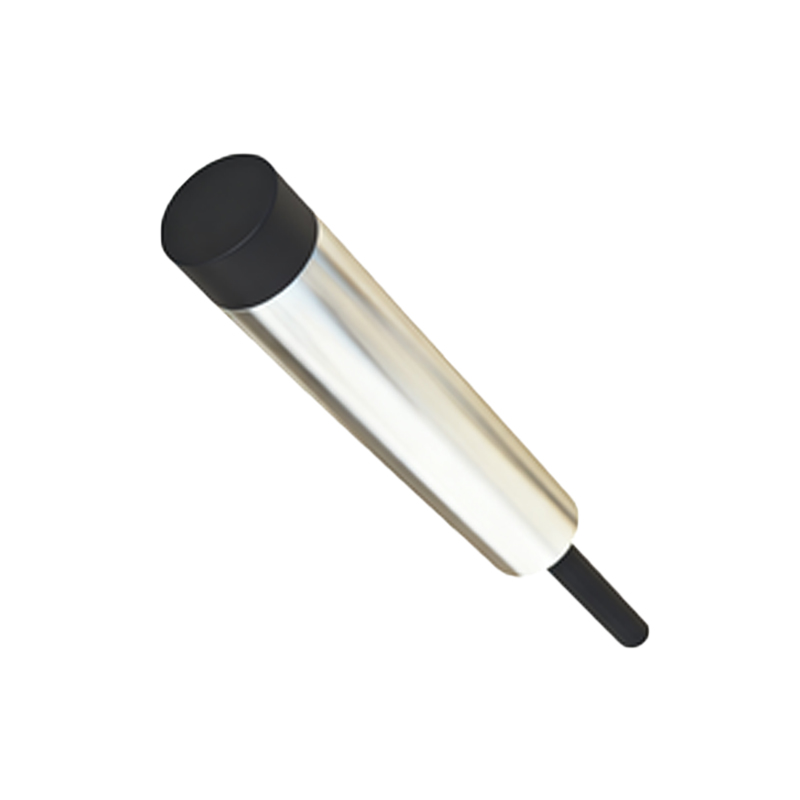
Photoelectric sensors, utilizing a light emitter and receiver, offered the longest sensing ranges in our tests, up to several meters. We examined three main configurations: through-beam, retro-reflective, and diffuse reflective. The through-beam type, with separate emitter and receiver units, provided the most reliable detection and was immune to target color or surface finish. The diffuse reflective type, where the sensor detects light reflected from the target, was convenient for single-unit installation but its performance varied with the target's reflectivity. We quantified this by testing on white paper, black rubber, and transparent glass, noting significant differences in maximum range and signal stability. Response time testing revealed photoelectric sensors to be exceptionally fast, suitable for high-speed counting applications.
A critical phase of the investigation involved analyzing environmental interference. Inductive sensors were largely immune to dust, dirt, and moisture but could be affected by strong adjacent electromagnetic fields from motors or welding equipment. Capacitive sensors were susceptible to contamination buildup on the active face and humidity changes. Photoelectric sensors could be blinded by ambient light (particularly infrared) or obstructed by opaque dust. Shielding, proper housing selection (e.g., IP67 rated for washdown environments), and careful mounting were validated as essential mitigation strategies.
Furthermore, we evaluated output types—typically NPN (sinking) or PNP (sourcing) transistor outputs, and analog (4-20mA or 0-10V) versions for distance-proportional measurement. The choice between normally open (NO) and normally closed (NC) contact logic was tested within control circuit simulations for fail-safe design considerations.
In application simulations, we integrated these sensors into a small-scale automated pick-and-place system. Inductive sensors reliably detected metal components on a conveyor. A capacitive sensor monitored the fill level of a plastic glue reservoir. A diffuse-reflective photoelectric sensor counted passing cartons. The experiment underscored the importance of selecting the correct sensor technology based on target material, required sensing distance, environmental robustness, and required response speed.
In conclusion, this experimental exploration confirms that there is no universal "best" proximity sensor. The inductive type excels for metallic targets in harsh industrial environments. The capacitive type provides versatility for non-metallics and level detection. The photoelectric type offers superior range and speed for clear environments. Understanding the nuanced performance characteristics, limitations, and calibration requirements of each type, as demonstrated through hands-on testing, is paramount for designing efficient, reliable, and safe automated systems. Future work could explore the integration of IO-Link enabled smart sensors for diagnostic data and parameterization via the control network.