In the realm of industrial laser cutting, precision and efficiency are paramount. The nozzle sensor, a critical yet often overlooked component, plays a pivotal role in maintaining optimal cutting quality and protecting expensive laser systems. This article delves into the technology, benefits, and implementation of advanced nozzle sensors, providing insights for engineers and operators seeking to enhance their manufacturing processes.
Laser cutting nozzles are responsible for directing assist gases, such as oxygen or nitrogen, to the cutting zone. This process blows away molten material, cools the workpiece, and influences cut quality. However, maintaining the correct standoff distance—the gap between the nozzle tip and the material surface—is a constant challenge. Variations in material flatness, thermal distortion, or incorrect machine calibration can lead to nozzle collisions or suboptimal gas flow, resulting in poor edge quality, dross formation, and even catastrophic damage to the nozzle and cutting head.
This is where nozzle sensor technology becomes indispensable. Modern capacitive or inductive sensors are integrated into the cutting head assembly, continuously monitoring the distance to the workpiece. These sensors operate by generating an electromagnetic field. When the distance to the conductive material changes, the capacitance or inductance within the sensor's field varies proportionally. This variation is converted into a precise voltage or digital signal, providing real-time feedback to the machine's CNC controller.
The core advantage lies in dynamic height control. The CNC system uses this feedback to automatically adjust the Z-axis, maintaining a pre-set standoff distance throughout the entire cutting path, regardless of material warping or uneven surfaces. This ensures consistent gas pressure and flow dynamics at the kerf, which is crucial for achieving clean, dross-free cuts, especially in high-reflectivity materials like aluminum or copper.
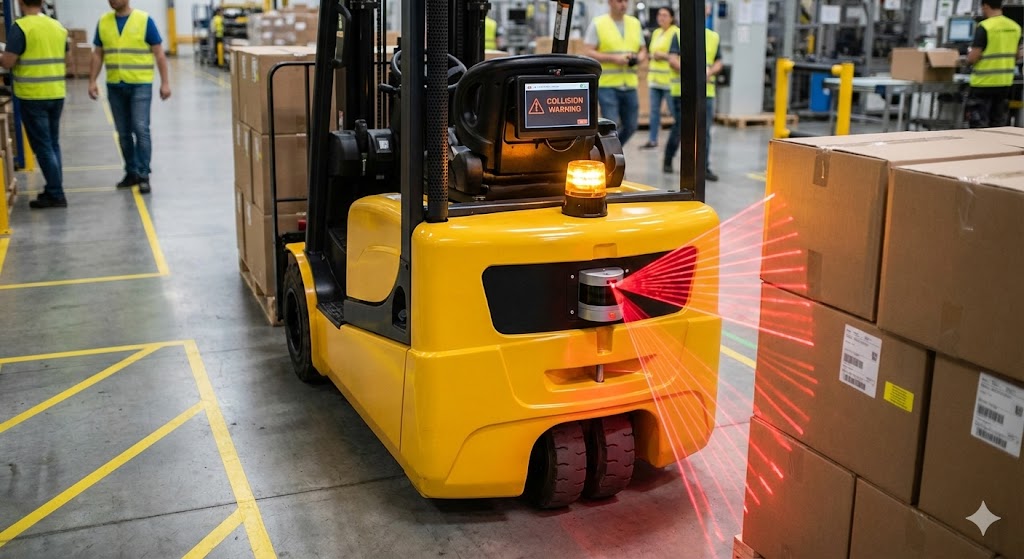
Beyond maintaining distance, advanced nozzle sensors incorporate collision detection. If the sensor detects an abrupt, unexpected change in distance—indicating a potential collision with a workpiece burr, a misplaced part, or a programming error—it can send an immediate emergency stop signal to the CNC. This proactive protection can prevent thousands of dollars in damage by avoiding a bent nozzle, a scratched lens, or misalignment of the entire optical path.

Implementing this technology requires careful consideration. Sensor selection depends on the material type (capacitive sensors work on both conductive and non-conductive materials, while inductive sensors require conductive targets). The sensor's frequency response must be high enough to track rapid changes during high-speed contouring. Integration with the existing CNC and laser control software is also critical; modern systems allow for easy calibration and tuning of sensitivity parameters, response curves, and delay settings to match specific application needs.
Regular maintenance is straightforward but essential. Nozzle sensors are exposed to harsh environments filled with metallic dust, spatter, and heat. A routine cleaning schedule using appropriate solvents and soft cloths prevents the buildup of contaminants that could dampen the sensor signal or cause false readings. Periodic calibration against a known reference ensures long-term accuracy.
In conclusion, the integration of sophisticated nozzle sensor technology is no longer a luxury but a necessity for competitive, high-mix, high-volume laser cutting operations. It transforms a passive mechanical component into an active, intelligent system node. By guaranteeing consistent standoff distance and providing robust collision avoidance, these sensors directly contribute to higher part quality, reduced scrap rates, minimized downtime for repairs, and extended consumable life. For engineers aiming to push the boundaries of cutting speed and precision while safeguarding their capital investment, prioritizing advanced nozzle sensing is a clear and impactful strategic decision.