Proximity sensors are indispensable components in modern industrial automation, offering non-contact detection of metallic and non-metallic objects. This comprehensive guide details original model specifications, selection criteria, and application scenarios for engineers seeking reliable solutions.
Inductive proximity sensors remain the industry standard for metal detection. Key original models include:
- Omron E2E Series: Cylindrical DC models with sensing ranges up to 15mm, featuring IP67 protection and temperature tolerance from -25°C to 70°C. The E2E-X5MY1 offers 5mm range with built-in surge protection for PLC interfaces.
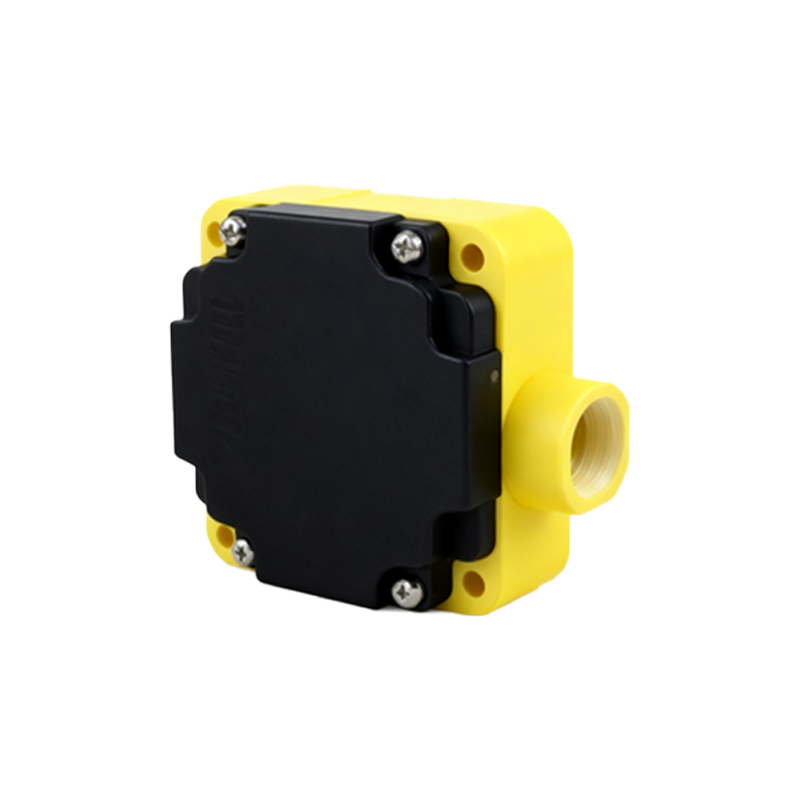
- Sick IM Series: M12/M18 threaded designs with 2-wire DC configurations. The IM03-04B provides 4mm range and short-circuit protection, ideal for robotic end-effector mounting.
- Pepperl+Fuchs NBB Series: 30mm tubular sensors with teach-in functionality. The NBB20-U4-E2-V1 features 20mm range and IO-Link communication for Industry 4.0 integration.
Capacitive models detect non-metallic materials like plastics and liquids. Notable original models:
- Balluff BCS Series: Flat-pack sensors with potentiometric sensitivity adjustment. The BCS00M4B offers 4mm range for transparent film detection in packaging machinery.
- IFM CSM Series: Compact rectangular designs with analog output options. The CSM18E7B1 provides 8mm range for liquid level monitoring in polymer processing.
Magnetic proximity sensors (reed switches) excel in harsh environments:
- Turck BI Series: Glass-encapsulated switches with 10W switching capacity. The BI2-EG08-AP6X-H1141 withstands vibrations up to 100g and temperatures from -40°C to 150°C.
Ultrasonic models solve complex detection challenges:
- Banner Q45 Series: Adjustable-field sensors with teach-button programming. The Q45URRAQ8 provides 300mm-8m range for bulk material level control in silos.
Selection requires evaluating five parameters:
1. Sensing distance: Consider 70-80% of rated range for reliability
2. Output type: PNP/NPN transistor, analog, or IO-Link
3. Housing material: Stainless steel (IP69K) for washdown areas
4. Frequency response: Up to 5kHz for high-speed counting
5. Electrical protection: Reverse polarity and surge suppression
Installation best practices:
- Maintain 2x diameter clearance between adjacent sensors
- Use shielded cables longer than 100m to prevent EMI
- Implement snubber circuits for inductive loads exceeding 100mA
- Verify switching hysteresis (typically 3-15% of sensing range)
Maintenance protocols extend sensor lifespan:
- Quarterly cleaning of sensing faces with isopropyl alcohol
- Annual verification of switching points using certified gap testers
- Monitor leakage current (<1.6mA for 2-wire DC models)
Emerging trends include:
- Multi-parameter sensors with integrated temperature monitoring
- Wireless configurations using Bluetooth 5.0 for rotating machinery
- AI-enabled predictive maintenance through cloud analytics
Always verify model suffixes indicating voltage ranges, connector types, and certification marks (CE, UL, ATEX). Consult manufacturer datasheets for exact dimensional drawings and electrical characteristics before integration.